A new garage door can improve security, curb appeal, insulation, and everyday convenience. But before you treat garage door installation videos as a complete plan for a weekend project, consider what is happening outside the camera frame: measuring the opening, selecting compatible hardware, managing spring tension, and making the door operate safely in real conditions.
For Chicago-area homeowners and property managers, a garage door is not a minor piece of hardware. It is a large, heavy moving system that may be used several times a day through snow, wind, temperature swings, and humid summers. Videos can be useful for learning how the system works. They are not always a safe substitute for an on-site installation by an experienced technician.
What Garage Door Installation Videos Can Teach You
A well-made installation video can help you understand the basic parts of a garage door system. You can see the door sections, tracks, rollers, hinges, cables, torsion springs, opener rail, safety sensors, and weather seal working together. That context is valuable when you are choosing a new door or speaking with an installer.
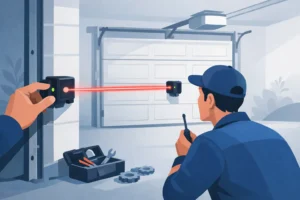
Videos are also helpful for identifying obvious issues after an installation. If a safety sensor has been bumped out of position, for example, a homeowner may recognize why an opener will not close the door. If weather stripping is worn, a video can show where that seal belongs and why it matters during an Illinois winter.
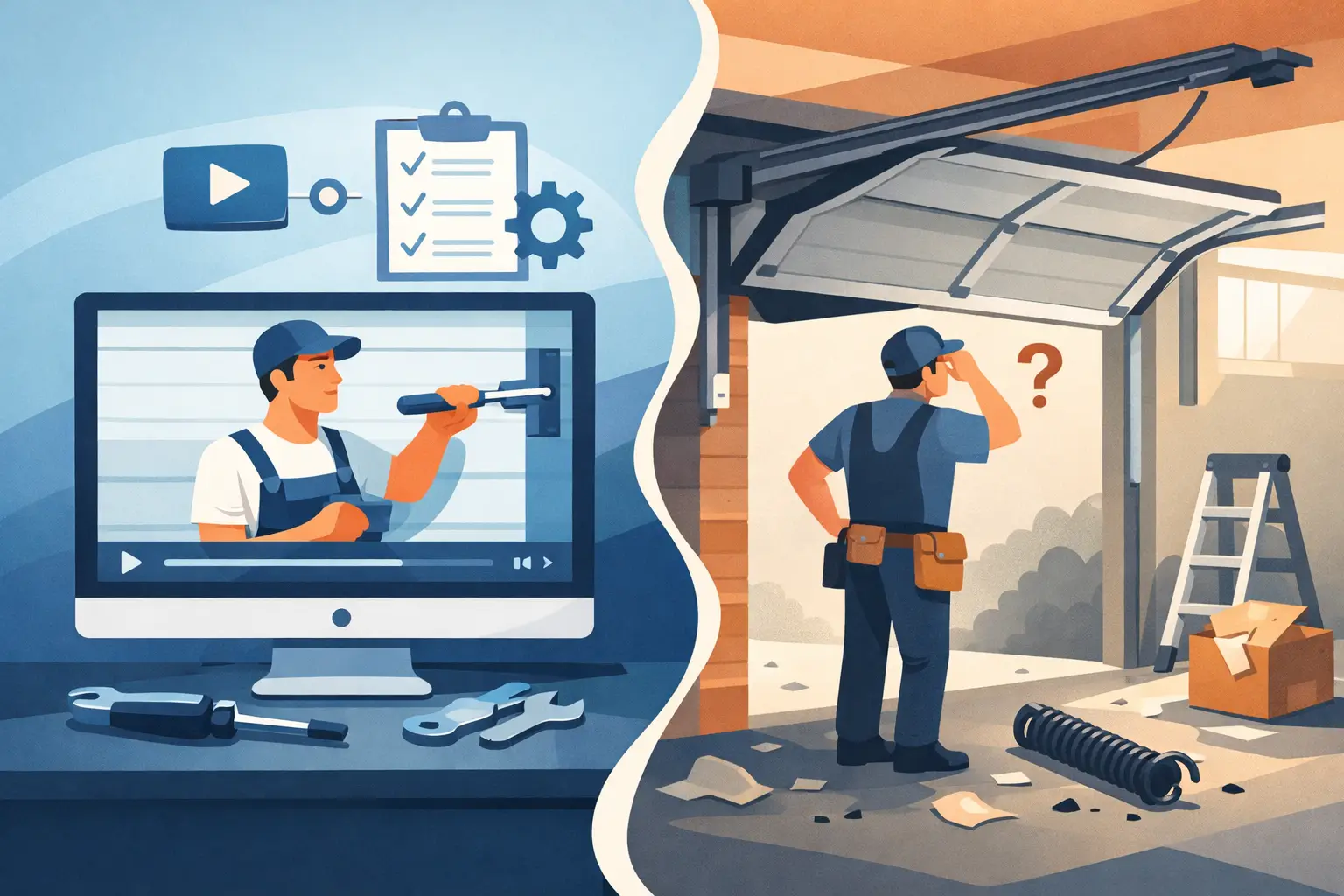
The problem begins when a clear, edited demonstration makes installation appear universal. Most videos show a clean garage, a standard opening, new parts, and a controlled setup. Real garages often have uneven floors, damaged framing, limited headroom, old track marks, nonstandard openings, or an opener that does not match the replacement door.
The Details Installation Videos Often Leave Out
Every door needs to fit the opening, the available clearance, and the building structure. A door that is the wrong size, improperly reinforced, or paired with the wrong track configuration can bind, leak air, or place excessive strain on the opener. These issues may not be obvious on day one, but they can lead to premature wear and expensive repairs.
A professional installer starts with measurements that go beyond the width and height of the opening. They check side room, headroom, backroom, floor level, jamb condition, ceiling support, and the location of electrical outlets. They also evaluate the door weight and choose springs rated to balance that specific door.
That balancing step is a major reason generic garage door installation videos have limits. A door should remain stable when it is disconnected from the opener and moved manually. If it flies upward, drops quickly, or feels excessively heavy, the spring system is not properly matched or adjusted. An opener is designed to guide a balanced door, not force a poorly balanced door through its travel.
Door selection affects the whole system
Replacing a lightweight single-layer door with an insulated steel door can change the total weight significantly. Adding windows, decorative hardware, or reinforcement may change it again. The existing springs and opener may not be suitable for the new setup.
This is where homeowners can accidentally make a project more expensive. Reusing old springs, cables, tracks, or an undersized opener may seem like a way to control the initial cost. It can instead shorten the life of the new door and create avoidable safety concerns. The right installation considers the entire system, not just the panels visible from the driveway.
Springs and Cables Are Not a DIY Experiment
Garage door springs store enough energy to lift a door that can weigh hundreds of pounds. Torsion springs sit above the door opening, while extension springs run along the horizontal tracks. Both systems require correct sizing, secure hardware, and careful adjustment.
Many videos show spring work quickly or make the process look routine. What they cannot provide is the judgment that comes from seeing the condition of the shaft, bearing plates, drums, cables, center bracket, and mounting surface in person. A worn cable, cracked bracket, or loose lag screw can change the risk level immediately.
Attempting to wind or unwind torsion springs without proper tools and training can cause serious injury or property damage. The same is true of cables that have come off drums or extension springs without safety containment. If a spring is broken, a cable is loose, or the door is hanging crooked, stop using the door and arrange professional service.
For a door that will not open, avoid pulling hard on the emergency release or repeatedly pressing the opener button. Forcing the system can bend tracks, damage panels, burn out the opener, or leave the door in an unstable position. A qualified technician can determine whether the problem is a spring, cable, roller, track, opener, or a combination of issues.
When a Video Is Useful for Homeowners
There is still a practical role for videos. They can help homeowners prepare for an installation and maintain a door after the work is complete. Knowing the terminology makes it easier to ask good questions and understand the scope of a service recommendation.
Use video guidance for low-risk tasks such as keeping photo-eye sensors clear, changing remote batteries, checking the bottom seal for visible gaps, and listening for new noises. You can also use it to learn how to test the opener’s reversing function with an object placed in the door’s path. If the door does not reverse as expected, discontinue normal use and schedule service.
Leave adjustments, spring replacement, cable work, track realignment, and structural mounting to a professional. Lubrication can also be more nuanced than it looks. Using the wrong product or applying too much can collect dust and create a sticky buildup. A technician can service the moving parts correctly while checking for wear that a quick online tutorial may not reveal.
A Professional Installation Protects the Investment
A properly installed garage door should open smoothly, seal evenly, sit level, and respond correctly to the opener and safety sensors. It should also be equipped for the way the property is used. A busy family may need a quiet, dependable belt-drive opener with battery backup. A property manager may need durable doors and repeatable maintenance support across several units. A warehouse or retail facility may require commercial-grade operators, high-cycle components, or faster service when a door affects deliveries and security.
For Chicago-area properties, weather protection is part of the installation decision. An insulated door can help moderate garage temperatures, especially when the garage is attached to the home. Proper perimeter seals help limit drafts, blowing snow, rain, and debris. However, insulation alone does not solve an installation problem. The door must be correctly fitted and sealed against the actual opening.
Garage Door Mart Inc approaches installation as a complete service call, not a box of parts. That means confirming the door and hardware are appropriate for the opening, installing and testing the system, checking balance and safety features, and making sure the customer understands normal operation. Clear scheduling and technician communication also reduce the uncertainty that often comes with a major home service appointment.
Commercial Doors Need an On-Site Assessment
Commercial operators should be especially cautious about relying on residential-style installation videos. A loading area, auto shop, storage facility, retail back room, or multi-unit building may have heavy-duty sectional doors, rolling steel doors, specialized tracks, dock equipment, or high-cycle openers. The wrong repair or installation decision can interrupt operations, compromise security, and create a safety issue for employees and tenants.
A professional assessment accounts for door usage, vehicle clearance, access control, operator type, safety devices, and the condition of the surrounding structure. It also helps facilities managers plan service around business hours and avoid a breakdown becoming a longer disruption.
Before scheduling an installation, take a few photos of the inside and outside of the garage, note any existing problems, and think about how you use the space. Those details help start a more accurate conversation about door options, insulation, windows, opener features, and timing.
A video can show you the parts. The right installer makes sure those parts work safely together, protect the property, and keep the door ready for the next cold morning, busy delivery, or late-night return home.