A garage door can weigh several hundred pounds, move multiple times every day, and protect one of the largest openings in your home or business. That is why asking what is overhead door installation means more than asking how a new door is hung. It is the professional process of fitting a complete door system so it opens safely, seals properly, operates reliably, and matches the demands of the property.
For homeowners across the Chicago area, installation may mean replacing an aging door that is noisy, damaged, drafty, or no longer secure. For commercial properties, it may involve installing a sectional door, rolling steel door, high-lift system, or heavy-duty opener that keeps deliveries and operations moving. In either case, correct installation matters just as much as the door itself.
What Is Overhead Door Installation?
Overhead door installation is the process of installing a garage or commercial door that travels upward and rests above the opening when open. Most residential garage doors use sectional panels connected by hinges. Rollers guide those panels along vertical and horizontal tracks, while springs counterbalance the door’s weight so it can be lifted by hand or an opener.
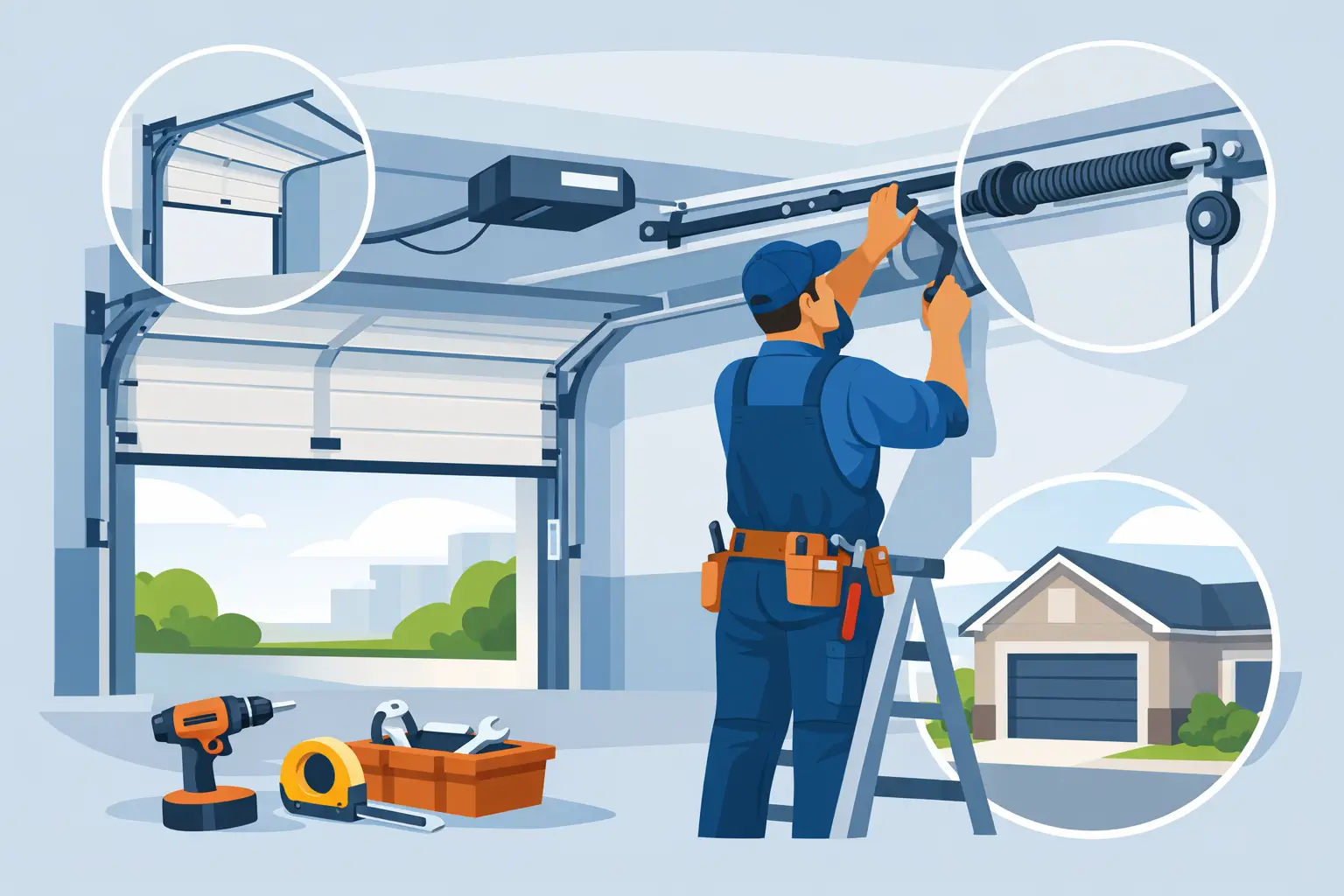
A complete installation includes more than the visible door panels. The installer evaluates the opening, headroom, side clearance, framing, track placement, springs, cables, rollers, reinforcement, weather seals, and opener compatibility. Each component has to work in balance.
The word “overhead” describes how the door moves. Instead of swinging outward like a gate, the door follows tracks upward and back into the garage or building. This design saves driveway space, allows vehicles to pull close to the door, and supports a wide range of residential and commercial applications.
The Parts of an Overhead Door System
An overhead door works as a system, not as a single product. A strong new door can still operate poorly if its tracks are misaligned, its springs are incorrectly sized, or its opener is not set up for the door’s weight.
The door sections form the face of the system. They may be steel, aluminum, wood, composite, fiberglass, or insulated construction. Residential choices often focus on curb appeal, insulation, and quiet operation. Commercial doors are usually selected for security, traffic volume, building use, and wind or impact requirements.
Tracks, rollers, hinges, and brackets control the door’s travel. Torsion springs or extension springs offset the door’s weight. Cables connect the spring system to the bottom of the door and must remain properly seated and tensioned. Weatherstripping helps reduce water, debris, pests, and cold air entering around the opening.
An automatic opener adds convenience, but it does not do the lifting by itself. A properly balanced door should be light enough for the spring system to support it. The opener guides the movement. If a door is too heavy, binding, or out of balance, an opener can wear out quickly or create a safety issue.
What Happens During Professional Installation
A reliable installation begins with measurement, not guesswork. The installer measures the width and height of the opening, checks the condition of the jambs and header, and confirms the available headroom and backroom. This step determines what door size, track style, spring system, and opener configuration will fit correctly.
Next, the old door is removed when the project is a replacement. This is one of the most hazardous parts of the job because existing springs and cables may be under high tension. The opening is then prepared so the new door can sit squarely against the frame and seal evenly.
The new sections are installed from the bottom up. Rollers, hinges, brackets, tracks, and support hardware are fitted as the door takes shape. The track system must be level, plumb, and securely fastened. Even a small alignment issue can cause noisy operation, uneven wear, or a door that comes off track.
After the door is assembled, the springs and cables are installed and adjusted. This is specialized work. Springs store significant force, and incorrect tension can cause the door to move too fast, feel excessively heavy, or fail to stay in position. Professional technicians use the correct tools and procedures to set the door’s balance.
If an opener is part of the project, it is mounted, connected, and tested after the door is balanced. Safety sensors are positioned near the floor on each side of the opening. The technician tests the reversal feature, travel limits, remote controls, wall control, and manual release. The final step is a full operating check to confirm smooth travel, secure closing, and reliable safety response.
Residential Installation: More Than a Curb Appeal Upgrade
A new residential garage door can change the look of a home, but appearance is only one factor. Chicago-area homeowners also need a door that can stand up to temperature swings, wind, moisture, and daily use. Insulated doors can help moderate temperatures in an attached garage, particularly when there is living space above or beside it.
Door selection depends on the home and the owner’s priorities. Steel doors are popular because they are durable and available in many styles. Carriage-house designs can provide a traditional appearance with modern overhead operation. Full-view aluminum and glass doors create a clean contemporary look, although privacy, insulation, and cost should be considered.
A professional installer can also identify issues that a new door alone will not solve. Weak framing, damaged jambs, insufficient clearance, an aging opener, or a poor driveway-to-floor seal may affect the finished result. Addressing those details during installation is usually more efficient than discovering them after the door is in use.
Commercial Overhead Door Installation Has Different Demands
Commercial doors are often larger, heavier, and used far more frequently than residential doors. A warehouse loading area, auto shop, storage facility, retail building, or multi-unit property may need a door system designed for repeated cycles, enhanced security, or specific clearance needs.
The right setup depends on how the opening is used. A standard sectional door may work well for a service bay, while a rolling steel door can be a better fit for security-focused openings or limited ceiling space. High-lift tracks can create additional vertical clearance, while heavy-duty operators are designed for frequent daily operation.
Downtime is a real cost for commercial operators. A door that will not close can affect security. A door that will not open can delay shipments, staff, tenants, or customers. That is why installation planning should account for traffic patterns, equipment needs, building layout, and the expected number of operating cycles.
Why Professional Installation Is the Safer Choice
Installing an overhead door is not a typical weekend project. Panels are awkward and heavy, tracks must be precisely aligned, and springs can cause serious injuries when handled incorrectly. Online instructions may make the process look simple, but they do not account for the conditions at a specific property.
Professional installation helps prevent common problems such as crooked tracks, loose mounting hardware, cable failure, uneven gaps, door binding, and premature opener damage. It also ensures the safety sensors and reversing system are tested before the door is put into regular use.
There is also a value in having one local provider responsible for the full system. If an adjustment, maintenance visit, opener replacement, or emergency repair is needed later, the service history and equipment setup are easier to understand. Garage Door Mart Inc serves Chicago-area homeowners and businesses with installation and follow-up service built around that practical need.
When Is It Time to Install a New Overhead Door?
Replacement is often the right choice when the existing door has major structural damage, frequent breakdowns, severe rust, cracked sections, outdated safety features, or poor insulation. A door that has been hit by a vehicle may look repairable but still have bent tracks, damaged hinges, or compromised reinforcement.
Sometimes repair makes more sense. A broken spring, worn rollers, damaged cable, or failed opener can often be corrected without replacing the door. The deciding factor is the overall condition of the system, the availability of matching parts, the cost of repeat repairs, and whether the door still meets the property’s security and performance needs.
Before scheduling installation, clear vehicles and stored items away from the opening and make sure the technician can access the garage or commercial space. Ask about the door material, insulation level, opener options, expected timeline, and removal of the old door. A clear plan at the start helps the finished system perform the way it should for years.
When your current door is unreliable, noisy, damaged, or no longer right for the building, a professional on-site evaluation is the fastest way to turn an uncertain problem into a safe, workable installation plan.