A garage door cable off drum is not a problem to force through with the opener or solve by pulling harder on the door. The cable is part of the counterbalance system that controls hundreds of pounds of door weight. Once it slips, loosens, or wraps incorrectly around the drum, the door can hang unevenly, jam in the tracks, or drop unexpectedly.
For Chicago-area homeowners, property managers, and businesses, the safest move is to stop using the door and arrange professional service. A trained technician can identify why the cable came off, reset the system under proper tension, and repair the condition that caused the failure in the first place.
What Happens When a Garage Door Cable Comes Off the Drum
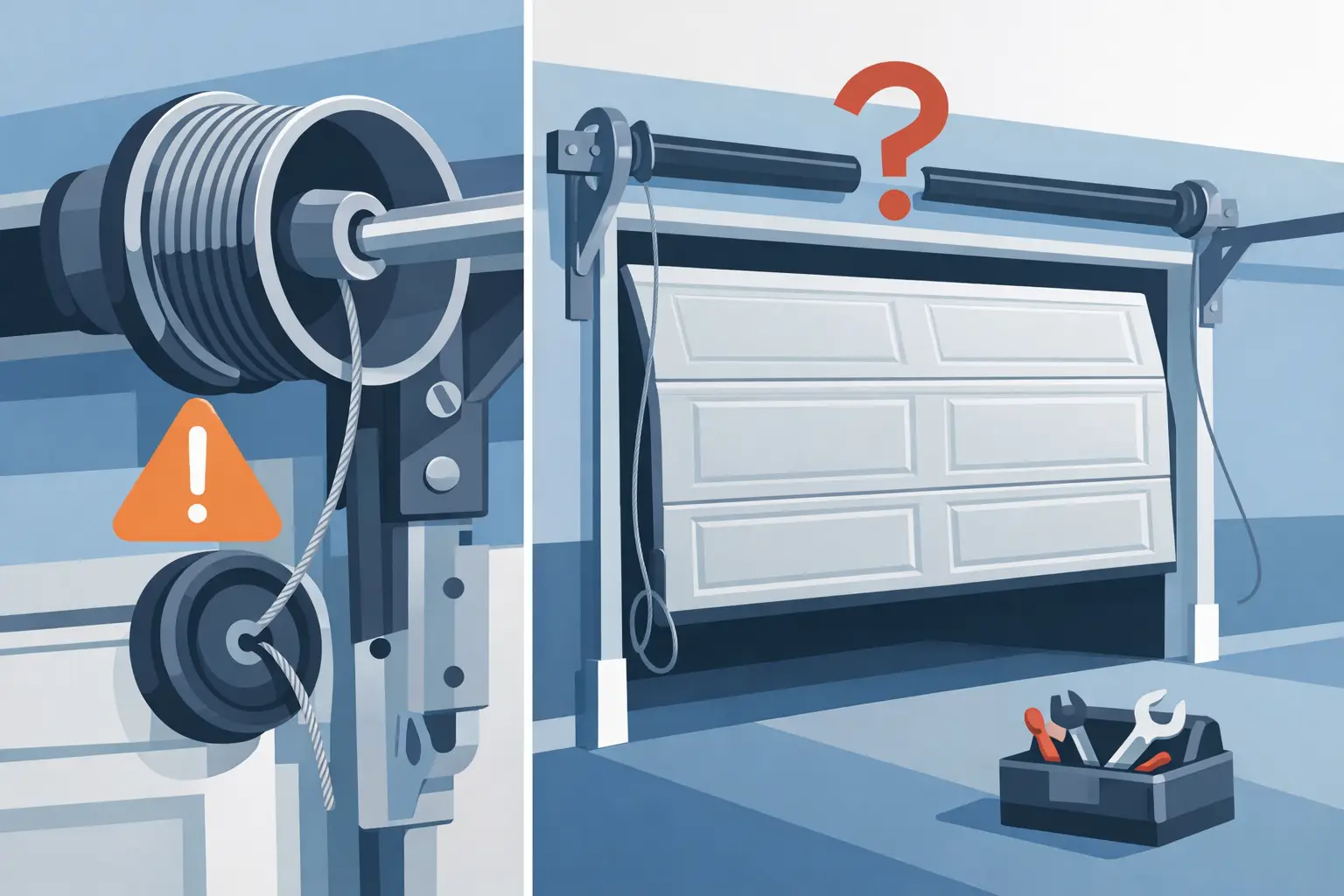
Your garage door uses cables, drums, torsion springs, shafts, and tracks to lift and lower the door evenly. The lift cables run from the bottom brackets of the door to drums mounted near the torsion spring shaft. As the door opens, the cables wind onto the drums. As it closes, they unwind in a controlled way.
When one cable comes off its drum, the two sides of the door no longer move together. You may see one side rise while the other stays low, a cable hanging near the track, or a door that is crooked in the opening. In some cases, the door is stuck halfway open. In others, it may be fully closed but unsafe to operate.
This is more than an inconvenience. A garage door that is no longer balanced can bend tracks, damage rollers, strain the opener, and create a serious injury risk. Commercial doors can also interrupt deliveries, block vehicle access, and leave a facility exposed after business hours.
Signs You Should Stop Operating the Door
A loose or unspooled cable is often visible, but not always. Stop using the door if it is moving unevenly, making sharp scraping or popping sounds, or refusing to open more than a few inches. A crooked door, a gap on one side at the floor, or an opener that hums without lifting the door are also warning signs.
Do not keep pressing the wall button or remote to see whether the door will correct itself. The opener is designed to move a balanced door. It is not designed to pull a twisted, jammed, or partially unsupported door back into position. Continuing to run it can turn a cable repair into a larger repair involving the opener, tracks, panels, or springs.
If the door is open or partially open, keep people, pets, and vehicles clear of the opening. Do not walk beneath the door, and do not try to support it with a ladder, board, or other temporary object. If the door protects a business, secure the area and contact an emergency garage door repair provider as soon as possible.
Why a Garage Door Cable Comes Off Its Drum
The cable itself may be the visible problem, but the underlying cause can vary. Proper repair means finding that cause rather than simply winding the cable back on.
A broken torsion spring is one of the most common causes. When a spring breaks, the shaft can lose tension and the cables can loosen or come off the drums. You may have heard a loud bang from the garage, even though the door was not moving. Never handle a suspected broken spring yourself. Springs store extreme tension and require specialized tools and procedures.
A door that has come off track can also pull the cable out of position. This may happen after a vehicle bumps the door, a roller fails, a track is bent, or the door catches on an obstruction. The cable can then become tangled, frayed, or wrapped backward on the drum.
Worn rollers, loose bearings, damaged drums, and misaligned tracks can contribute to the same problem. On older doors, cable wear is another concern. Frayed strands, corrosion, or stretched cable ends may fail under load. Chicago’s changing temperatures and moisture can speed up wear on metal components, especially when maintenance is delayed.
Improper previous repairs are another factor. If spring tension is uneven, cables are installed incorrectly, or the door was not balanced after service, the system may work for a while before the cable slips again. That is why a complete inspection matters.
What You Can Safely Do Before Help Arrives
There is no safe homeowner method for resetting a garage door cable on a torsion system. The drums and springs are under tension, and removing set screws or attempting to turn the shaft can cause sudden movement.
You can take a few safe steps. First, unplug the garage door opener if the door is closed and accessible. If it is partially open, do not disconnect the opener or pull the emergency release unless a technician instructs you to do so. The opener may be helping hold the door in place, even though it should not be operated.
Next, move cars away from the door if possible and keep the area clear. Do not cut the cable, loosen hardware at the bottom brackets, or remove track bolts. The bottom bracket is connected directly to the lift cable and can release with dangerous force.
If you need to report the issue, note whether the door is open, closed, or stuck halfway. It also helps to mention whether one cable is loose, whether the door is off track, and whether you heard a spring break. Those details help a repair team arrive prepared with the right parts.
Professional Repair for a Cable Off the Drum
A professional repair starts by securing the door and inspecting the entire counterbalance system. The technician checks the springs, cables, drums, shaft, end bearings, rollers, tracks, hinges, and opener operation. This matters because a cable that has slipped may be a symptom of a separate failure.
The repair process may involve releasing and resetting spring tension, replacing damaged cables, realigning the tracks, replacing worn rollers or drums, and restoring the door to level travel. The door should then be balanced and tested by hand before the opener is reconnected and adjusted.
The exact repair depends on the door type and condition. A cable that came loose because a roller briefly bound in the track may require a relatively focused repair. A cable failure caused by broken springs, bent tracks, or a door that has fallen out of the opening will require more extensive work. A reliable technician should explain what failed, what must be repaired now, and what maintenance or replacement options are worth considering.
For commercial properties, speed is often critical, but safety still comes first. Loading docks, warehouse bays, service entrances, and storefront doors may require heavier-duty components and additional adjustments. A properly equipped commercial garage door technician can restore access while addressing the cause of the breakdown, not just the visible cable issue.
Can You Open the Door Manually?
It depends on the condition of the door, but the answer is usually no until it has been inspected. A balanced garage door can be opened manually after the opener is disconnected. A door with a cable off the drum is not balanced. It may be much heavier on one side, bind in the tracks, or shift suddenly as it moves.
Trying to lift it with several people is still risky. The door can rack, the remaining cable can slip, or the door can come out of the track completely. If you must get a vehicle out of the garage, call for urgent service rather than attempting a manual lift. The cost of professional help is typically far less than the cost of damaged panels, a broken opener, or an injury.
Preventing Future Cable Problems
Routine service can catch many conditions before a cable comes off. During maintenance, the technician can inspect cable wear, test spring balance, tighten hardware, lubricate appropriate moving parts, and check track alignment. This is particularly useful for doors that see frequent use, including multi-unit properties and commercial facilities.
Homeowners can also reduce avoidable strain by keeping the track area clear and watching for changes in door movement. A door should not shake heavily, scrape along the track, or struggle during normal operation. If it starts moving unevenly, schedule service early instead of waiting for a complete failure.
Garage Door Mart Inc provides dependable residential and commercial garage door repair across the Chicago-land area, including urgent cable, spring, off-track, and opener issues. When a cable comes off the drum, a prompt inspection protects the door, the opener, and everyone using the space.
A door that suddenly stops working always seems to happen at the worst time. Leave the counterbalance system alone, keep the area clear, and have the repair handled before one loose cable becomes a larger and more expensive problem.