A loading dock door that will not open at 6:30 a.m. can put an entire shift behind schedule before the first truck is unloaded. Warehouse door failures affect more than a single entrance. They can delay shipments, leave inventory exposed, create safety risks for employees, and force drivers to wait at the dock. For Chicago-area warehouse operators and property managers, quick diagnosis and dependable repair are essential.
Why Warehouse Door Failures Need Immediate Attention
Commercial overhead doors are built for demanding use, but they are not indestructible. A warehouse door may cycle dozens of times per day while handling vibration from forklifts, winter weather, vehicle traffic, and constant pressure to keep products moving. Small mechanical issues can become major operational problems when service is delayed.
A door that hangs unevenly, reverses unexpectedly, or requires repeated operator resets should not be treated as a minor inconvenience. Continuing to run damaged equipment can bend tracks, burn out an opener, damage panels, or cause a door to fall out of alignment. It can also put employees near moving components that are under extreme spring tension.
The right response depends on the failure. Some problems can be limited to a sensor adjustment or control reset. Others require the door to remain out of service until a trained commercial door technician can inspect the springs, cables, rollers, tracks, operator, and safety devices.
The Most Common Causes of Warehouse Door Failures
Broken Springs or Frayed Cables
Torsion springs and lift cables carry the weight of the door. When a spring breaks, the operator may hum without lifting the door, or the door may rise only a few inches before stopping. A broken cable can cause one side of the door to drop, creating an uneven and dangerous condition.
These are not do-it-yourself repairs. Commercial springs are under substantial tension, and improper handling can cause serious injury or additional damage. If the door looks crooked, feels unusually heavy, or has a visible loose cable, keep people clear and schedule professional service.
Damaged Tracks, Rollers, and Hinges
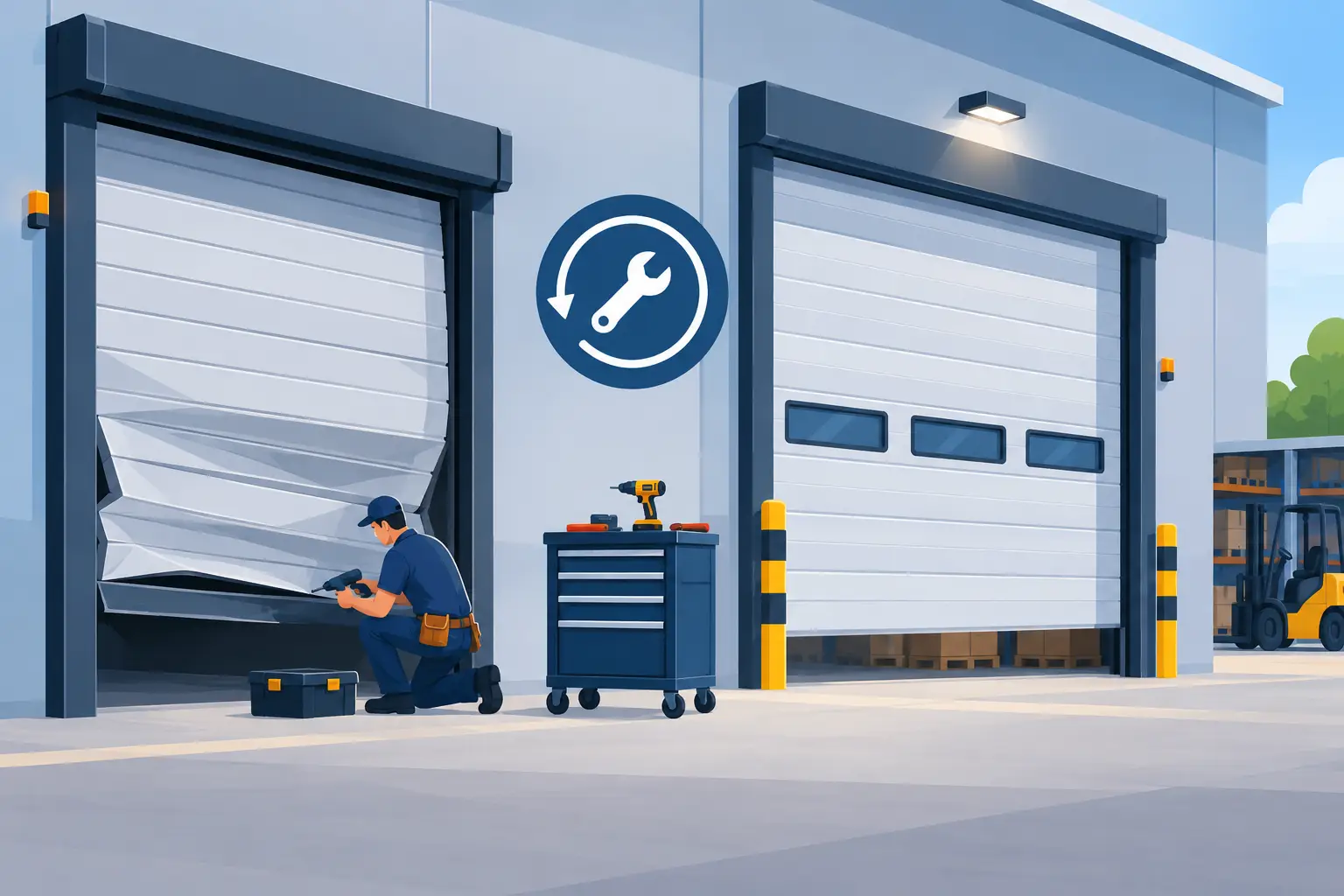
Forklift contact, delivery vehicle strikes, pallet movement, and normal wear can damage the hardware that guides a door through each cycle. Bent vertical tracks, worn rollers, loose hinges, and missing fasteners create resistance that eventually causes the door to bind or come off track.
Sometimes a damaged track can be straightened and secured. In other cases, replacement is the safer long-term answer. The decision depends on the extent of the bend, the door’s weight, the condition of the brackets, and whether alignment can be restored without compromising safe operation.
Operator and Electrical Problems
A commercial opener may fail because of a worn gear, failed capacitor, damaged drive component, faulty limit switch, or electrical issue. Power interruptions, moisture, and age can also affect wall controls, keypads, photo eyes, and remote systems.
Before assuming the operator has failed, verify that the circuit breaker is on and that no emergency stop control has been engaged. If power is present but the system will not respond, avoid repeatedly pressing the control button. Repeated attempts can overheat the motor or worsen an existing mechanical obstruction.
Misaligned or Blocked Safety Sensors
Photo eyes and monitored safety devices are designed to prevent a closing door from striking people, equipment, or vehicles. Dust, snow residue, damaged wiring, misalignment, and a blocked sensor path can keep a door from closing properly.
A quick visual check can identify obvious obstructions near the floor-level sensors. However, bypassing safety equipment to force a door closed is not an acceptable warehouse solution. A technician should correct the underlying sensor, wiring, or control issue so the door can operate safely during every shift.
Weather, Corrosion, and Poor Preventive Maintenance
Chicagoland winters are hard on commercial doors. Ice near the threshold can prevent a bottom seal from releasing. Temperature changes can affect moving parts, while road salt, humidity, and moisture encourage corrosion on hardware and electrical components.
Lack of lubrication and inspection accelerates wear. Rollers become noisy, bearings wear down, bolts loosen, and cables deteriorate gradually. By the time the door stops working, the repair may involve more parts and more downtime than a scheduled maintenance visit would have required.
Warning Signs Before a Door Stops Working
Most warehouse door failures give warning before they become a complete shutdown. Facility teams should report changes in operation promptly rather than waiting for the next scheduled service call. Watch for these signs:
- Grinding, squealing, popping, or scraping noises during travel
- A door that moves slower than usual or pauses unexpectedly
- Gaps, dents, loose hardware, frayed cables, or bent track sections
- A door that will not fully open, close, or stay level
- An operator that runs but does not move the door
A quick report with clear details helps speed up the repair process. Note which door is affected, whether it is stuck open or closed, what happened immediately before the issue began, and whether a vehicle or forklift made contact with the door.
What to Do When a Warehouse Door Fails
First, protect people and the loading area. Keep employees away from a door that is off track, crooked, partially open, or making unusual noises. Do not allow anyone to stand beneath a suspended door or attempt to pull it down by hand.
Next, secure the opening if the door is stuck open. Depending on the building and the condition of the door, this may mean moving inventory away from the dock, redirecting deliveries, and limiting access to the affected area. If the door is stuck closed, coordinate truck traffic early to prevent congestion and missed appointments.
Document visible damage and report the failure to a qualified commercial garage door service provider. Photos can be useful, especially after a vehicle impact, but do not touch cables, springs, drums, or tracks to get a closer look. Those components can move suddenly under load.
For urgent failures, 24/7 emergency service can make the difference between a contained disruption and a full operational loss. A technician can determine whether the door can be safely returned to service, temporarily secured, or needs replacement parts before operation resumes.
Preventing Repeat Warehouse Door Failures
Preventive maintenance is one of the most practical ways to reduce avoidable downtime. The frequency depends on door size, daily cycle count, operating environment, and the type of equipment installed. A high-traffic distribution dock needs more attention than a low-use storage entrance.
A professional maintenance visit should include an inspection of spring tension, cables, rollers, hinges, tracks, fasteners, bottom seals, operator components, controls, and safety systems. Moving parts should be lubricated with products appropriate for commercial door equipment, and limits should be checked so the door opens and closes at the correct positions.
Warehouse managers can support that work by keeping dock areas clear, training forklift operators on safe clearance, and reporting vehicle strikes immediately. Even a low-speed impact can shift a track or loosen hardware enough to cause problems later. Waiting until the door binds often turns a small adjustment into an emergency repair.
Replacement may be more cost-effective when a door has recurring structural damage, obsolete operator parts, severe corrosion, or frequent service interruptions. A repair-first approach makes sense when the door is structurally sound and the problem is isolated. When breakdowns keep affecting productivity, a new commercial door or opener can provide better reliability, security, and operating control.
Get the Right Commercial Door Repair Response
Warehouse doors are part of the workflow, not a background building feature. When one fails, the repair decision should account for employee safety, shipment schedules, building security, and the condition of the entire system.
Garage Door Mart Inc helps Chicagoland commercial properties address urgent door problems, routine repairs, opener issues, and planned maintenance with clear communication and professional on-site service. A prompt inspection can prevent a damaged door from becoming the reason a dock, warehouse bay, or delivery schedule stays offline.
When a commercial door starts showing signs of trouble, act before the next delivery depends on it. Early service protects the people working around the door and gives your operation a better chance to keep moving.