A loading door that will not close at the end of a shift is more than an inconvenience. It can leave inventory exposed, delay trucks, create a safety risk, and force staff to work around a problem they should never have to manage. Commercial door repair issues often start with a small change in movement or noise, then become an operational interruption when they are ignored.
For Chicago-area warehouses, retail locations, multi-unit properties, and service facilities, the right response depends on the type of door, the condition of the hardware, and whether the opening can be secured safely. Some concerns can wait for scheduled service. Others require immediate professional attention.
Commercial Door Repair Issues That Need Fast Action
A commercial door should move smoothly, close fully, and remain secure without employees forcing it, lifting it manually, or using makeshift workarounds. When that stops happening, treat the door as a safety system first and a convenience second.
A door that is off its tracks is one of the clearest reasons to stop using it. Continuing to run an off-track sectional or rolling door can bend tracks, damage panels, strain the operator, and cause the door to fall or bind unexpectedly. Keep people and equipment clear of the opening until a trained technician can inspect the system.
Broken or worn springs also require prompt service. Springs carry significant tension and counterbalance the door’s weight. If a spring breaks, the door may become too heavy for the opener or too dangerous to lift by hand. Do not attempt to replace, wind, or adjust commercial door springs without the proper tools and training.
A door that will not close creates an immediate security concern, particularly after business hours. The cause may be a failed photo eye, damaged bottom seal, limit-setting problem, electrical issue, or obstruction in the track. If the door protects stock, vehicles, tools, or tenant areas, secure the property and arrange emergency repair rather than leaving the opening unattended.
Other urgent signs include grinding noises, a burning smell from the operator, frayed cables, loose brackets, a door that drops quickly, or a door that reverses without a clear obstruction. These conditions can worsen quickly under daily use.
Problems That Commonly Interrupt Daily Operations
Not every failure is sudden. Many commercial doors give warning signs for days or weeks before they stop working altogether. Facilities managers who notice those changes early often avoid a more expensive repair and an unplanned shutdown.
Door movement is slow, uneven, or noisy
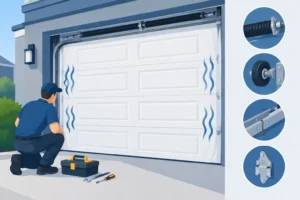
A door that jerks, shakes, scrapes, or moves more slowly than usual may have worn rollers, dry bearings, damaged hinges, misaligned tracks, or a balance issue. Cold Chicago-area weather can make existing wear more noticeable, especially when moisture freezes around hardware or seals become stiff.
Noise alone does not always mean the door is about to fail. Some operational noise is normal for large rolling steel and sectional doors. The concern is a new sound, a louder sound, or noise paired with uneven movement. That is the time to schedule service before a roller fails, a cable slips, or the operator is placed under excess strain.
The opener runs, but the door does not move correctly
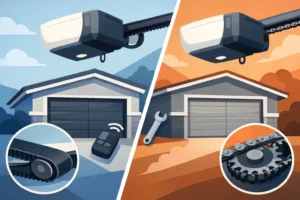
Commercial operators can fail in several ways. The motor may hum without lifting the door, the chain or belt may slip, controls may respond intermittently, or the operator may stop before the door reaches the floor or fully opens. Wall stations, remote controls, keypads, safety sensors, and wiring can all contribute to the problem.
It is tempting to reset the operator repeatedly or override the controls to keep traffic moving. That approach can mask a mechanical fault and risk further damage. A technician should check both the operator and the door itself, because a door that is out of balance can overload even a properly functioning opener.
The door does not seal or latch properly
A gap at the bottom or sides of a commercial door can invite water, pests, cold air, and unwanted access. It can also raise energy costs in conditioned spaces. Damaged weatherstripping, bent tracks, worn bottom seals, and door alignment problems are common causes.
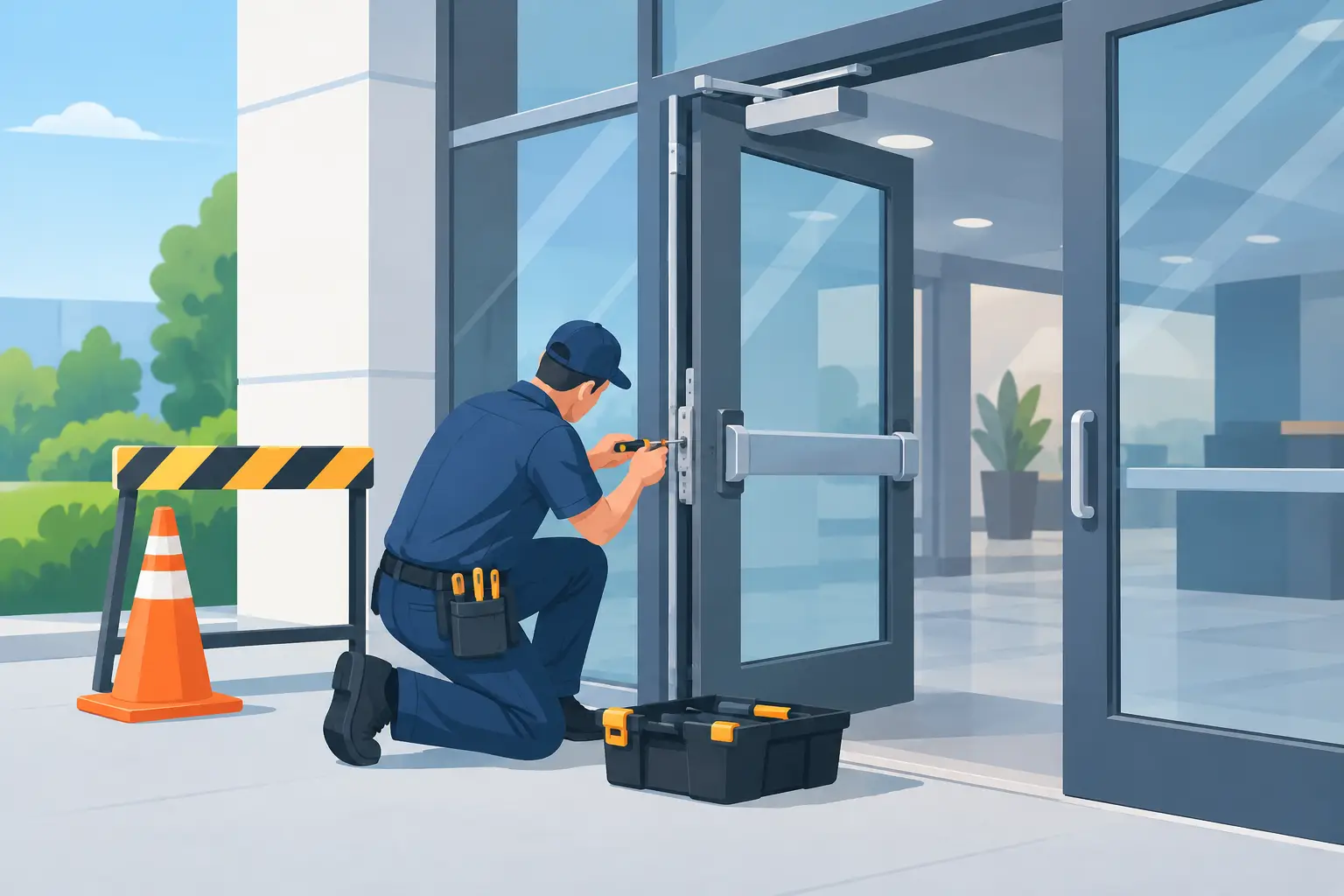
For retail storefronts and secured storage areas, a door that does not latch or lock correctly should be addressed quickly. Security hardware is only effective when the door is aligned well enough for it to engage as designed.
Repeated sensor and control problems
Photo eyes and other safety devices prevent a closing door from striking people, vehicles, or equipment. Dirty lenses, poor alignment, damaged wiring, and moisture can make sensors unreliable. A sensor issue may appear simple, but bypassing it is never the right repair.
If the door reverses constantly, closes only when a control is held down, or behaves differently from one shift to another, arrange an inspection. The problem may be a sensor, but it may also involve the operator settings, wiring, or the door’s travel path.
Why Temporary Workarounds Usually Cost More
Businesses are understandably focused on keeping trucks moving and customers served. But forcing a door open, chaining it in an unsafe position, disabling safety features, or assigning employees to lift a heavy door manually can turn a manageable repair into a serious liability.
Temporary measures also make diagnosis harder. For example, a door that is repeatedly forced through a binding track can damage rollers, hinges, panels, and the operator drive system. A repair that began with alignment may become a larger replacement project.
There are limited cases where a technician may recommend a temporary operational plan while parts are ordered. That decision should follow an on-site assessment, with the door secured and clear instructions provided to the facility team. It should not be an improvised fix made during a busy shift.
What to Do Before Calling for Service
Start by taking the door out of regular use if it is moving unpredictably, hanging unevenly, or showing cable, spring, or track damage. Keep forklifts, vehicles, customers, and employees away from the opening. If security is affected, move valuable inventory if possible and follow your property’s access-control procedures.
Then gather a few useful details for the service call: the door type, what it is doing or not doing, whether the operator has power, when the problem began, and whether a vehicle or piece of equipment struck the door. Photos can help document visible damage, but do not climb ladders or touch high-tension components to get them.
A qualified commercial door technician should inspect the full system, not just the obvious failed part. That means checking door balance, tracks, rollers, cables, springs, hinges, safety devices, operator condition, and controls. The best repair restores safe operation while identifying wear that could cause the next breakdown.
Maintenance Prevents Many Commercial Door Repairs
Commercial doors work harder than most people realize. A busy loading area may cycle a door dozens of times each day, while a parking facility or multi-unit building may depend on access doors around the clock. Usage, weather, vibration, and accidental impacts all add up.
A scheduled maintenance plan helps catch loose hardware, worn rollers, weakened cables, damaged seals, and operator issues before they cause downtime. The right interval depends on door type, cycle volume, exposure to weather, and the consequences of a failure. High-cycle warehouse doors generally need more frequent attention than a lightly used storage-room door.
Maintenance is also a practical time to review safety features and operating habits. Employees should know not to stand beneath a moving door, drive through before it is fully open, or continue using a door that has been hit by a vehicle. Clear reporting prevents minor damage from becoming an emergency overnight.
For businesses that need reliable commercial door service in Chicagoland, Garage Door Mart Inc can inspect the problem, explain the repair clearly, and help restore safe access without unnecessary delay. A door that starts acting differently is giving you a chance to act before operations stop completely.