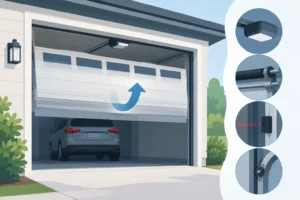
A garage door rarely stops working without giving a warning first. It may start with a new grinding sound, a delay at the keypad, or a door that no longer closes evenly. Knowing when garage door needs service can help Chicago-area homeowners and business owners address a manageable repair before it becomes a trapped vehicle, security problem, or safety hazard.
Garage doors are heavy moving systems, not just exterior doors. Springs, cables, rollers, tracks, sensors, hinges, and openers must work together every day, often through Illinois temperature swings, moisture, road salt, and wind. A change in performance is worth taking seriously.
When a Garage Door Needs Service Right Away
Some issues can wait for a scheduled maintenance visit. Others call for prompt professional service because operating the door can cause more damage or create a risk of injury.
The door will not open or close
If the opener runs but the door does not move, stops partway, or reverses unexpectedly, stop trying to force it. The cause may be a broken spring, damaged cable, obstructed track, failing opener component, or sensor issue. Repeatedly pressing the remote will not correct a mechanical failure and can place additional strain on the opener.
For a business, a door that will not close can leave inventory, equipment, and staff exposed. For a homeowner, it can compromise access to the garage and the security of the house. This is a situation where fast service is usually the practical choice.
You hear a loud bang, grinding, or metal-on-metal noise
A single loud bang from the garage can indicate a broken torsion or extension spring. Springs carry significant tension and should never be handled as a do-it-yourself repair. If a spring breaks, the door may become too heavy for the opener to lift safely.
Grinding, scraping, popping, or screeching can point to worn rollers, loose hardware, damaged hinges, dry moving parts, or a door that is moving out of alignment. Not every unusual sound means an emergency, but noises that are new, loud, or worsening deserve a service call before parts fail further.
The door is crooked, off track, or has a loose cable
A garage door that hangs unevenly or appears to have come out of its track should remain closed if possible and should not be operated. A loose or frayed cable is another clear warning sign. Cables work under high tension, and a door that is off track can shift or fall unexpectedly.
This type of repair requires the right tools and training to secure the door, reset the system, and determine why it happened. A vehicle impact, worn rollers, track damage, broken spring, or obstruction may be behind the problem. Fixing only the visible issue without identifying the cause can lead to another failure.
The garage door feels unusually heavy
With the door fully closed, a trained technician can evaluate balance and spring tension. From an owner’s perspective, a door that suddenly feels heavy when using the emergency release is a strong signal that the spring system may not be doing its job.
Do not attempt to lift a heavy residential or commercial door by yourself. The opener is designed to guide a properly balanced door, not to compensate for a failed spring system. Continuing to use it may burn out the opener motor or damage its internal gears.
Signs Your Garage Door Needs Service Soon
Not every repair starts as an urgent breakdown. Early service often costs less than waiting until the door is stuck, damaged, or unsafe to use.
The opener is slow, inconsistent, or unresponsive
A remote that works only sometimes may need a fresh battery, but inconsistent operation can also involve the photo-eye sensors, wiring, wall control, receiver, circuit board, or opener motor. If the door hesitates, moves slowly, or requires several attempts to respond, schedule an inspection.
Sensor problems are common. The safety sensors near the bottom of the tracks must be aligned and clear. Dirt, spider webs, snow, moisture, or a bumped sensor can prevent the door from closing. Cleaning the lenses and checking for visible obstructions is reasonable, but do not bypass the safety system to make the door close.
The door shakes or moves unevenly
A door should travel smoothly through its full opening and closing cycle. Excessive vibration, jerking, or side-to-side movement can mean worn rollers, loose brackets, bent track sections, or an imbalance in the spring system.
Chicago-area weather can make this more noticeable. Cold temperatures can stiffen lubricants, while seasonal moisture and corrosion can affect metal components. Still, a shaking door is not something to write off as normal winter behavior. A technician can identify whether the issue is routine wear or a developing mechanical problem.
You can see damaged panels, rollers, springs, or weather seal
A dented panel does not always require immediate replacement, but it should be assessed if it affects how the door moves, seals, or locks. Cracked rollers, rusted springs, bent hinges, and deteriorated bottom seals also deserve attention.
The bottom weather seal matters more than appearance. It helps keep out water, leaves, pests, drafts, and salt-laden slush. For commercial properties, worn seals may also affect temperature control, cleanliness, and loading-area operations. Replacing a seal early is often far simpler than addressing water damage or pest entry later.
Your garage door no longer locks or seals properly
A door that leaves a visible gap at the floor or sides may be out of level, have damaged weatherstripping, or need track and limit adjustments. If the door does not fully close and lock, your garage is more vulnerable to weather and unauthorized entry.
For property managers and commercial operators, this is also an operational concern. A loading or service door that does not secure correctly can create liability and security issues after business hours. Service should focus on both the immediate closing problem and the condition of the hardware that controls the door.
Why Small Garage Door Problems Get Expensive
Garage door systems distribute weight and force across several connected components. When one part wears out, other parts take on extra stress. A worn roller can damage a track. A weak spring can overwork an opener. A misaligned door can strain cables, hinges, and panels.
Waiting is sometimes reasonable when the issue is purely cosmetic and the door remains safe, balanced, and reliable. But it is not a good trade-off when the door is noisy, uneven, difficult to operate, or unreliable. In those cases, early repair protects the larger system and can prevent an inconvenient emergency.
Commercial doors need particular attention because the duty cycle is higher. A warehouse bay door or retail service entrance may operate dozens of times a day. Small performance changes should be evaluated before they interrupt deliveries, employee access, or business security.
What to Do Before a Technician Arrives
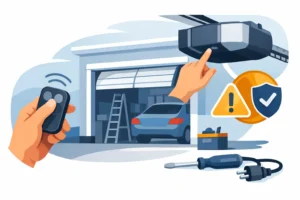
If the door is unsafe, off track, or has a broken spring or cable, keep people away from it and do not operate the opener. Move vehicles only if it is safe to do so. Do not pull on cables, loosen spring hardware, or attempt to force the door into position.
For less urgent issues, note what happens during operation: whether the problem occurs while opening or closing, any sounds you hear, and whether the wall button, remote, or keypad responds differently. This information helps the technician diagnose the issue efficiently.
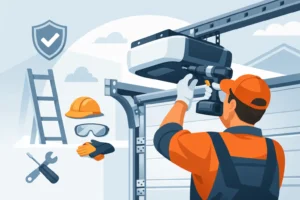
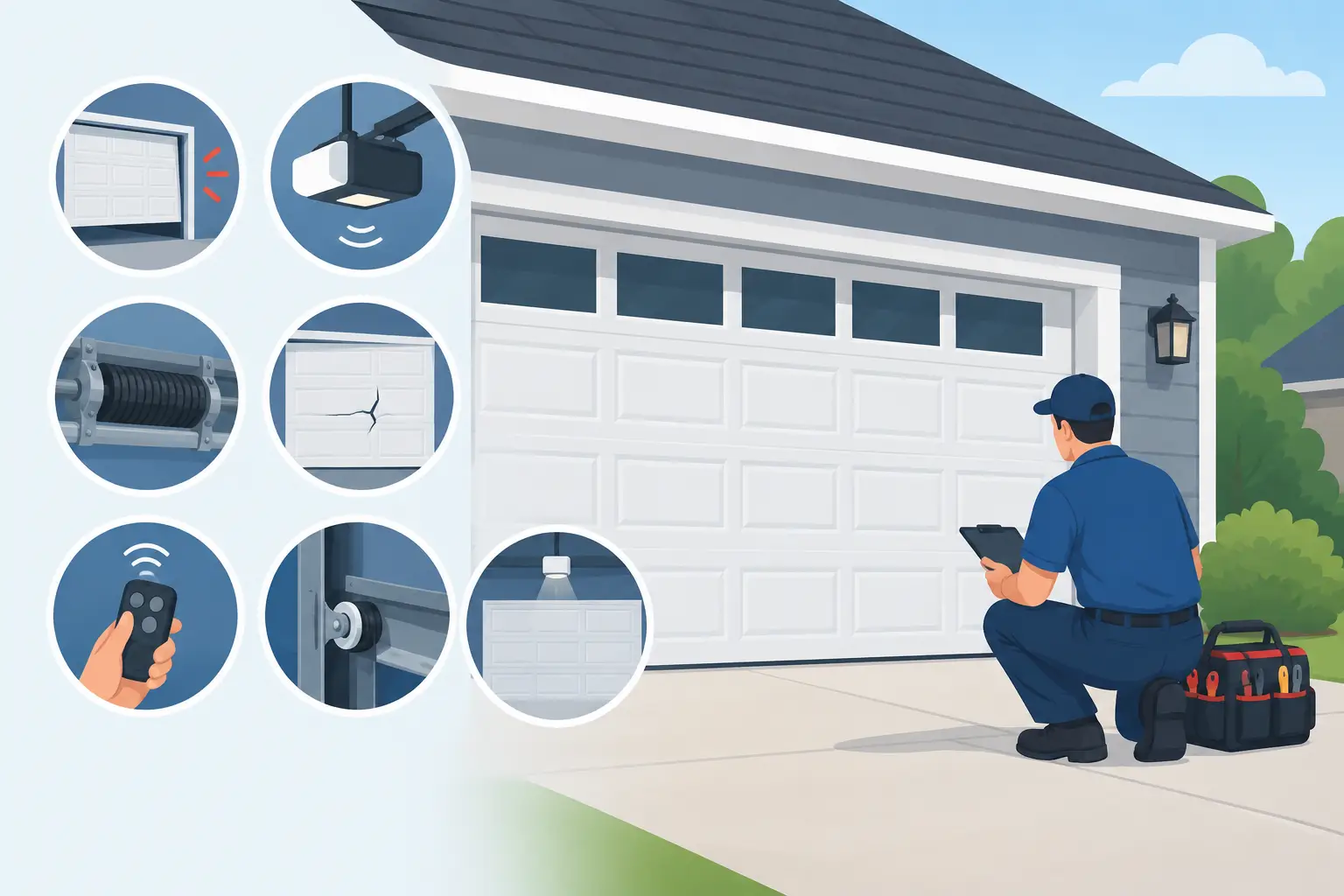
A professional service visit should include more than a quick adjustment. The technician should inspect the door balance, spring system, cables, rollers, tracks, hinges, safety sensors, opener operation, and hardware condition. Garage Door Mart Inc provides clear appointment communication and service for residential and commercial doors throughout the Chicago-land area, including urgent repair needs.
A garage door does a demanding job every day. When it starts sounding, moving, or responding differently, treat that change as useful information and arrange service before the next open or close becomes the one that fails.