Your garage door starts down, gets within a few inches of the floor, then heads right back up. Or it closes halfway and reverses without warning. If you are asking why garage door reverses, the answer is often related to a safety system doing its job – but it can also point to an opener setting, damaged hardware, or a door that needs professional repair.
A reversing garage door is more than an inconvenience when you are trying to leave for work or secure a business at the end of the day. It can leave your home, warehouse, or loading area exposed. More importantly, repeated reversing may indicate a condition that puts added strain on the opener and moving parts. The pattern of when the door reverses provides the best clue to the cause.
Why a Garage Door Reverses Before It Closes
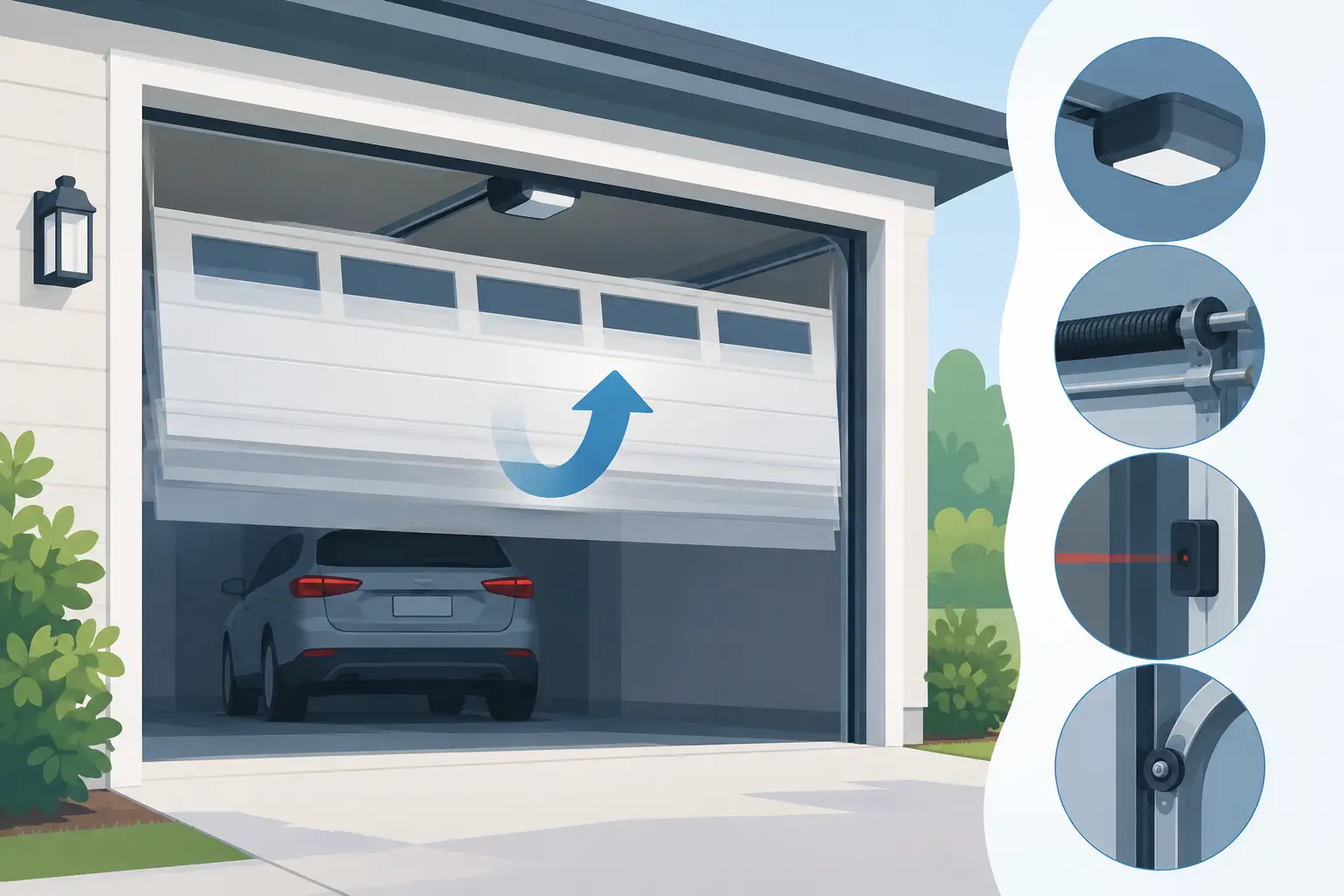
Modern garage door openers are designed to reverse when they sense an obstruction. This is an essential safety feature, especially for households with children, pets, and vehicles moving in and out of the garage. The opener relies primarily on photo-eye safety sensors and resistance detection to decide whether it is safe to close the door.
When either system receives the wrong signal, the door may reverse even when nothing obvious is in its path. A quick visual check can sometimes identify the problem. Other causes require a trained technician, particularly when springs, cables, tracks, or the opener itself are involved.
Misaligned or blocked photo-eye sensors
If the door starts closing and immediately reverses, look first at the photo-eye sensors near the bottom of each side of the door opening. These small sensors send an invisible beam across the opening. If the beam is blocked or the two sensors are not aligned, the opener treats that interruption as an object in the doorway.
Leaves, snow, road salt, cobwebs, a stored item, or even a dirty sensor lens can interfere with the beam. This is common in Chicagoland garages during winter, when moisture and debris collect near the floor. Check that both sensor lenses are clean, pointed toward each other, and securely mounted. Most sensors have indicator lights; a blinking or unlit light often signals an alignment or wiring issue.
Do not assume a steady light means the entire system is working correctly. A damaged wire, loose connection, or weak sensor can create intermittent problems. If cleaning and careful alignment do not correct the issue, schedule service rather than bypassing the safety sensors.
Something is catching in the door’s path
The obstruction does not always sit directly under the door. A bent track, loose roller, damaged hinge, or object pressing against the track can create enough resistance for the opener to reverse. You may notice scraping, popping, grinding, or a section of the door that appears to hesitate as it travels.
With the door fully open and the opener disconnected only if it is safe to do so, inspect the visible tracks for debris and obvious damage. Do not force a door that is crooked, hanging unevenly, or partly off its track. Continuing to operate it can bend components further, damage the opener, or create a serious injury risk.
The close-force setting is too sensitive
Your opener monitors how much force is needed to move the door. If it meets more resistance than its programmed limit allows, it assumes the door has struck something and reverses. A close-force setting that is too sensitive can therefore cause a false reversal.
This does not always mean the setting is the real problem. A door that suddenly needs more force may have worn rollers, a binding track, poor lubrication, or a balance issue. Adjusting the opener to push harder can hide the warning sign while putting greater pressure on the door and opener. A professional should inspect the door’s movement before changing force settings.
The travel limit is set incorrectly
If the garage door reaches the floor, touches down, and then reverses, the close travel limit may be set too far. The opener believes it has not completed its closing cycle, keeps pushing after the door reaches the ground, senses resistance, and reverses.
Travel limits are adjustable on most openers, but the process differs by manufacturer and model. Minor adjustment may solve the problem when the door otherwise moves smoothly. If the door is slamming, stopping unevenly, or reversing at different points each time, the issue is more likely mechanical than a simple limit setting.
When a Reversing Door Signals a Mechanical Problem
A garage door is heavy, and the opener is not meant to lift that weight by itself. Springs counterbalance the door, while cables, rollers, hinges, and tracks guide it through each cycle. When one of those components wears out or fails, the opener may detect abnormal resistance and reverse.
Broken or weakened springs
A broken spring can make the door extremely heavy and difficult to move. In some cases, the door may open only a few feet, reverse unexpectedly, or fail to close smoothly. You may hear a loud bang from the garage when a torsion spring breaks, but not every spring problem is that obvious.
Never attempt spring replacement yourself. Garage door springs are under extreme tension and can cause severe injury or property damage if handled incorrectly. A technician can check spring condition, door balance, and the related hardware before recommending the correct repair.
Frayed cables, worn rollers, or track damage
Cables can fray or slip, rollers can seize, and tracks can become bent from an impact or years of use. These problems often make the door travel unevenly. One side may move ahead of the other, or the door may appear to shake as it closes.
For commercial doors, these issues can quickly become operational problems. A loading bay or service entrance that will not close reliably affects security, deliveries, employee access, and daily schedules. Stop using a door with loose cables, damaged tracks, or off-track rollers until it has been inspected.
A door that is out of balance
An out-of-balance door puts unnecessary workload on the opener. A properly balanced door should not feel excessively heavy when operated manually with the opener disconnected. If it drops quickly, rises on its own, or will not stay near the halfway point, the spring system may need adjustment or replacement.
Balance testing should be performed carefully and only when the door and hardware appear intact. If you see a broken spring, loose cable, bent track, or damaged panel, leave the door alone and call for service.
What You Can Safely Check Before Calling
There are a few practical checks homeowners and property managers can make without taking apart the door system. Clear the garage door opening and confirm there is no object, ice buildup, or packed snow along the threshold. Wipe the photo-eye lenses with a soft, dry cloth and make sure both sensors face each other at the same height.
Next, watch one closing cycle from a safe distance. Note whether the door reverses immediately, at the same spot every time, or only after it contacts the floor. Listen for unusual sounds. These details help identify whether the problem is sensor-related, caused by travel settings, or connected to the door hardware.
Avoid lubricating sensor lenses, bending tracks back into place, pulling on cables, or adjusting springs. Also avoid repeatedly pressing the remote in hopes that the issue will clear itself. Every failed cycle can place additional stress on an already struggling opener.
When to Schedule Garage Door Repair
Call for professional garage door repair if the door reverses after basic sensor cleaning, reverses unpredictably, makes grinding or popping noises, moves unevenly, or will not stay closed. Immediate service is especially appropriate when the door is stuck open, off track, has a broken spring, or leaves a commercial property unsecured.
Garage Door Mart Inc serves homeowners and businesses across the Chicagoland area with repair support for sensors, openers, springs, tracks, cables, and off-track doors. A technician can identify whether the issue is a quick adjustment or a component failure that needs attention before it worsens.
A garage door that reverses is trying to tell you something. Treat the symptom early, keep people clear of a door that is moving abnormally, and get the right repair in place before a small closing problem becomes a security or safety emergency.