A garage door gap can turn a secure garage into an easy entry point for cold air, rain, pests, and intruders. If you are asking what causes garage door gaps, the answer is not always a simple worn weather seal. The gap may be caused by a door that has shifted, damaged tracks, failing rollers, broken hardware, or an uneven floor. In the Chicago-land area, freeze-thaw cycles and high winds can make a small sealing issue worse quickly.
The location of the gap matters. A gap under the bottom edge has different causes than daylight showing along one side or across the top. Identifying the pattern helps determine whether your door needs an adjustment, a replacement part, or a more involved repair.
What Causes Garage Door Gaps Around the Edges?
Garage doors are designed to close evenly against the opening and floor. When the door, its hardware, or the opening itself changes position, the panels no longer sit where they should. That leaves visible gaps and reduces the door’s ability to keep out the elements.
Worn or damaged bottom weatherstripping
The rubber seal attached to the bottom of the door is the most common source of a gap along the floor. Over time, rubber can flatten, crack, tear, or become stiff in cold weather. It may no longer flex enough to conform to minor variations in the concrete.
A worn bottom seal often creates a thin, uneven line of daylight under the door. You may also notice leaves, water, or insects getting in. Replacing the seal can solve the issue when the door itself is closing level. However, a new seal will not correct a door that is crooked, bent, or stopping short of the floor.
An uneven or settling garage floor
Concrete floors do not always remain perfectly level. Settlement, cracks, heaving, and drainage issues can create low spots beneath the door. This is especially common in older homes and commercial properties where heavy vehicle traffic puts added stress on the slab.
If the door appears level but there is a gap in only one small section of the bottom, the floor may be the problem. A heavier or oversized seal can sometimes compensate for a minor low area. Larger floor movement may require evaluation of both the concrete and the door system so the repair does not create new operating problems.
Misaligned tracks or worn rollers
Your garage door travels along vertical and horizontal tracks. If a track loosens, bends, shifts out of alignment, or becomes blocked with debris, the door may not travel straight. Worn rollers can create the same problem by allowing the door to wobble or bind as it moves.
A side gap is often a warning sign of track or roller trouble, particularly if the door is noisy, jerks during operation, or looks uneven while closing. Continuing to operate a door that is binding can cause it to come off track. That can damage panels, cables, and the opener, while creating a serious safety risk.
Loose hinges, damaged sections, or warped panels
Garage door sections work together as one system. A cracked hinge, loose fastener, bent reinforcement strut, or damaged panel can prevent the sections from lining up correctly. The result may be a gap at the side of one panel, between sections, or near the top corners of the opening.
Wood doors may warp as moisture and temperature change. Steel doors can bend after a vehicle impact, storm damage, or repeated contact with an obstruction. Aluminum and lightweight commercial doors can also distort under impact. Sometimes one damaged section can be replaced; in other cases, especially when the door is old or multiple sections are compromised, replacement is the safer and more cost-effective choice.
Why Garage Door Gaps Get Worse in Chicago Weather
Chicago winters place unusual stress on garage doors. Freezing temperatures harden weatherstripping, snow and ice can block the bottom edge, and repeated freezing and thawing can move surrounding concrete. Strong wind can also flex a weak door or loosen aging hardware.
Moisture is another concern. Water entering through a bottom or side gap can damage stored items, encourage corrosion on metal components, and contribute to wood rot around the garage opening. For commercial facilities, gaps can affect temperature control, inventory protection, and daily operations.
Do not assume a gap will disappear when warmer weather returns. Seasonal movement may be part of the cause, but the underlying issue can still be a failing seal, misadjusted door, or worn component that needs attention.
Garage Door Gaps Caused by Opener Settings
Sometimes the door is structurally sound but does not close all the way. Modern openers use travel limits to tell the motor when to stop. If the close limit is set incorrectly, the opener may stop before the door makes full contact with the floor. A small gap can remain underneath even though the opener appears to complete its cycle.
This can happen after an opener installation, power outage, adjustment attempt, or gradual wear in the system. In some cases, the safety sensors may also be misaligned or obstructed, causing the door to reverse before it closes fully.
Opener settings should be checked carefully. Closing force and travel limits are safety controls, not simple convenience settings. Increasing force to make a door close can mask a binding track, failing roller, or other mechanical problem. If the door reverses, strains, or closes unevenly, professional inspection is the better approach.
When a Gap Signals a Spring or Cable Problem
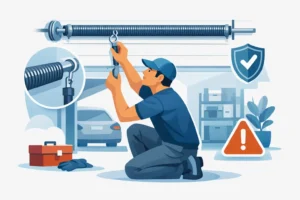
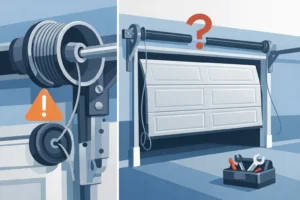
Springs and cables counterbalance the weight of the garage door. When one of these components wears out or fails, the door can become uneven, heavy, or difficult for the opener to move. A broken cable may cause one side of the door to drop lower than the other, leaving a noticeable gap on one side and putting the door at risk of coming off its track.
A broken torsion spring can also leave the door unable to close or open properly. You may hear a loud bang from the garage, see a separation in the spring above the door, or find that the opener hums without lifting the door.
Do not attempt to adjust, remove, or replace springs and cables yourself. These components are under extreme tension and can cause severe injury or property damage if handled incorrectly. Stop using the door and arrange service, especially if the door is crooked, hanging from a cable, or stuck in an open position.
What You Can Check Before Scheduling Service
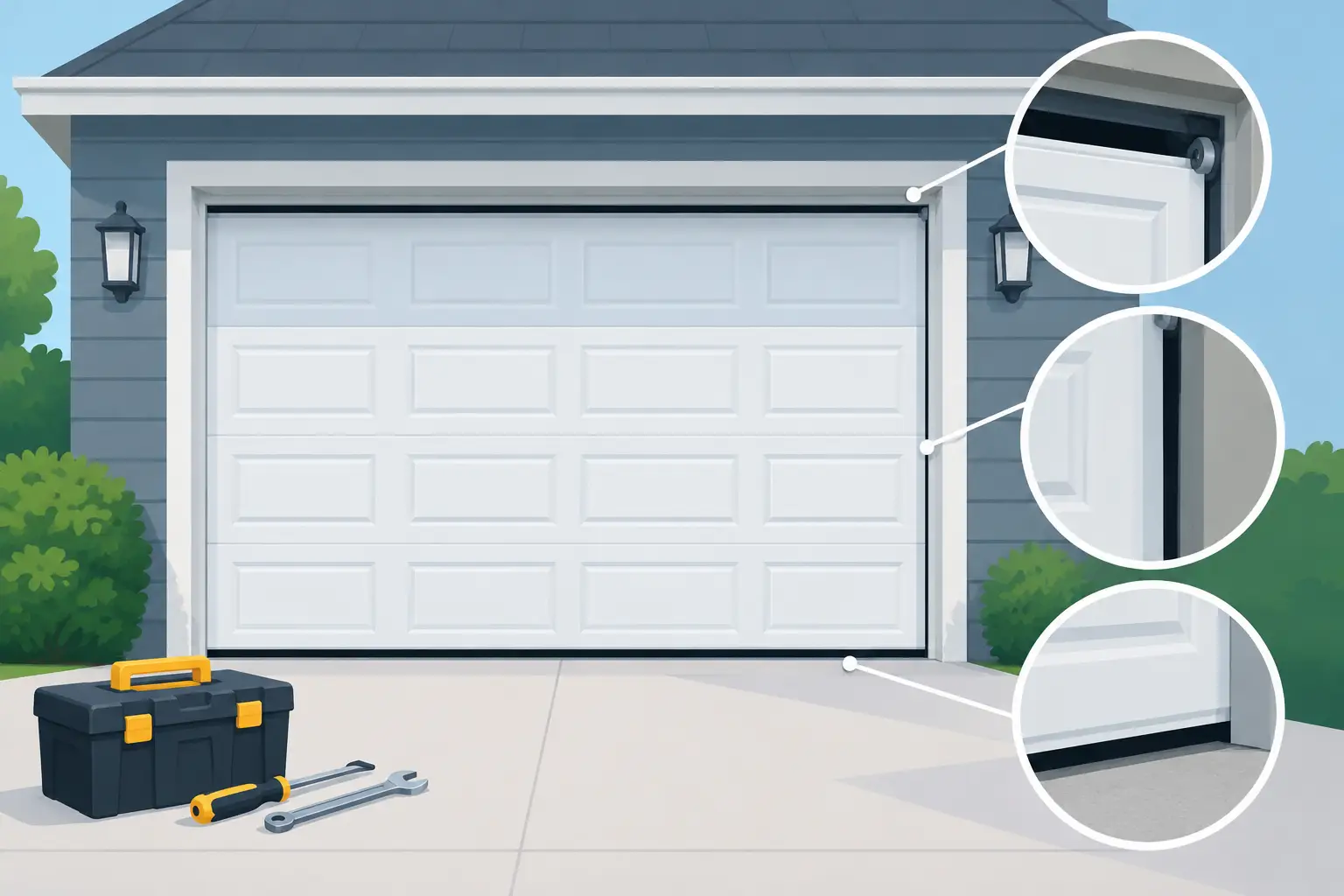
A quick visual inspection can help you describe the problem accurately. With the door closed, look for daylight at the bottom, sides, top, and between panels. Check whether the gap is consistent across the opening or wider on one side.
From a safe distance, look for cracked weatherstripping, loose track brackets, bent panels, damaged rollers, or objects in the track area. Test the photo-eye sensors by making sure their lenses are clean and unobstructed. If the opener has recently been adjusted, note whether the gap appeared afterward.
Avoid loosening track bolts, touching cables, or changing spring hardware. A garage door can weigh hundreds of pounds, and a small adjustment in the wrong place can cause the door to shift unexpectedly.
When to Call for Garage Door Repair
Schedule repair promptly if the gap is letting in water, pests, cold air, or visible daylight around a door that previously sealed correctly. Call right away if the door is off track, crooked, making grinding noises, has a broken spring or cable, or will not close securely.
For homeowners, a properly sealed door protects the garage, improves comfort in attached living spaces, and helps prevent avoidable damage. For property managers and commercial operators, it protects access points, equipment, inventory, and operational uptime.
Garage Door Mart Inc provides garage door inspections, weather seal replacement, track and roller repairs, spring service, opener adjustments, and emergency repair throughout the Chicago-land area. The right repair starts with finding the real cause of the gap rather than covering it with a temporary fix.
A garage door should close squarely, move smoothly, and seal against the opening without force. If yours does not, addressing the issue early can help protect your property and prevent a manageable repair from becoming an urgent breakdown.