A garage door that suddenly feels heavy, stops halfway, or slams shut is not just inconvenient. It may be telling you that the spring system is failing. Knowing how to test garage springs can help you recognize a problem early, but the test should always stay on the safe side of the door. Garage springs are under extreme tension, and attempting to adjust, remove, or wind them without professional training can cause severe injury.
For homeowners, property managers, and business operators in the Chicago area, the safest useful test is a door-balance check. It reveals whether the springs are supporting the door correctly without requiring you to touch the springs themselves.
What Garage Door Springs Actually Do
Garage door springs counterbalance the weight of the door. A standard residential door can weigh well over 100 pounds, while insulated, wood, oversized, and commercial doors may weigh much more. Springs make that weight manageable for you and for the opener.
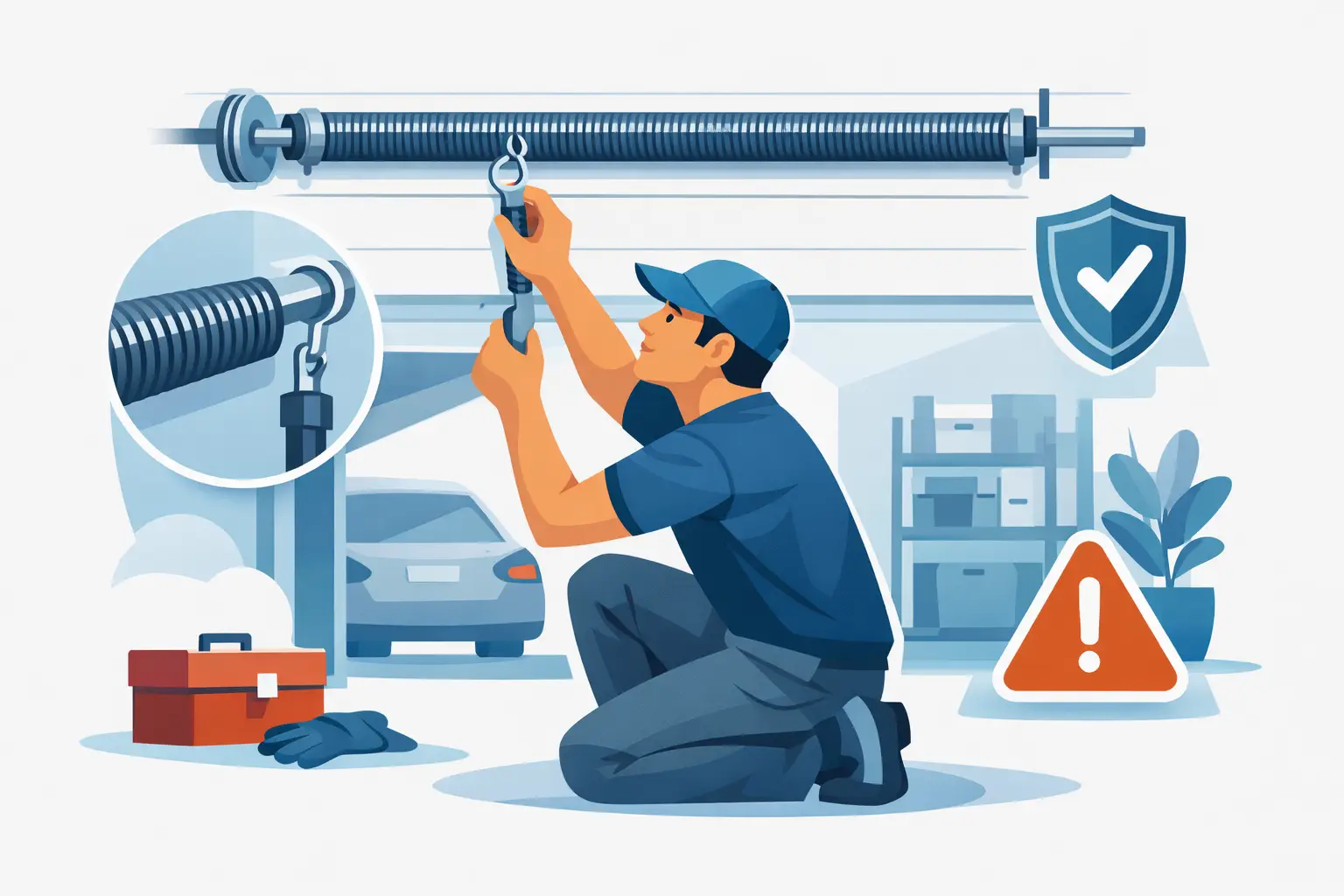
Most garage doors use one of two systems. Torsion springs sit on a metal shaft above the closed door. Extension springs run along the horizontal tracks on either side of the door. Torsion springs are common on newer and heavier doors, while extension springs are often found on older or lighter systems.
Both spring types do the same basic job. When they lose tension, fatigue, or break, the opener has to carry weight it was never designed to lift alone. That can damage the opener, cables, rollers, tracks, and door sections in addition to creating a safety risk.
Warning Signs Before You Test Garage Springs
Start with observation. You may not need to perform a balance check if the signs already point to a broken spring or another serious door problem.
A broken torsion spring often creates a loud bang in the garage. You may also see a visible gap of roughly two inches in the coil above the door. With extension springs, look for a hanging, stretched, or clearly separated spring along the track. Do not get close to inspect it.
Other warning signs include a door that opens only a few inches, an opener that hums but cannot lift the door, uneven movement, a door that feels unusually heavy, or a door that closes faster than normal. A door may also rise crookedly if one side of the spring or cable system is not working properly.
If you see a broken spring, a loose cable, bent track, damaged roller, or a door that has come off its track, stop using the opener. Do not try to force the door open or closed. These conditions call for professional service rather than testing.
How to Test Garage Springs With a Balance Check
The balance check is appropriate only when the door is closed, appears to be on its tracks, and has no visible broken spring, loose cable, or major damage. Choose a time when children, pets, vehicles, and foot traffic are clear of the garage door area.
Disconnect the opener safely
Close the garage door completely. Then unplug the opener or turn off power to the opener circuit if it is easily accessible. This prevents someone from activating the door while you are checking it.
Pull the emergency-release cord to disconnect the door from the opener trolley. The release handle is usually a red cord hanging from the opener rail. Keep your hands clear of the springs, cables, pulleys, and brackets throughout the process.
If the door is too heavy to move even slightly by hand, do not force it. That is a strong sign the spring system is not doing its job, and it is time to schedule a repair.
Lift the door by hand
Stand inside the garage and use the bottom handles or the lower edge of the door. Lift slowly and evenly. A properly balanced door should move with moderate, controlled effort. You should not have to strain, jerk the door upward, or rely on your back to get it moving.
Pay attention to how the door travels. It should move smoothly without scraping, shaking, binding, or pulling to one side. Rough movement can be caused by worn rollers, track issues, cable problems, or lack of lubrication, so it does not automatically mean the springs are bad. Still, it deserves attention before the issue becomes a larger repair.
Check the halfway position
Raise the door to about waist or chest height, then carefully let go while standing clear of its path. A balanced door should remain close to that position. It may drift slightly, but it should not race down, shoot up, or require you to hold it in place.
If the door drops quickly, the springs may be weak or have lost tension. If it rises on its own, the spring tension may be excessive. Either condition can make the door unsafe and place unnecessary strain on the opener.
Do not repeat this test by moving the door all the way up and down several times. One careful check is enough to identify whether the door needs service.
Reconnect the opener
Lower the door fully before reconnecting the opener. Re-engage the trolley according to the opener’s instructions, restore power, and run one normal cycle while watching from a safe distance. If the opener strains, reverses unexpectedly, or the door moves unevenly, stop using it until the issue is inspected.
What a Failed Garage Spring Can Look Like
Not every spring failure is dramatic. Springs wear down over thousands of open-and-close cycles. In the Chicago area, temperature swings can also affect metal components, lubrication, and door operation. A spring may gradually lose performance before it finally breaks.
The most common symptom is a heavy door. If you can barely lift the door after disconnecting the opener, the spring system is likely not providing enough counterbalance. Another common clue is an opener that works intermittently or stops after a few inches because its safety system detects excessive resistance.
On a two-spring torsion system, one spring can break while the other continues to provide partial support. The door may still move, but it will feel heavier than normal and may operate unevenly. Do not assume the system is safe just because the opener can still move the door.
For commercial properties, a weak spring can interrupt deliveries, restrict access to storage areas, and leave equipment or inventory exposed. A slow or unreliable overhead door should be addressed before it becomes an after-hours emergency.
Why You Should Not Adjust Springs Yourself
Online instructions may make spring adjustment look simple. It is not. Torsion springs are wound under significant force, and the cones, cables, drums, and brackets around them can cause serious injury if handled incorrectly. Extension springs also carry stored energy and can become dangerous if safety cables are missing or damaged.
The risk is not limited to the spring itself. An incorrect adjustment can cause the door to slam shut, lift unevenly, jump a track, or overload the opener. Using the wrong replacement spring can create the same problems even if the door appears to work at first.
A trained technician measures the door weight, checks the spring size and cycle rating, examines cables and drums, tests balance, and verifies the opener settings after the repair. This process is what restores safe operation rather than simply making the door move again.
When to Call for Garage Spring Repair
Call for professional service immediately if the door will not open, feels extremely heavy, has a visible broken spring, has loose cables, or is stuck in an open position. Do not park underneath an unstable door or leave it open if it cannot be secured safely.
You should also schedule service for a door that drifts at the halfway point, makes new grinding or popping sounds, opens unevenly, or causes the opener to strain. Catching a weak spring early can help prevent damage to the opener and other moving parts.
Garage Door Mart Inc provides garage door spring repair and emergency service throughout Chicagoland for residential and commercial doors. A technician can identify whether the issue is the spring system, cables, rollers, tracks, or opener and provide a clear path to safe operation.
A garage door should feel controlled, balanced, and predictable every time it moves. If yours does not, keep people clear, avoid DIY spring work, and arrange service before a small imbalance turns into a stopped door or a safety hazard.