A garage door that starts down, then reverses at the last second is not just frustrating when you are trying to leave for work. It can leave your home, vehicles, inventory, or equipment exposed. If you are asking, “why wont garage door close,” the answer is often a safety system doing its job – but a worn part, blocked track, or opener problem can also be responsible.
The right response depends on what the door does. Does it not move at all? Does it close with the wall button but not the remote? Does it reach the floor and immediately open again? Those details help narrow the problem quickly. Start with safe, simple checks. If the door is crooked, making a grinding sound, or has a loose cable, stop operating it and arrange professional service.
Why Won’t My Garage Door Close? Start With the Safety Sensors
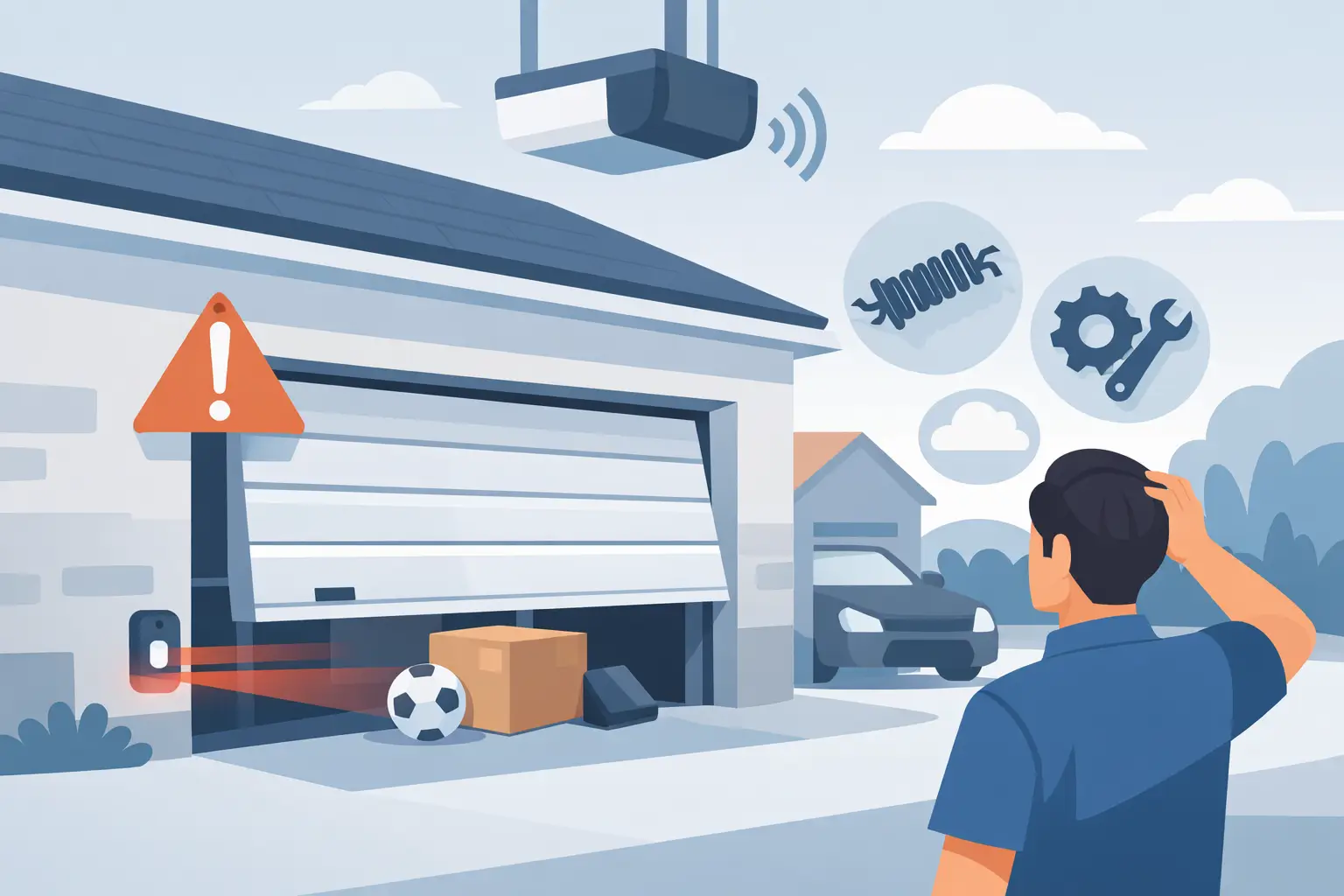
Most modern garage doors use photo-eye safety sensors near the bottom of each track. One sensor sends an invisible beam to the other. If that beam is blocked or the sensors are out of alignment, the opener assumes something is in the doorway and will not close the door normally.
Look for boxes, tools, leaves, snow, or debris between the sensors. In Chicago-area winters, slush and road salt can accumulate around the bottom of the tracks and sensor brackets. Wipe each sensor lens gently with a clean, soft cloth. Then check the indicator lights. Exact light colors vary by manufacturer, but a blinking or unlit sensor often points to an alignment or wiring issue.
The sensors should face one another at the same height. A bumped bracket can shift a sensor just enough to interrupt the beam. Carefully straighten the bracket if it is visibly loose, but do not force damaged wiring or take apart electrical components. If the lights will not stay solid after clearing and aligning the sensors, a technician should inspect the wiring, brackets, and opener connection.
A useful clue: if the wall control closes the door only while you hold the button down, but the remote will not close it, the safety sensors are the likely issue. Holding the wall button may override the photo-eye system on many openers. It is not a safe long-term workaround. Keep the doorway clear and have the problem repaired.
Check for Something Stopping the Door
A garage door can reverse because it detects physical resistance, even when the sensors are clear. Walk to the outside and inspect the full path of the door. Look for a rake, bicycle, trash bin, packed snow, or a small object near the bottom seal. A warped bottom weatherstrip can also catch on uneven concrete.
Next, look at the vertical tracks on both sides. Dirt buildup, ice, a bent track, or a loose mounting bracket can prevent the rollers from moving smoothly. Do not try to bend a track back with a hammer. Tracks must stay properly aligned, and an improvised adjustment can cause the door to bind, come off track, or damage rollers.
Cold weather adds another variable. A bottom seal may freeze to the driveway after a thaw and overnight freeze. Avoid repeatedly pressing the opener. The motor can strain, gears can wear, and a cable or spring problem may get worse. If the seal is lightly frozen, carefully clear ice around it without pulling hard on the door. If the door remains stuck, call for service.
A Door That Closes Then Reopens May Need a Limit Adjustment
If the garage door travels all the way down, touches the floor, and then reverses, the opener’s close-limit setting may be incorrect. The opener may believe it has met an obstruction before the door is fully seated. This is common after opener adjustments, temperature changes, or gradual wear in the door system.
Some opener models allow a close-limit adjustment using marked screws, dials, or digital controls. The correct procedure differs by manufacturer. A small adjustment may solve the issue, but random changes can make the door hit the floor too hard or leave a gap underneath. That can damage the door, affect security, and shorten the life of the opener.
A professional can test the door’s balance, travel limits, force settings, and safety reversal system together. That matters because a limit problem sometimes masks an underlying issue, such as binding rollers or a door that is too heavy for the opener.
Make Sure the Door Is Not Locked or Disconnected
Before assuming the opener has failed, check whether a manual slide lock or interior lock has been engaged. This is more common on older doors or doors with a handle and locking bars. If the lock is set, the opener may hum, strain, or stop because it cannot move the door.
Also check the emergency release cord. If someone pulled the red release handle, the door may be disconnected from the opener trolley. In that case, the opener motor can run while the door stays in place. Reconnecting the trolley is usually straightforward when the door is fully closed and the system is undamaged, but do not attempt it if the door is open, crooked, or difficult to move.
For commercial doors, a chain hoist, manual lock, or operator disconnect may be involved. Facilities managers should avoid forcing a door that has been manually secured or disconnected. A damaged commercial door can interrupt deliveries, create a security issue, and put employees at risk.
Remote and Wall Control Problems Can Look Like a Door Problem
If the wall button closes the door but the remote does not, replace the remote battery first. Make sure you are within normal operating range and that the opener antenna is not damaged or tucked behind metal. Interference from nearby electronics can occasionally affect remote performance, especially in dense neighborhoods or commercial settings with multiple devices.
If neither the wall control nor the remote works, confirm that the opener has power. Check whether the outlet is active, whether a GFCI outlet has tripped, and whether a breaker has switched off. Do not use an extension cord as a permanent opener power solution. If power is available but the opener only hums, clicks, or shows error lights, the issue could be the motor, logic board, capacitor, or internal gear assembly.
Modern openers may also enter lock or vacation mode, which disables remote controls. Check the wall control display or lock button before scheduling a larger repair. Still, if the opener is behaving inconsistently, professional diagnosis is the safer choice than repeatedly cycling it.
Broken Springs, Cables, and Off-Track Doors Need Immediate Attention
Garage door springs carry most of the door’s weight. When a torsion spring breaks, you may hear a loud bang from the garage. The door may lift only a few inches, feel extremely heavy, or refuse to move. Extension springs can also fail or stretch unevenly.
Do not attempt to replace or adjust springs yourself. They are under extreme tension and can cause serious injury or property damage when handled incorrectly. The same applies to cables. A loose, frayed, or unspooled cable is a clear sign to stop using the opener. Do not pull the emergency release when a cable is loose or the door is partially open, because the door may fall or shift suddenly.
If one side of the door is higher than the other, rollers have come out of the track, or the door is hanging at an angle, keep people and vehicles away from the opening. An off-track door can become unstable quickly. This is a repair situation, not a reset-and-try-again situation.
When to Call for Garage Door Repair
Call for service right away if the door is stuck open, will not secure, has a broken spring, shows a loose cable, or is off track. The same applies when the opener strains, the door slams, or you see damaged panels or bent hardware. These conditions affect more than convenience. They can compromise security and create a real safety risk.
For a door that simply reverses because of dirty or misaligned sensors, a quick cleaning may restore operation. But if the issue returns, do not keep overriding the safety system. A technician can identify whether the cause is sensor alignment, wiring damage, track resistance, worn rollers, or an opener adjustment.
Garage Door Mart Inc provides residential and commercial garage door repair throughout the Chicago-land area, including urgent service when a door will not close or your property cannot be secured. A trained technician can inspect the complete system, explain the repair clearly, and help restore safe, reliable operation.
Tonight, do not leave a door partially open because it “usually works eventually.” Clear the doorway, avoid forcing the opener, and get help before a small closing problem becomes a security issue or a larger repair.