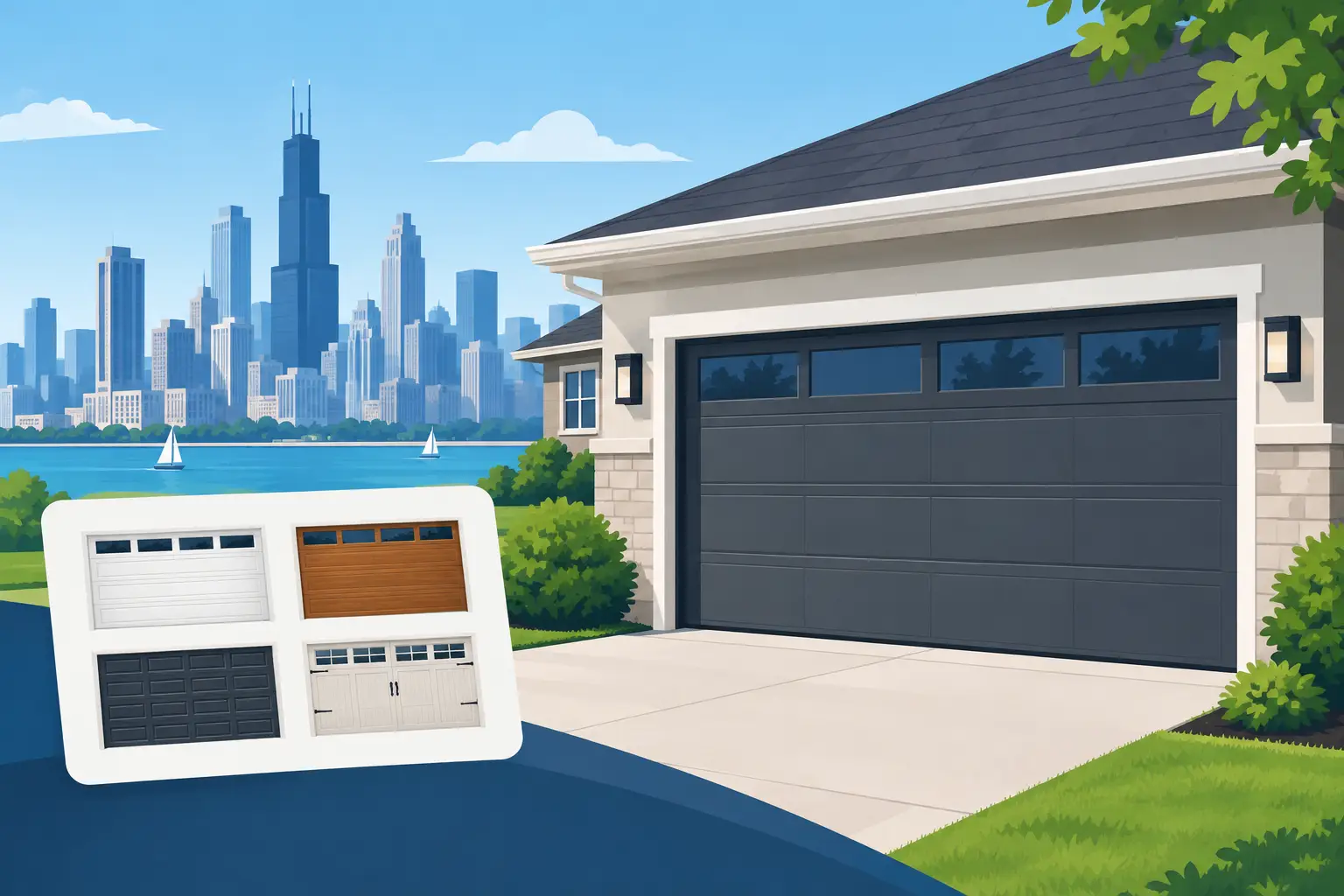
A new garage door has to do more than look good from the curb. It needs to open reliably during a Chicago winter, protect the garage from wind and moisture, operate safely every day, and fit the way your household actually uses the space. This garage door buying guide focuses on the decisions that affect performance, cost, and long-term value.
For homeowners, a garage door can represent a large portion of the front exterior. For property managers and commercial operators, it can also affect security, tenant access, deliveries, and daily operations. The right choice is not always the most expensive door. It is the door built for your building, your climate, and your expected level of use.
Start With How the Garage Is Used
Before comparing colors or window designs, consider what is behind the door. An attached garage that shares walls with living space has different needs than a detached garage used for storage. A heated workshop, a garage gym, or a space with plumbing benefits from better insulation and weather sealing. If the garage is mostly used for parking and has no heating or cooling, a simpler door may be the better value.
Usage also matters. A door that opens and closes several times each day needs dependable hardware, correctly matched springs, and an opener designed for the workload. A rental property or multi-unit building may need a door selected for heavier use and easier serviceability. Commercial doors require even more planning, especially where loading schedules, security, and vehicle clearance are critical.
Measure the opening, headroom, side room, and backroom before choosing a model. Standard doors fit many residential garages, but low headroom, ductwork, storage racks, or unusual framing can affect the track system and opener options. A professional site evaluation prevents costly surprises on installation day.
Garage Door Buying Guide: Choose the Right Material
Material drives the door’s appearance, maintenance needs, durability, and price. There is no single best material for every Chicago-area property.
Steel: The Practical Choice for Most Homes
Steel is the most common residential garage door material because it is durable, widely available, and available in many styles. It can be embossed to resemble wood, finished in a range of colors, and ordered with or without insulation. A quality steel door is a strong fit for homeowners who want reliable performance without the maintenance demands of real wood.
Steel thickness and construction vary. Entry-level doors may use thinner panels and minimal insulation, while higher-grade doors use stronger steel skins, reinforced sections, and insulated cores. If the door faces frequent wind, harsh weather, or daily use, the upgrade can be worthwhile.
Wood and Faux Wood: Strong Curb Appeal, Different Upkeep
Real wood delivers a traditional, high-end appearance that suits many older homes and custom exteriors. It also requires regular finishing, inspection, and protection from moisture. In the Chicago area, snow, rain, humidity, and temperature swings can make wood maintenance a real commitment.
Faux wood steel doors provide much of the visual warmth of wood with less ongoing care. They are often a practical compromise for homeowners who want a carriage-house look but do not want to refinish the door regularly.
Aluminum and Glass: Best for Modern Designs
Aluminum and glass doors create a clean, contemporary look and bring natural light into the garage. They can be an excellent choice for modern homes, studios, and showrooms. The trade-off is that glass affects privacy and may offer less insulation than a well-built insulated steel door, depending on the glass and frame selected.
Fiberglass and Composite: Consider the Specific Product
Fiberglass and composite doors can resist moisture and replicate wood grain. Their quality varies by manufacturer and construction. Rather than choosing by material name alone, compare insulation, panel strength, warranty coverage, finish durability, and replacement-part availability.
Insulation Matters More Than Many Buyers Expect
Garage door insulation is typically measured by R-value. A higher R-value generally means better resistance to heat transfer, but it is not the only factor. Air sealing around the door, the condition of the garage walls, and whether the space is heated all affect real-world comfort.
For an attached garage, an insulated door can reduce cold drafts near adjacent rooms and help moderate temperature swings. It can also make the door quieter and more rigid. For a detached garage used only for vehicle storage, a lower-insulation door may be enough. The goal is to avoid paying for performance you will not use while still protecting the building from severe weather.
Pay attention to the bottom seal, perimeter weatherstripping, and panel construction. A well-insulated door with poor seals still allows cold air, water, and debris to enter. These smaller components have an outsized effect on winter performance.
Match the Style to the Home, Not Just the Trend
A garage door should support the home’s architecture. Traditional raised-panel doors work well on many suburban homes. Carriage-house doors add depth and character to colonial, craftsman, and farmhouse-style exteriors. Flush-panel doors and full-view glass designs fit contemporary properties.
Color and windows deserve careful thought. A color that matches the trim can make the door feel integrated, while a contrasting color can make it a focal point. Windows add daylight and visual interest, but they should be placed for privacy and security. Frosted or obscure glass is useful when the garage faces a busy sidewalk, neighbor, or alley.
Do not choose windows strictly for appearance. Glass should be appropriate for local weather exposure, and the door should maintain enough structural support for the size and configuration of the window sections.
Do Not Treat Hardware and Springs as Afterthoughts
The visible panels get the attention, but springs, rollers, tracks, hinges, and cables do the hard work. These parts determine how smoothly and safely the door operates. A new door installed with worn or undersized components can become noisy, unreliable, or unsafe sooner than expected.
Torsion springs are mounted above the opening and are common on modern residential systems. They are designed to counterbalance the weight of the door. Spring sizing must match the door’s weight, height, and track setup. This is not a place for guesswork or do-it-yourself adjustment. Garage door springs store significant force and should be installed or replaced by trained technicians.
Ask about roller quality as well. Nylon rollers generally operate more quietly than basic steel rollers, while heavy-use or commercial applications may require specialized hardware. Reinforcement struts, especially on wider doors, help maintain panel integrity over time.
Select an Opener for Convenience and Security
The opener should be selected after the door, not before it. Door weight, ceiling height, available space, and daily usage all influence the right model.
Belt-drive openers are a popular option for attached garages because they are quiet. Chain-drive models are durable and often cost less, making them a practical choice where noise is not a major concern. Wall-mount openers can free up ceiling space and work well in garages with high ceilings or overhead storage, provided the garage layout supports the installation.
Look for safety sensors, battery backup, secure remote access, and manual release access. Battery backup is particularly useful during power outages, allowing the door to operate when you need to get a vehicle out. Smart controls can provide alerts and remote operation, but they should be used with strong account security and kept updated.
Plan for Wind, Weather, and Maintenance
Chicago-area weather puts garage doors through repeated cycles of freezing temperatures, salt, wind, moisture, and summer heat. The door should be properly sealed, balanced, and installed with hardware suited to the opening and use level. A door that binds in its tracks or has poor weather protection will not deliver the value you expected, no matter how attractive the panels look.
After installation, routine care keeps the system dependable. Homeowners can visually inspect the door, keep the tracks clear, test the photo-eye sensors, and watch for new grinding, squeaking, or uneven movement. Springs, cables, and tracks should be handled by a professional when adjustment or repair is needed.
Before buying, make sure you can answer these practical questions:
- Is the garage attached, heated, used as a workspace, or mainly used for parking?
- Does the door material fit the maintenance level you are willing to maintain?
- Is the insulation level appropriate for the garage and the Chicago climate?
- Are the springs, rollers, track system, and opener matched to the door?
- Does the installation include weather sealing, safety testing, and a clear warranty?
A garage door is a moving exterior wall, not just a curb-appeal upgrade. Choose one that fits the property, then have it installed and tested by professionals who can verify safe operation from the first cycle. When questions come up about sizing, insulation, opener compatibility, or worn hardware, Garage Door Mart Inc can help Chicago-area property owners make a clear, practical decision before the old door becomes an urgent problem.