A commercial door that hesitates, slams shut, or comes off its track is more than an inconvenience. It can stop deliveries, expose inventory, damage equipment, and put employees or customers in harm’s way. This commercial door safety guide gives Chicago-area business owners, facility managers, and property managers practical steps for keeping overhead doors, rolling doors, and loading-area doors safe and dependable.
Commercial doors handle heavier loads and more operating cycles than most residential systems. A small issue can become a major operational problem quickly, especially during a busy delivery window or a Chicago winter cold snap. The goal is not to have your staff repair every problem. The goal is to recognize risks early, operate the door correctly, and know when professional service is needed.
Start With Safe Daily Door Operation
Every employee who opens or closes a commercial door should understand the basic operating rules. That includes warehouse staff, delivery teams, maintenance personnel, and managers who may use the door after normal business hours.
Keep the opening clear before operating the door. Pallets, forklifts, carts, vehicles, ladders, and loose debris can block the door’s path or interfere with safety sensors. Never assume a doorway is clear because it was clear an hour earlier. In active loading areas, conditions change constantly.
Employees should also avoid walking under a moving overhead door. A properly working door should not fall, but worn cables, damaged tracks, failed hardware, or an improperly adjusted system can create real danger. Wait until the door has fully stopped in the open position before walking or driving beneath it.
Do not allow staff to pull on a moving door, push it upward by hand, or try to force it closed when it binds. Those actions can damage the opener, bend tracks, pull rollers out of alignment, or put someone near high-tension components. If the door does not move smoothly, take it out of normal use until it can be inspected.
Know Which Problems Require Immediate Action
Some door issues can wait for a scheduled service visit. Others require the area to be secured right away. If a commercial door is crooked, hanging from one side, off track, or unable to close securely, keep employees away from it and limit access to the opening.
A loud bang during operation may indicate a broken spring, cable issue, or hardware failure. A door that suddenly feels extremely heavy, drops quickly, or will not stay open should not be operated manually. Commercial springs and cables are under significant tension. Attempting a do-it-yourself repair can cause severe injury and make the repair more costly.
Treat these warning signs as urgent:
- The door is off track, leaning, or visibly uneven.
- Cables are loose, frayed, broken, or wrapped incorrectly around the drum.
- The door reverses unexpectedly, will not close, or closes too fast.
- Tracks are bent, rollers are damaged, or hinges are pulling away from door sections.
- The opener makes grinding sounds, strains, or runs without moving the door.
- A vehicle, forklift, or delivery truck has struck the door, track, frame, or bottom section.
If the door protects a loading dock, stockroom, parking area, or secured building entrance, a failure can also create a security concern. Use temporary access controls where appropriate, but do not improvise a repair with rope, clamps, or makeshift supports. A qualified commercial door technician can identify the actual cause and restore safe operation.
Inspect Doors Without Taking Risks
A regular visual check helps catch wear before the system fails during a critical shift. For a busy warehouse or service facility, a quick inspection at the start of the day is practical. Lower-cycle doors may only need a weekly check, but the right schedule depends on usage, door size, and operating conditions.
Look at the door from a safe distance while it opens and closes. It should move evenly, without shaking, scraping, jerking, or excessive noise. Check the tracks for dents, loose fasteners, dirt buildup, and obstructions. Inspect panels for cracks or impact damage, particularly near the bottom of the door where forklifts and carts are most likely to make contact.
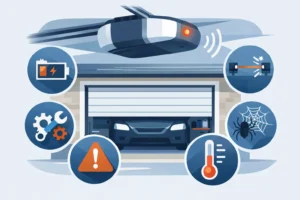
For automatic doors, test the photo eyes or other monitored safety devices according to the manufacturer’s instructions. The sensors must remain aligned, clean, and free of boxes, snow, dust, or cobwebs. If a safety device does not respond correctly, stop using automatic operation until it has been serviced.
Do not touch torsion springs, extension springs, lift cables, drums, or bottom brackets during an inspection. These are not routine maintenance parts. The safest approach is to observe and report any change in appearance, movement, or sound.
Keep a Simple Service Record
A door service log creates accountability, particularly at multi-unit properties, warehouses, and facilities with several bays. Record the date, the door location, the issue observed, and whether the door was removed from service. Note vehicle strikes and repeated sensor problems even if the door resumes operation.
This record helps a technician diagnose recurring trouble and helps managers decide when repair is no longer the most cost-effective option. It also shows that the property has a consistent safety process, which matters when multiple teams share the same loading area.
Loading Dock Safety Depends on the Whole Opening
The door is only one part of a safe loading dock. Drivers, dock staff, forklifts, levelers, restraints, and pedestrian traffic all need to work together. A door in good condition can still become dangerous when the area is poorly managed.
Mark pedestrian routes clearly and keep people out of forklift travel lanes. Before a truck backs into position, confirm that staff are clear of the dock edge and door opening. Do not raise the door until the truck is properly positioned and the dock process allows it.
For doors used near dock levelers or vehicle restraints, employees should follow your site’s loading procedure every time. The exact sequence depends on the equipment in use, but rushing is a common source of preventable injuries. A door should never be used as a signal that a truck is secured or that a dock is ready for forklift traffic.
Good lighting also matters. Dark loading bays make it harder to see an uneven door, damaged threshold, hanging cable, or obstructed sensor. Replace failed lights promptly and make sure exterior lighting supports early-morning, evening, and overnight deliveries.
Plan for Chicago Weather and Seasonal Wear
Chicago-area weather can be hard on commercial doors. Freezing temperatures can stiffen lubricants, snow and ice can block the bottom seal, and wind can expose weak panels or loose hardware. Road salt and moisture can speed up corrosion around tracks, hinges, cables, and exterior fasteners.
During winter, clear snow, ice, and packed debris from the door’s path before attempting to open it. Do not force a frozen door with the opener. That can strip gears, damage the operator, or tear the bottom seal away from the door. If a door is frozen repeatedly, it may need adjustment, weather sealing service, or an inspection of drainage around the opening.
After high winds or severe storms, inspect exterior doors for dents, shifted tracks, loose panels, and damage around the frame. Wind-rated doors and properly maintained hardware are especially important for larger openings, but no door should be assumed safe after an impact or storm event without a visual check.
Schedule Professional Preventive Maintenance
Daily awareness prevents accidents, but professional maintenance protects the entire door system. A technician can inspect spring balance, cable condition, rollers, bearings, drums, track alignment, fasteners, operator settings, safety devices, and wear that is not obvious during normal use.
Maintenance frequency depends on door size and cycle count. A retail backroom door used a few times each day has different needs than a warehouse door opening dozens of times per shift. High-cycle doors, heavy insulated sectional doors, rolling steel doors, and doors exposed to weather generally need closer attention.
Preventive service also gives businesses a chance to plan repairs before a breakdown disrupts deliveries or leaves the building unsecured. Replacing worn rollers or correcting alignment early is usually less disruptive than responding to an off-track door during a busy workday.
Give Employees Clear Reporting Instructions
Your team should know exactly what to do when something seems wrong. The message should be simple: stop using the door, keep people clear, notify the designated manager, and arrange service. Employees should not be expected to diagnose springs, reset limits, or work around electrical and moving parts.
For facilities that operate after hours, make sure supervisors know who can authorize emergency service and where to find the door’s location details. A clear report should include which bay or entrance is affected, whether the door is open or closed, whether anyone was injured, and whether the opening is secure.
A dependable commercial door supports safe work, predictable deliveries, and building security. When a door starts showing warning signs, acting early protects your people and keeps a small mechanical issue from turning into a shutdown. Garage Door Mart Inc provides commercial door repair, maintenance, and emergency service for businesses throughout the Chicago-land area when safe operation cannot wait.