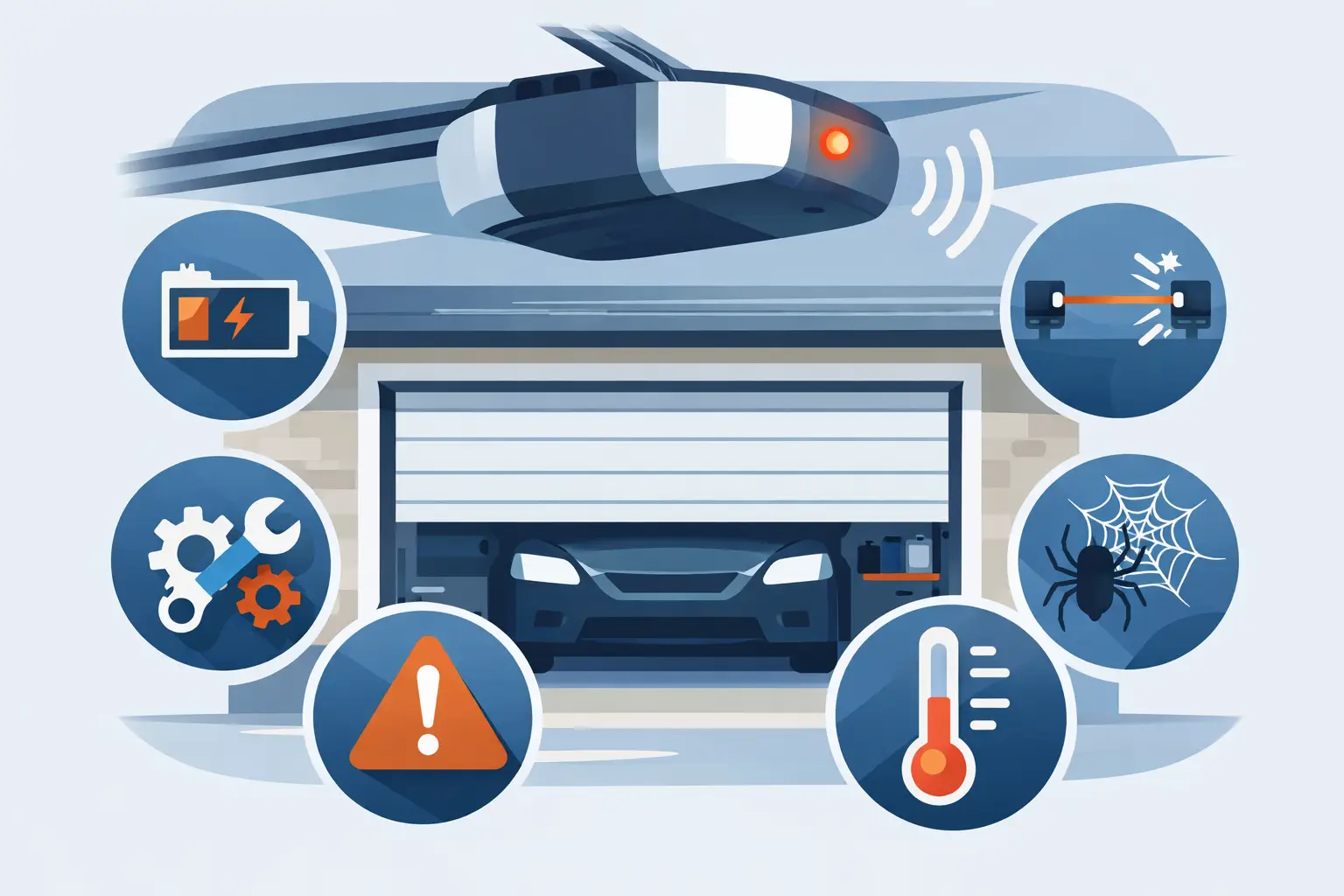
A garage door opener that starts beeping can turn a normal morning into a real concern, especially when the door is the main way in and out of your home. When homeowners ask, “why is garage opener beeping?” the answer is often a battery warning, but it can also point to a safety issue, an interrupted power supply, or a door system that needs service.
The sound is a warning, not something to ignore or silence permanently. Start by identifying where it comes from: the opener unit on the ceiling, a wall control, a keypad, or another device in the garage. That one detail can narrow the problem quickly.
Why Is Your Garage Opener Beeping?
Most modern openers are designed to make an audible alert when they detect a condition that needs attention. The exact beep pattern varies by manufacturer and model, so a single chirp means something different than rapid, repeated beeping. Check the opener’s display, diagnostic light, or owner’s manual if available, but do not take apart the motor unit to investigate.
1. The backup battery is low or needs replacement
A low backup battery is one of the most common reasons an opener beeps. Many newer garage door openers have battery backup systems that allow the door to operate during a power outage. The battery is useful during Chicago-area storms and utility interruptions, but it does not last forever.
The opener may chirp every 30 seconds or at another regular interval when the battery is weak. A flashing LED or battery symbol on the motor housing may appear at the same time. In many cases, replacing the correct manufacturer-approved backup battery solves the issue.
Do not assume a new battery is the whole answer if the warning continues. A damaged battery connection, charging problem, or failing opener circuit can produce similar alerts. If the unit is older or the battery will not hold a charge, professional testing is the safer next step.
2. The opener is operating on battery power
Your opener may beep during an active power outage because it has switched to battery operation. This is usually normal. The alert lets everyone nearby know that the system is running from its reserve power and that battery capacity is limited.
Check whether lights and outlets in the garage are working. If the outage affects only the opener outlet, inspect the home’s breaker or GFCI outlet. Avoid running extension cords across the garage or using an unapproved power source to keep the opener running. The door should be used only as needed until normal power is restored.
If power has returned but the beeping does not stop, the opener may not be charging its backup battery correctly. That calls for service rather than repeated resets.
3. A safety sensor or door-travel problem is preventing normal operation
Photo-eye sensors protect people, pets, vehicles, and stored property from a closing garage door. If the sensors are blocked, dirty, misaligned, or have damaged wiring, the opener may refuse to close the door properly. Some models beep along with flashing lights when this happens.
Look at the sensors near the bottom of each garage door track. Remove leaves, cobwebs, road salt residue, or objects blocking the lens. Make sure both sensors are firmly mounted and facing each other. A steady indicator light commonly means the sensor is aligned, while a blinking light often signals a problem, though colors and meanings vary by brand.
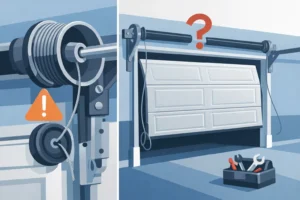
A beeping opener can also be reacting to resistance as the door moves. A bent track, broken spring, worn roller, or door that has come off track can make the opener work too hard. Do not keep pressing the remote if the door reverses, shudders, hangs unevenly, or makes grinding noises. The opener is not designed to compensate for a damaged or excessively heavy door.
4. A disconnected or failing wall control is sending an alert
The wall-mounted control panel can cause beeping, especially when its lock function, battery, wiring, or internal electronics have an issue. Some smart control panels also alert users to a lost connection, an error condition, or an open door that has remained open for a set period.
First, check whether the door works from the wall control and from the remote. If one works and the other does not, the problem may be limited to the control or remote rather than the opener itself. A loose low-voltage wire at the wall button can create intermittent behavior, but these wires should be inspected carefully instead of pulled or cut.
For property managers and commercial operators, this matters even more. A warning from a wall station may be connected to a monitored access system, a timer-to-close feature, or a control issue that affects security and daily operations.
5. The remote or keypad battery is low
Not every beep in a garage comes from the ceiling-mounted motor. A wireless keypad or remote may chirp when its battery is failing, when buttons are stuck, or when it has lost its programming. This is easy to overlook because the sound may echo around the garage.
Check the keypad first if it is mounted near the entry door or exterior garage frame. Replace its battery with the specified type and check for moisture, cracked buttons, or signs of corrosion. A keypad exposed to Illinois winter weather can develop problems long before the opener itself fails.
If a remote button is stuck inside a car, it can repeatedly send commands and create confusing door behavior. Remove the remote battery temporarily if you suspect this issue. Do not leave a vehicle remote where children can accidentally operate the door.
6. The beep may not be from the garage opener at all
Garages collect devices that make similar warning sounds: smoke alarms, carbon monoxide detectors, security equipment, battery chargers, sump pump alarms, and smart-home hubs. A low-battery chirp from one of these devices is often mistaken for an opener problem.
Carbon monoxide alarms deserve immediate attention. If a CO alarm is sounding an emergency pattern or anyone feels dizzy, nauseated, confused, or unusually tired, leave the area, get fresh air, and contact emergency services. Never run a vehicle in a closed or partially closed garage, even for a short time.
Before scheduling an opener repair, stand beneath the motor unit and listen closely. Then check nearby alarms and devices. Finding the exact source prevents unnecessary work and helps you respond to the right risk.
Safe Checks Before You Call for Garage Opener Repair
You can safely check for a power outage, verify that the opener is plugged into its proper outlet, clear the photo-eye lenses, and look for visible obstructions in the door’s path. You can also note the beep frequency, indicator-light color, and whether the door opens, closes, reverses, or fails to move.
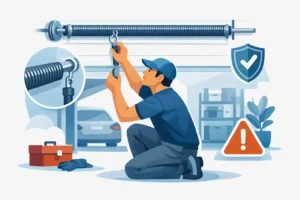
Do not attempt to adjust torsion springs, cables, bottom brackets, or opener force settings to stop the noise. Garage door springs and cables are under high tension. A door that feels heavy, will not stay open, or moves unevenly may have a spring or cable failure that requires trained service.
It is also best to avoid manually disengaging the opener when the door is open unless you understand the condition of the door. If a spring is broken, the door can fall quickly once disconnected.
When the Beeping Requires Prompt Service
Schedule professional repair promptly when beeping occurs with a door that will not close, reverses unexpectedly, hangs crooked, moves only a few inches, or has visible damage to its tracks, rollers, cables, or springs. Call for urgent service if the garage door is stuck open and leaving your home, equipment, inventory, or vehicles exposed.
For commercial properties, a noisy or unreliable opener can interrupt deliveries, restrict employee access, and create a security issue. A technician can determine whether the problem is the operator, safety devices, electrical connection, or the door’s mechanical system before a minor warning becomes downtime.
Garage Door Mart Inc provides garage door and opener service throughout the Chicago-land area, including urgent issues that cannot wait for regular business hours. A clear description of the beep pattern and door behavior helps the technician arrive prepared to diagnose the problem efficiently.
A garage opener should be quiet enough to fade into the background. When it starts beeping, treat the sound as useful information: protect the door’s path, identify the source, and get qualified help before a simple alert becomes a safety or access problem.