A garage door that suddenly feels impossibly heavy, stops halfway, or makes a sharp bang from inside the garage often has one cause: failed torsion springs. These tightly wound components do the heavy lifting every time your door opens and closes. When one breaks, the door may still look normal from the outside, but it is no longer operating safely or correctly.
For homeowners, property managers, and commercial operators across the Chicago area, a broken spring is not a minor inconvenience. It can trap vehicles, interrupt deliveries, leave a building unsecured, and create a real injury risk. Knowing what torsion springs do, how to spot trouble early, and when to call for service can prevent a small mechanical issue from becoming a costly emergency.
What Torsion Springs Do for Your Garage Door
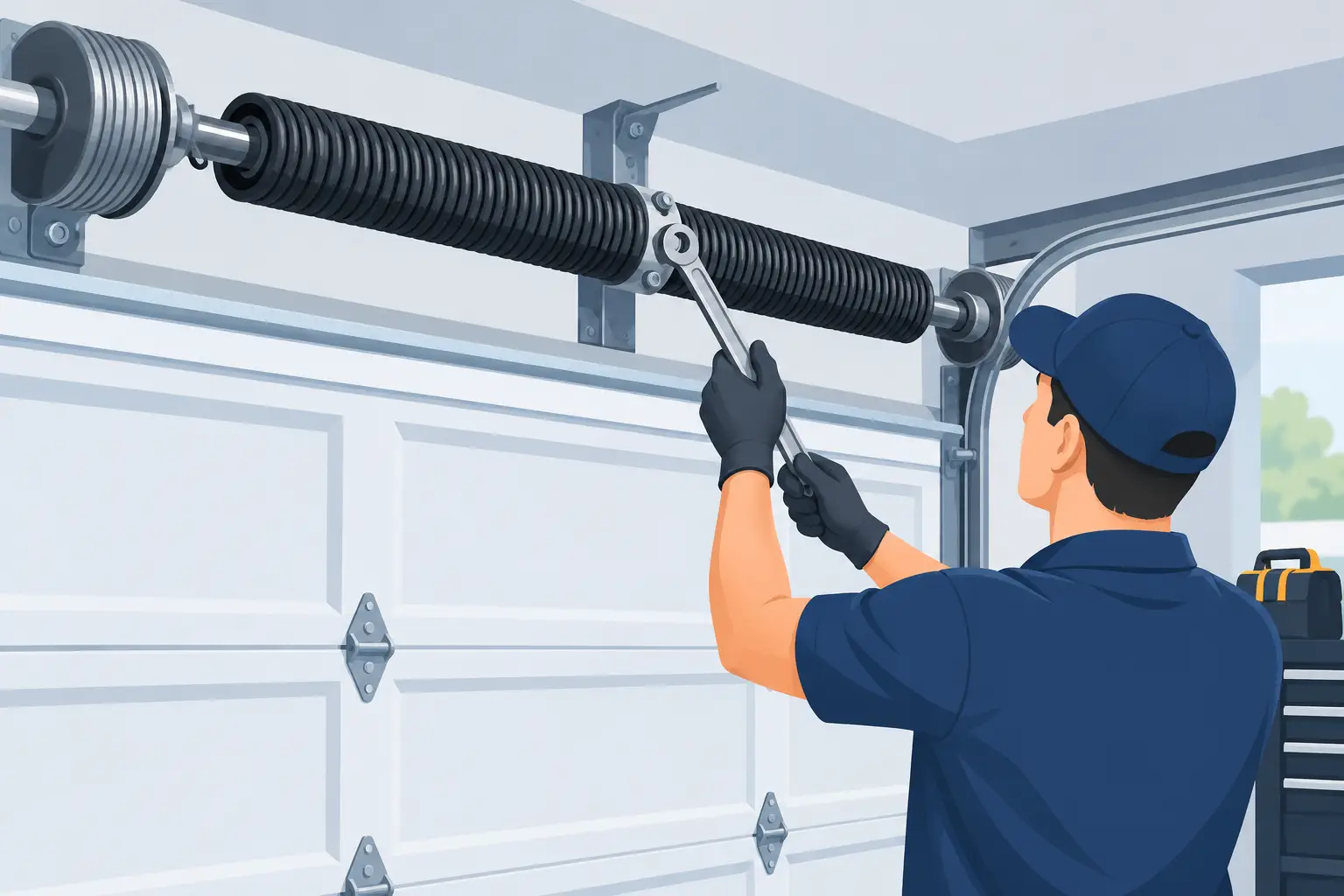
Torsion springs are mounted on a metal shaft above the garage door opening. As the door closes, cables and drums wind the springs under tension. When the door opens, that stored energy helps lift its weight. The opener guides the movement, but it is not designed to lift a full garage door without properly functioning springs.
This matters because most garage doors weigh far more than they appear to. A typical insulated residential door can weigh 150 to 300 pounds, while wood, oversized, and commercial doors may weigh considerably more. Correctly sized torsion springs counterbalance that weight so the door can move smoothly and remain stable at different heights.
A properly balanced door should feel manageable when disconnected from the opener by a trained technician. It should not slam down, race upward, drag on one side, or require the opener to strain. If it does, the springs, cables, drums, tracks, or another part of the counterbalance system may need attention.
Signs Your Torsion Springs May Be Failing
A broken spring often announces itself with a loud pop or bang. That sound can resemble something hitting the garage door or a heavy object falling inside the garage. It happens when the metal coil releases its stored tension.
Not every spring problem is that obvious. Springs can also weaken gradually as they approach the end of their service life. Watch for a door that opens slowly, stops before reaching the top, reverses unexpectedly, or looks uneven while moving. You may also notice a visible gap in the spring coil above the door. A broken torsion spring commonly separates into two distinct sections.
Other warning signs include a garage door opener that hums without lifting the door, frayed lift cables, a door that feels unusually heavy, or a door that will not stay open. Do not assume the opener is the problem just because the remote no longer raises the door. Continuing to run an opener against a failed spring can damage the motor, gears, rail, or bracket.
For commercial properties, warning signs can include slower cycle times, loud operation, inconsistent closing, and doors that interrupt normal loading activity. A commercial door is a critical access and security point. Waiting for a complete failure can mean downtime at the worst possible moment.
Why Torsion Spring Repair Is Not a DIY Job
Torsion springs are under extreme tension. The winding bars, set screws, shaft, cables, and drums all work together under force. A mistake during adjustment or removal can cause a bar to slip, a cable to release, or the door to fall suddenly. Serious hand, face, and shoulder injuries are common in improper spring repair attempts.
The risk is not limited to the spring itself. Garage doors become unstable when their counterbalance system is disconnected or misadjusted. A heavy door can come down quickly, especially if cables have slipped from their drums. Children, pets, vehicles, and anyone standing nearby can be at risk.
There is also the issue of correct spring sizing. A spring must match the door’s height, weight, track configuration, drum type, and intended cycle use. Installing the wrong spring may allow the door to move, but it can leave the system unbalanced. That increases wear on the opener and hardware and can shorten the life of the replacement part.
The safe choice is to keep clear of the door, avoid pulling the emergency release if the door is open or partly open, and arrange professional service. If the door is stuck open and security is a concern, do not try to force it closed. A trained technician can assess the condition of the springs, cables, tracks, and opener before making the repair.
Should One Spring or Both Springs Be Replaced?
Many residential garage doors use two torsion springs. If one has broken, the other has performed the same number of cycles and may be close to failure. In many cases, replacing both springs at the same appointment is the practical choice. It restores balanced lifting force and reduces the chance of another spring failure shortly afterward.
That said, the right recommendation depends on the door, the condition of the remaining spring, and the type of system installed. A professional inspection should also check bearings, center brackets, end bearing plates, cables, rollers, and drums. Replacing only the visible broken part while ignoring worn supporting hardware can lead to another service call.
For high-use homes, multi-unit buildings, and commercial facilities, higher-cycle springs may be worth considering. Standard springs are often rated for a limited number of opening and closing cycles. A household that uses the garage as the main entry may reach that limit much sooner than expected. Higher-cycle options can cost more upfront, but they may offer better value where daily use is heavy.
Chicago Weather Can Add Stress to Garage Door Systems
Chicago-area weather is hard on moving garage door parts. Winter cold can make lubricants thicken, metal components contract, and older hardware less forgiving. Snow, ice, road salt, and moisture can contribute to corrosion around cables, rollers, hinges, and bottom brackets. Summer humidity and temperature swings create their own wear over time.
Weather does not usually break a healthy spring by itself. Springs typically fail because of normal metal fatigue after thousands of cycles. But cold temperatures can expose a spring that is already weakened, and a door that binds because of frozen debris, misaligned tracks, or worn rollers puts added strain on the entire system.
Keep the area around the tracks clear, avoid opening a door frozen to the ground, and pay attention to new noises. Squealing, grinding, scraping, or jerking movement should be checked before it turns into a locked-out garage or an emergency repair.
What Professional Spring Service Should Include
A quality torsion spring repair is more than installing a new coil. The technician should identify the correct spring specifications, safely remove failed components, install and tension the replacement springs, and balance the door. The cables should be seated correctly on the drums, and the door should travel smoothly by hand before the opener is reconnected.
The opener also needs to be tested after the repair. Its force settings, travel limits, safety reversal function, and photo-eye sensors all affect safe operation. If a spring failure caused the opener to work too hard, the technician should check for signs of related damage rather than sending the system back into service without testing it.
At Garage Door Mart Inc, spring service is handled with the full door system in mind. That approach helps identify issues that could cause repeat problems, whether the door serves a family home, a rental property, a warehouse, or a retail location.
When to Call for Immediate Help
Call for prompt garage door service when a spring breaks, a cable comes off, the door is stuck open, or the door will not open and a vehicle is trapped inside. These are not situations to solve by lifting the door manually or repeatedly pressing the opener button.
If the door is closed and secure, stop using it until it can be inspected. If it is open, keep people away from the opening and avoid standing beneath the door. For businesses, secure the area and make alternate access arrangements where possible until a technician can restore safe operation.
A garage door should make daily life easier, not leave you guessing whether it will open, close, or stay in place. Acting at the first sign of spring trouble protects the door, the opener, and the people who rely on it every day.