A garage door can weigh 150 pounds or more, yet it should lift smoothly with one hand or an opener. The springs make that possible. When comparing torsion vs extension springs, the right answer depends on your door’s weight, available headroom, budget, and how much long-term reliability matters to your home or facility.
For Chicago-area homeowners and property managers, spring choice is not just a hardware detail. Our changing temperatures, daily vehicle traffic, and the need for dependable access make a properly matched spring system essential. A worn or broken spring can leave your vehicle trapped, your building unsecured, or a commercial operation at a standstill.
How Garage Door Springs Do Their Job
Garage door springs counterbalance the door’s weight. They do not pull the door open by themselves. Instead, they store mechanical energy while the door closes and release it as the door opens, reducing the lifting force required from you or the opener.
Every spring is rated for a certain number of cycles. One cycle is one complete opening and closing of the garage door. Standard springs often provide about 10,000 cycles, while higher-cycle options may last significantly longer. A door used twice a day has very different needs from a busy warehouse door or a multi-car household door used ten or more times daily.
The spring type must also be matched to the door. Installing a spring that is too weak, too strong, or incorrectly sized can make the door unsafe, strain the opener, and cause uneven movement.
Torsion vs Extension Springs: The Main Difference
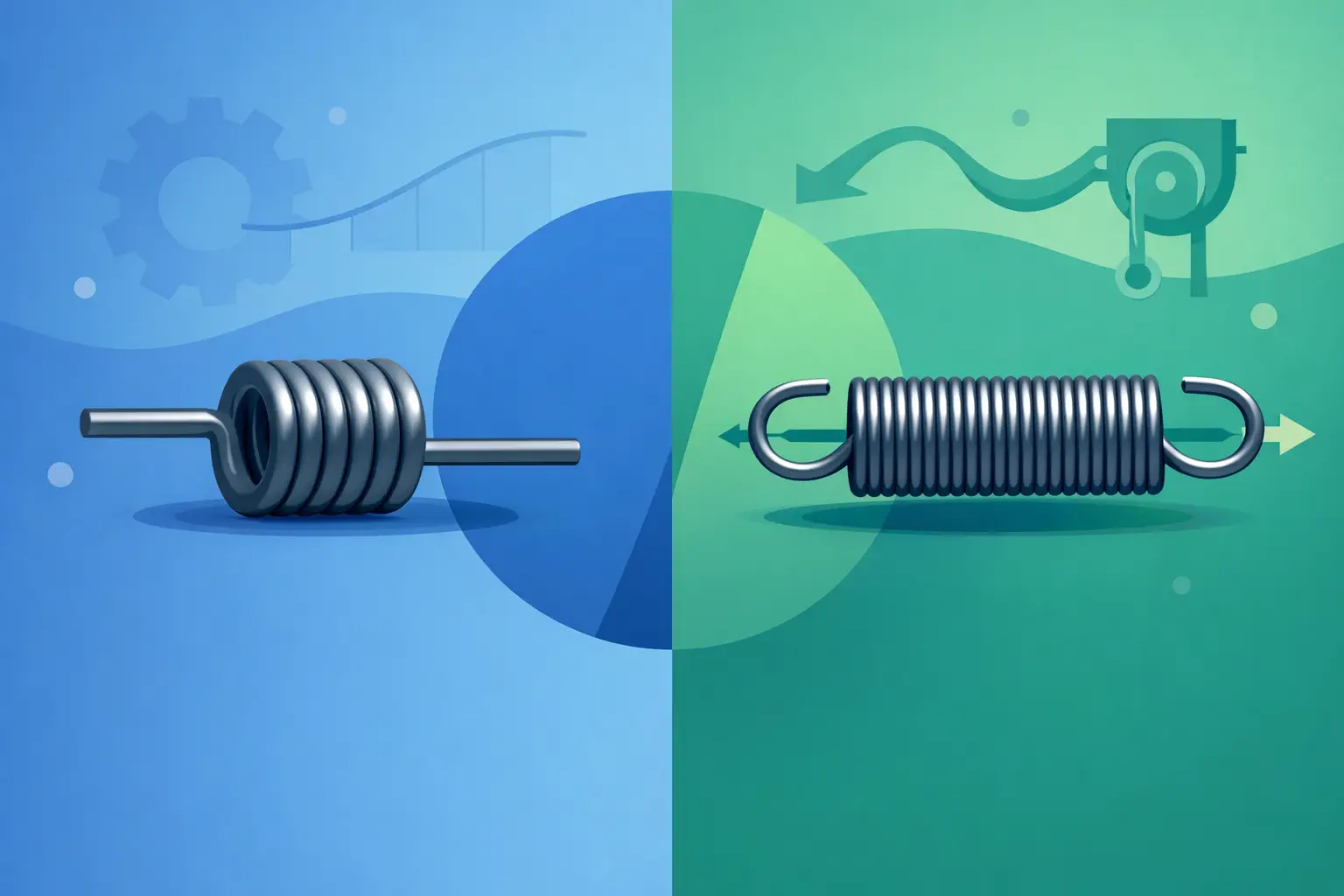
The difference is mostly in where the springs sit and how they store energy. Torsion springs mount horizontally on a steel shaft above the garage door opening. As the door closes, the springs twist and build tension. When it opens, the springs unwind in a controlled motion.
Extension springs run along the horizontal tracks on both sides of the door. They stretch as the door closes and contract as it opens. They are common on older garage door systems and on garages where the layout does not allow a torsion shaft above the opening.
Both systems can operate a garage door effectively when installed and maintained correctly. Still, they differ in safety, performance, lifespan, and installation requirements.
Torsion springs offer smoother, more controlled lifting
A torsion system distributes lifting force through a shaft above the door. This generally creates more balanced operation and less movement during travel. If one torsion spring breaks on a two-spring setup, the door may still be held more predictably than a door with a failed extension spring, although it should not be operated until repaired.
Torsion springs are also a strong choice for heavier doors, including insulated steel doors, wood doors, and many commercial applications. They can be customized for the exact door weight and can be configured with high-cycle springs for homes or businesses with frequent use.
The trade-off is upfront cost. Torsion systems and their installation typically cost more than basic extension systems. They also require adequate clearance above the door. In garages with limited headroom, a technician may need to recommend a low-headroom torsion setup or a different solution.
Extension springs can fit tighter budgets and certain garages
Extension springs are usually less expensive to install and can work well on lighter residential garage doors. Because they mount beside the tracks rather than directly above the opening, they are often used where there is limited room above the door.
However, extension systems have more moving parts involved in balancing the door, including pulleys and cables. That can mean more potential wear points over time. The door may also feel less evenly balanced than it would with a torsion system, especially if one side is worn or improperly adjusted.
Safety cables are non-negotiable with extension springs. A broken extension spring can recoil violently if it is not contained by a cable running through its center. If your garage has extension springs without safety cables, schedule service promptly. This is a meaningful safety concern, not an optional upgrade.
Safety Is the Biggest Reason to Call a Professional
Garage door springs are under extreme tension. A broken spring, loose cable, winding bar slip, or incorrect adjustment can cause serious injuries and property damage. Replacing springs is not a DIY project, even when online instructions make it look simple.
Torsion springs require precise winding and adjustment at the shaft. Extension springs may look less complicated, but they can still release force unexpectedly and involve cables, pulleys, and brackets that must be set correctly. The wrong repair can damage the door sections, bend tracks, overload the opener, or cause the door to fall.
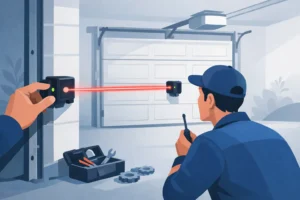
A professional technician should confirm the door’s weight, spring dimensions, cable condition, drum and pulley condition, track alignment, roller wear, and opener settings. The goal is not simply to install a new spring. The goal is to restore a balanced, reliable door system.
Which Spring Type Lasts Longer?
In many residential applications, torsion springs last longer than standard extension springs. Their controlled twisting motion generally produces less friction and less side-to-side wear. Torsion systems are also easier to specify for a higher cycle count when frequent use calls for it.
That does not mean every torsion spring automatically outlasts every extension spring. Quality, cycle rating, door weight, maintenance, climate exposure, and daily use all matter. A properly installed extension system with safety cables can provide dependable service, particularly on a lighter door that is not opened constantly.
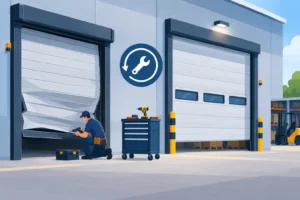
For a home with an attached garage used as the main entrance, investing in a higher-cycle torsion spring often makes practical sense. For a commercial door, the decision should account for operating volume, door size, downtime risk, and the need to keep deliveries, tenants, or employees moving.
Signs Your Garage Door Spring May Be Failing
A spring rarely gives much warning before it breaks, but the system often shows wear. Watch for a door that feels unusually heavy, opens only a few inches, moves unevenly, or closes with a hard bang. You may hear loud squeaking, popping, or grinding during operation.
A visible gap in a torsion spring above the door is a common sign of breakage. With extension springs, look for a stretched, damaged, or hanging spring, along with loose cables or pulleys. Do not pull on a cable or attempt to force the door open.
If the opener hums but the door will not lift, stop using it. An opener is designed to guide a balanced door, not lift the full weight of a door with a broken spring. Continuing to run it can burn out the motor or damage internal gears.
When a Conversion Makes Sense
Not every extension spring system needs to be converted to torsion. If the current system is properly installed, has safety cables, and suits a light door with modest use, replacing it with the same type can be cost-effective.
A conversion is worth discussing when you are replacing a heavy door, dealing with repeated extension-spring issues, upgrading to an insulated door, or looking for smoother operation and longer spring life. It may also be a good option during a full garage door replacement, when the hardware can be designed as one balanced system.
Garage Door Mart Inc can inspect the entire door assembly and explain whether a like-for-like replacement or a torsion conversion is the smarter investment. You should receive a clear recommendation based on the door in front of you, not a one-size-fits-all answer.
Choose the System That Supports Reliable Daily Access
The best spring system is the one correctly sized for your door, safely installed, and suited to how often you use the garage. Torsion springs are often the better long-term choice for smooth operation, heavier doors, and frequent use. Extension springs remain a practical option for certain garage layouts and budget-conscious replacements when they are properly contained and maintained.
If your door is heavy, noisy, uneven, or stuck, treat it as a safety issue. Leave the door closed when possible, keep people clear of the area, and arrange professional spring service before a small hardware problem turns into a damaged door or an unexpected access emergency.