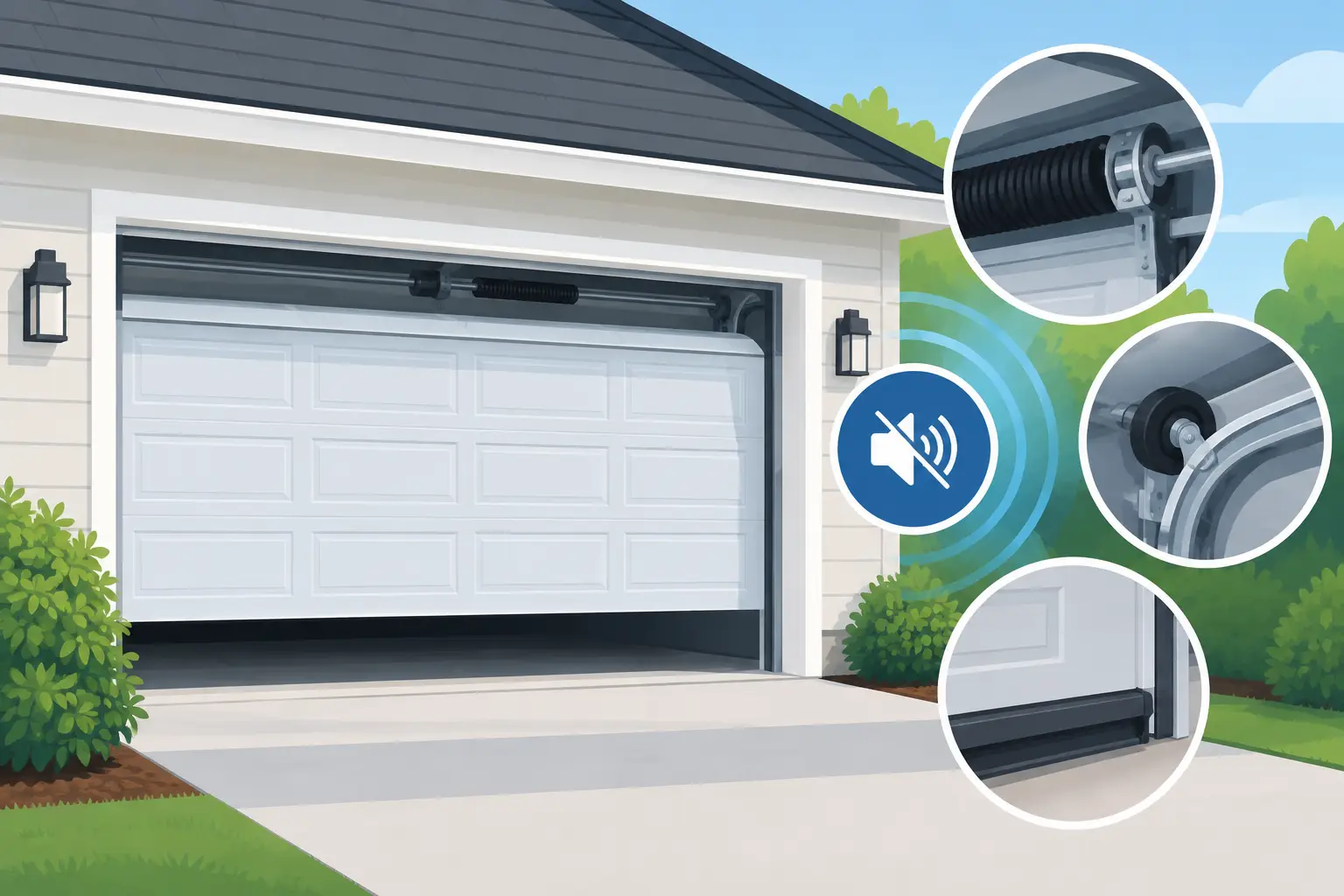
A garage door that rattles through an early morning opening can wake the whole house. Squealing rollers, a grinding opener, or a hard bang at the floor are more than everyday annoyances. They can point to worn moving parts, an unbalanced door, or a condition that could become a sudden breakdown. The right way to reduce garage door noise is to identify where the sound begins, address simple maintenance needs, and leave high-tension repairs to a trained technician.
For Chicago-area homeowners, cold temperatures and seasonal moisture can make existing wear more obvious. For property managers and commercial operators, a loud door can also disrupt tenants, staff, customers, and daily loading activity. Quiet operation starts with a door that is properly maintained, aligned, and safe to use.
Find Out What Kind of Noise You Hear
The sound often provides the first clue. A high-pitched squeal usually comes from dry rollers, hinges, or bearings. A scraping or grinding sound may indicate rollers that are worn, a track that is out of alignment, or an opener working under excess strain. Repeated popping can come from loose hardware, while a heavy thud at the end of travel may suggest an opener adjustment or a door that is not balanced.
Listen while the door opens and closes, but keep hands, tools, clothing, and children clear of moving parts. Notice whether the noise starts at one side of the door, near the ceiling-mounted opener, or when the door meets the floor. That information makes a service visit faster and helps separate a minor lubrication need from a repair that should not wait.
Four common causes account for most noisy garage doors:
- Dry, worn, or damaged rollers and hinges
- Loose track brackets, hinges, or opener mounting hardware
- A chain-drive opener with normal but noticeable operating noise
- A door with worn springs, an alignment issue, or poor balance
A door can have more than one cause at the same time. Lubrication may soften a squeak, for example, but it will not correct a bent track or failing roller bearings.
Start With Safe, Basic Maintenance
If the door is operating normally and there are no visible damaged parts, a few routine checks can make a meaningful difference. First, wipe dust and old residue from the tracks using a dry or lightly damp cloth. Tracks should be clean, but they should not be coated with grease. Grease attracts dirt, which can make rollers drag and create more noise over time.
Next, inspect the hinges, roller stems, and spring coils from a safe distance. A garage-door-specific lubricant or a silicone-based lubricant is generally appropriate for metal moving points. Apply a light amount to hinge pivot points, roller bearings if accessible, and the spring coils. Wipe away excess product so it does not drip onto the floor or track.
Avoid using thick grease, cooking oils, or general-purpose sprays as a long-term solution. They may quiet the door briefly, but they can collect debris or fail to protect components properly in changing Chicago weather. If your rollers are nylon, do not lubricate the nylon wheel itself unless the manufacturer specifically calls for it. The bearing area, where applicable, is the part that needs attention.
You can also check accessible bolts and nuts on hinges, track brackets, and the opener mounting system. Tighten hardware that is clearly loose, but do not adjust red-painted components, cable drums, cables, or spring hardware. Garage door springs store extreme tension. A serious injury can occur when those parts are handled without the right training and tools.
Reduce Garage Door Noise at the Opener
The opener may be the loudest part of an otherwise healthy system. Chain-drive openers are durable and common, but their metal-on-metal operation is naturally louder than belt-drive models. If the noise is a steady mechanical rumble and the door moves smoothly, the opener type may be the main reason you hear it.
A belt-drive opener is often the best upgrade for an attached garage, a bedroom above the garage, or a property where quieter access matters. It uses a reinforced belt rather than a metal chain, so it generally produces less vibration and less operating noise. The trade-off is upfront cost, but many homeowners find the improvement worthwhile when the garage is close to living space.
Before replacing an opener, have the door itself evaluated. An opener should guide a balanced door, not force a heavy or dragging door through its path. Installing a new, quiet opener on a door with bad rollers or weak springs may reduce some sound but will not resolve the underlying strain. It can also shorten the life of the new equipment.
Vibration can travel through ceiling supports and framing. If the opener motor shakes, mounting hardware may be loose, the support may be inadequate, or the door may be binding. A technician can determine whether reinforcement, adjustment, or replacement is the appropriate fix. Commercial operators should take vibration seriously as well, particularly when a noisy sectional door affects adjacent offices or customer-facing areas.
Do Not Ignore Rollers, Tracks, and Balance
Rollers are small parts with a large effect on noise and door movement. Steel rollers can become loud as they age, especially when bearings wear. Quality nylon rollers often run more quietly and can reduce vibration, making them a practical option for many residential doors. The correct roller depends on the door weight, track configuration, and expected usage, so replacement should match the system rather than be selected on noise alone.
Tracks need to be secure, straight, and correctly spaced. A roller that scrapes, jumps, or binds in the track is not a lubrication project. It can mean the track is bent, a bracket is loose, or the door has begun to move out of alignment. Continuing to run the door can damage panels, cables, rollers, and the opener.
Balance is another issue that homeowners cannot safely diagnose by simply pulling on springs. A properly balanced door should not place excessive demand on the opener. If the door feels unusually heavy, reverses unexpectedly, rises unevenly, or slams down, stop using it and schedule professional service. Broken springs and damaged cables are common sources of loud, abrupt operation and require prompt repair.
When a Noisy Door Needs Professional Service
Call for service if the sound is sudden, severe, or paired with a change in how the door moves. Grinding, metal-on-metal scraping, loud bangs, jerking, crooked travel, or a door that will not open fully are signs that should not be dismissed. The same applies if you see a loose cable, separated spring, bent track, damaged roller, or opener rail that moves excessively.
For businesses, delayed repairs can become an access, security, and safety problem. A noisy rolling steel door or commercial sectional door may still open today, but an advancing failure can interrupt deliveries or leave a building unsecured. Scheduling repair before the system stops working is usually the more affordable and controlled option.
Garage Door Mart Inc provides repair, maintenance, opener service, and emergency response across the greater Chicago-land area. A trained technician can inspect the entire operating system, identify the source of the noise, and explain the repair options before work begins. That matters because quiet operation should never come at the expense of safe door performance.
Keep the Door Quiet With Routine Care
Most residential doors benefit from an annual professional inspection, while high-use commercial doors may need more frequent maintenance. Regular service can catch loose hardware, roller wear, opener strain, and spring issues before they become louder and more expensive.
Between appointments, pay attention to changes rather than waiting for the door to fail. A garage door should sound consistent and move smoothly. When it becomes noticeably louder, treat that change as useful warning information. A quick maintenance check or timely service call can protect your opener, reduce disruption at home or work, and keep the door ready for the next time you need it.