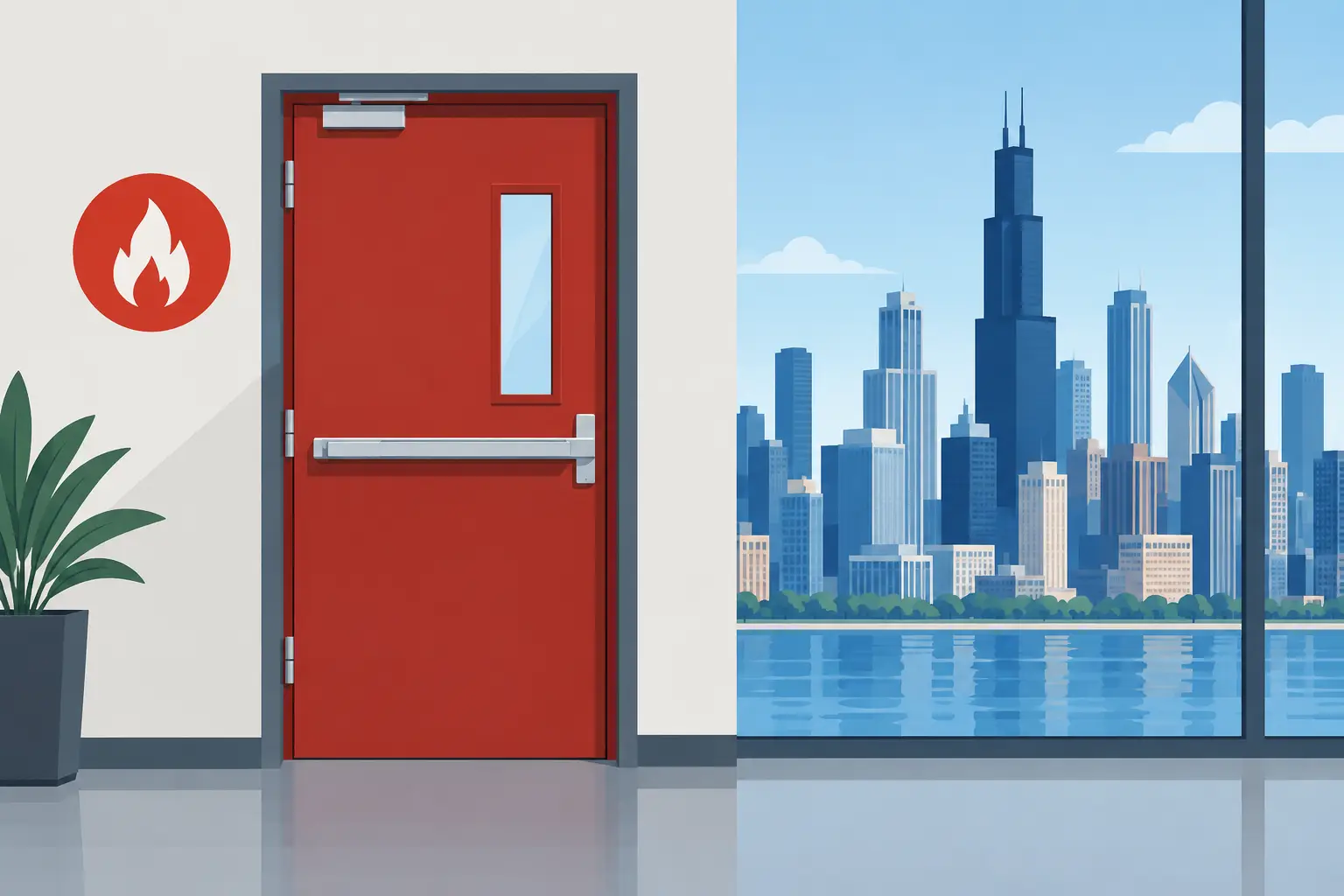
A fire door is only protective when the entire opening works as tested: the door, frame, hinges, closer, latch, glazing, and any automatic release device. For Chicago-area homeowners, property managers, and commercial operators, that is the practical point behind fire rated doors. A door with a fire label is not a standard door with a stronger panel. It is part of a tested fire-protection assembly designed to slow the spread of fire and, in some cases, smoke.
That distinction matters most around garages, multi-unit buildings, warehouses, retail spaces, and facilities with separated occupancy areas. A damaged, blocked, altered, or improperly repaired fire door can create a code issue and reduce the time people have to exit safely.
What Fire Rated Doors Are Designed to Do
Fire rated doors are built and tested to resist fire for a stated period, commonly 20, 45, 60, 90, or 180 minutes. The rating does not mean the door makes an area fireproof. It means the assembly has met specific test criteria for limiting fire passage during that rated period when installed and maintained correctly.
These openings help compartmentalize a building. Rather than allowing fire to move quickly through a corridor, stairwell, service area, garage connection, or opening in a fire wall, the closed door helps hold the fire in one area. This can protect exit paths, limit property damage, and support emergency response.
Many rated assemblies are also required to control smoke. Smoke seals, door bottoms, gasketing, and positive latching may be part of the required setup. The exact requirements depend on the door location, the occupancy, local code enforcement, and the approved assembly.
The label is not optional
A legitimate rated door assembly is identified by permanent labeling on the door, frame, or both. That label identifies the manufacturer and the applicable fire rating or listing information. Painting over a label, removing it during a repair, or replacing a labeled component with an unapproved part can create problems during inspection.
Do not assume a heavy steel door is fire rated because it looks industrial. Likewise, a wood door may be rated, but only if it carries the proper listing and is paired with compatible, approved hardware and framing.
Where Fire Rated Doors Matter Most
Commercial buildings commonly use fire doors at openings in rated walls, stairwells, corridors, mechanical rooms, storage areas, and between sections with different hazards. In warehouses and industrial facilities, fire-rated rolling doors or shutters may protect larger openings in fire barriers. These are specialized systems and should be serviced by technicians familiar with their release mechanisms, guides, counterbalance systems, and code requirements.
In apartment and condominium properties, fire doors may be located at unit entries, common corridors, utility rooms, trash rooms, stairwells, and parking areas. Property managers should treat these doors as life-safety equipment, not ordinary doors that can be propped open or repaired later.
For single-family homes, the most common related concern is the door between an attached garage and the living space. Building requirements vary by jurisdiction and project type, but this opening often has specific door, thickness, self-closing, or fire-resistance requirements. The overhead garage door itself is usually not automatically required to be fire rated simply because it is a garage door. The wall location, the building layout, and the applicable code determine what is needed.
When replacing a door near a garage, do not select by appearance alone. Confirm whether the opening is part of a required separation and whether a self-closing hinge, closer, latch, or listed assembly is necessary.
Fire Doors Must Close and Latch Every Time
The most common fire-door failures are basic operational failures. A door that will not fully close, does not latch, drags on the floor, has a broken closer, or is held open by a wedge may not perform as intended during a fire.
A fire door should normally close under its own power and positively latch without being slammed. It should not bind against the frame, scrape excessively, or leave an unexplained gap. If it is equipped with a hold-open device, that device must be designed to release when the fire alarm system activates or when heat triggers its release mechanism. A door held open with a chair, hook, trash can, or magnetic device that is not part of the approved system is a serious problem.
For rolling fire doors, the same principle applies on a larger scale. The door must have a clear path to close, working guides, a functioning release system, and no damaged slats or obstructions. Stored materials, lift equipment, pallets, and vehicles should never block its travel path.
Repairs That Can Void a Rated Assembly
Fire doors cannot be modified casually. Drilling new holes for hardware, cutting openings for glass, replacing a closer with a non-rated model, adding unapproved kick plates, or installing the wrong lockset can affect the door’s listing. Even a seemingly simple field repair can be unacceptable if it changes the tested assembly.
This does not mean every repair requires replacing the door. Many issues can be corrected, including loose hinges, worn closers, alignment problems, latching failures, damaged weather seals, and some hardware concerns. The key is using the right components and verifying that the work preserves the assembly’s required function.
If a door or frame has visible damage from impact, corrosion, forced entry, or heat exposure, schedule an evaluation promptly. Bent frames, delaminated door faces, missing labels, cracked glazing, and damaged rolling-door curtains deserve professional attention. In commercial settings, delaying the repair can expose the building owner to inspection findings, operational disruption, and preventable risk.
Fire-Rated Garage Openings Need Specialized Service
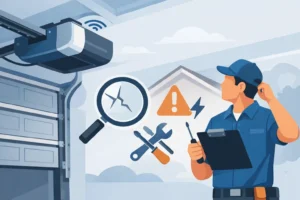
A standard residential garage door repair and a fire-rated commercial rolling-door repair are not interchangeable jobs. Fire-rated rolling doors may include fusible links, governor mechanisms, release devices, chain hoists, motor operators, alarm interfaces, and closing-speed controls. Each component affects how the door behaves during normal use and during an emergency.
A repair that restores daily operation but leaves the emergency closing function unreliable is not a complete repair. The door may open and close on command yet fail the moment its fire-protection role is needed. For that reason, commercial operators should request service from a provider that understands both door mechanics and the specific demands of fire-door assemblies.
Garage Door Mart Inc serves Chicagoland properties with commercial door service, repairs, and responsive scheduling. If a commercial opening is labeled or suspected to be fire rated, tell the service team before the appointment so the right assessment and parts planning can begin.
What Property Owners Should Check Between Service Visits
Regular observation can catch problems before an inspection or emergency exposes them. Walk the opening and look for clear warning signs: a blocked closing path, door damage, missing or covered labels, loose hinges, a closer leaking oil, a latch that does not catch, damaged seals, or alterations that were added after installation.
For rolling doors, check that the opening remains clear and that no one has tied, chained, or otherwise prevented the door from closing. Do not test a fire release system without knowing the proper reset procedure. An improper test can leave a heavy door closed, create downtime, or cause injury.
The inspection frequency and formal testing requirements depend on the building, the door type, local regulations, and the authority having jurisdiction. Facilities managers should keep service records and address deficiencies quickly. Those records are useful for maintenance planning, inspections, insurance discussions, and accountability across a multi-site operation.
When to Call for Service
Call for professional help when a fire door will not close and latch, an automatic closing feature fails, hardware is damaged, a rolling door binds in its guides, a release device appears altered, or an impact has damaged the door or frame. If the opening is in an active fire barrier, a stairwell, a required exit path, or a garage-to-building separation, do not treat the issue as routine wear.
For Chicago-area commercial properties, fast action protects more than the door itself. It helps keep tenants, employees, inventory, and daily operations from carrying unnecessary risk. A properly maintained fire door is easy to overlook on an ordinary day, which is exactly how it should be. When it is needed, it needs to close, latch, and do its job without hesitation.