A thin strip of cracked rubber can turn a garage into the coldest, wettest part of a property. If you see daylight below the door, find rainwater along the wall, or notice leaves and pests getting inside, garage door weather seal replacement should move up your repair list. In Chicagoland, where freezing temperatures, wind-driven rain, and road salt put doors through hard use, a worn seal is more than a cosmetic problem.
A properly fitted weather seal helps the door close against the floor and frame, reducing drafts, moisture intrusion, and debris. It also protects stored belongings, helps attached garages stay more comfortable, and prevents small gaps from becoming larger damage issues. The right repair depends on where the leak is coming from, the type of garage door, and whether the door itself is still closing level.
Why a Worn Garage Door Seal Creates Bigger Problems
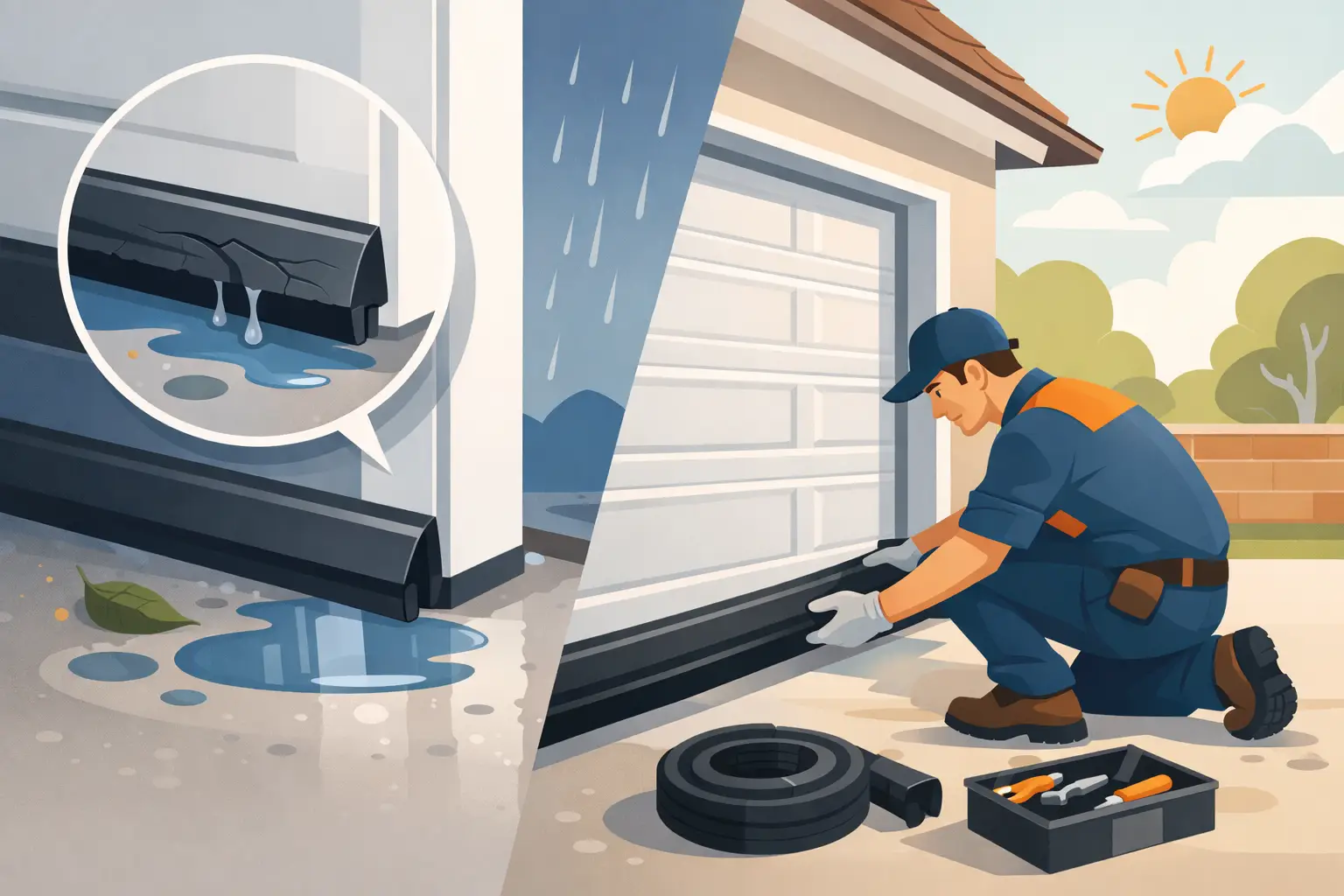
The bottom seal is the flexible strip attached to the lower edge of the garage door. When the door closes, it compresses against the concrete to block outside air and water. Side and top seals work differently: they mount to the door frame and create a barrier where the door meets the opening.
Over time, rubber and vinyl lose flexibility. They can flatten, split, pull loose from the retainer, or become stiff in winter. A seal may look mostly intact but no longer make full contact with an uneven driveway. That is why simply seeing a gap does not always tell you which part needs replacement.
Water is often the first concern. Snowmelt can run under a failing bottom seal and soak cardboard boxes, drywall, tools, and stored inventory. Cold air is another common complaint, especially when the garage is attached to the home or has a room above it. The seal will not fully insulate an uninsulated garage door, but it can stop a direct path for drafts around the opening.
Pest control matters, too. Mice, insects, and other unwanted visitors need very little space to enter. A door that leaves a gap along one corner provides an easy access point. For businesses, that same gap can allow dust, windblown debris, and water into a loading or storage area.
Signs You Need Garage Door Weather Seal Replacement
A visual check is useful, but the best inspection happens with the door fully closed. Stand inside the garage during daylight and look around the bottom, sides, and top of the door. Small pinpoints of light may not require immediate repair, but a continuous line of light or a visible corner gap calls for attention.
Look for rubber that is torn, brittle, crushed flat, or hanging out of its track. If the bottom seal has hardened, it may not conform to minor dips in concrete. You may also notice water marks on the floor after rain, leaves gathering inside the door, or a sharp temperature difference near the opening.
Do not assume the seal is the only problem. If one side of the door sits higher than the other, the issue may involve worn rollers, a shifted track, cable trouble, or an out-of-balance door. Replacing a bottom seal on a door that does not close evenly may improve the gap temporarily, but it will not correct the cause. A garage door that is off track, binding, or operating unevenly needs professional attention before routine sealing work.
Choosing the Right Seal for the Door and Floor
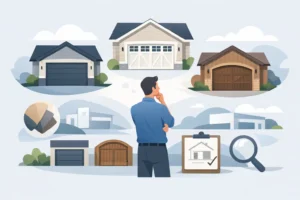
There is no single weather seal that fits every garage door. Bottom seals vary by width, thickness, shape, and the type of retainer attached to the door. Some slide into a T-shaped track, while others use a different channel or are fastened directly to the bottom edge. Installing the wrong profile can leave gaps, slide loose, or interfere with proper closing.
The floor condition matters just as much. A relatively level concrete slab may need only a standard bottom astragal. A driveway with minor settling or uneven sections may benefit from a wider or taller seal designed to compress into low spots. If water consistently flows toward the garage, a floor threshold can add protection, but it is not a replacement for correcting poor drainage when drainage is the real issue.
Side and top weatherstripping are generally mounted to the frame, not the moving door. They need to make light contact with the door without creating excessive friction. If they are pressed too tightly, the door can drag, wear the seal quickly, or strain the opener. If they are too loose, wind and rain will still find a way in.
Material choice involves trade-offs. Vinyl is widely used and cost-effective, while rubber often stays flexible longer in changing temperatures. Heavier-duty commercial applications may require more durable materials and a fit designed for frequent cycles. The most affordable seal is not always the best value if it cracks after one or two severe winters.
When a DIY Repair Is Reasonable
A straightforward bottom-seal replacement can be a manageable project when the garage door is operating smoothly, the retainer is undamaged, and the floor is reasonably level. The work usually involves measuring the door, removing the worn seal, cleaning the channel, sliding in the correct replacement, trimming it carefully, and checking the fit with the door closed.
The difficult part is often not the installation itself. It is identifying the correct seal profile and determining whether the gap is caused by the seal, the floor, or the door’s alignment. Forcing a seal into the wrong track can damage the retainer. Cutting it too short can create a corner gap that defeats the repair.
Never loosen bottom brackets, lift cables, or spring hardware to install weatherstripping. Those components are under significant tension and can cause serious injury. If the seal is near damaged bottom brackets, frayed cables, bent tracks, or a door that will not close evenly, schedule service rather than treating it as a simple weatherization project.
What Professional Seal Service Should Address
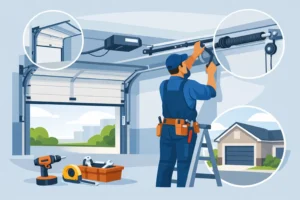
A dependable garage door weather seal replacement begins with an inspection of the full opening. A technician should check the bottom seal, frame weatherstripping, retainer condition, door alignment, track condition, rollers, and the way the door meets the concrete. This helps prevent paying for a seal replacement that cannot perform correctly because another mechanical issue remains unresolved.
The door should then be tested through a complete open and close cycle. A proper installation allows the seal to contact the floor evenly while the door moves without dragging or binding. If a threshold is needed, its placement must allow the door to close securely without creating a trip hazard or trapping water in the wrong location.
For homeowners, this service is often a practical part of seasonal maintenance before winter or after noticing water intrusion in spring. For property managers, inspecting seals across multiple units can prevent repeated tenant complaints about cold garages, pests, and wet storage areas. Garage Door Mart Inc can inspect the door and its weather sealing together, so a damaged seal is not treated separately from a door that needs adjustment or repair.
Commercial Doors Need a Different Standard
Commercial garage doors face more cycles, more vehicle traffic, and higher consequences when weather protection fails. A damaged bottom seal at a warehouse or retail facility can allow rainwater, dust, and pests into spaces where inventory, equipment, or deliveries are handled. It can also make floors slippery near a loading area.
Commercial openings may use larger doors, specialized retainers, dock-related equipment, or high-cycle operators. The seal must fit the door’s use, not just the opening dimensions. A light residential-style solution may wear out quickly on a busy service bay or loading area.
Facilities managers should also watch for seals damaged by forklifts, pallet movement, snow removal, and repeated contact with rough concrete. Replacing a seal promptly is usually less disruptive than waiting until water damage, door misalignment, or an operational shutdown forces an urgent call.
Protect the Opening Before the Next Storm
Weather seals are a small part of a garage door system, but they make a noticeable difference when Chicago weather turns harsh. Check the full perimeter of the closed door, pay attention to new drafts or water marks, and address uneven closing before a minor gap becomes a bigger repair. A door that closes squarely with the right seal in place keeps the garage cleaner, drier, safer, and ready for the season ahead.