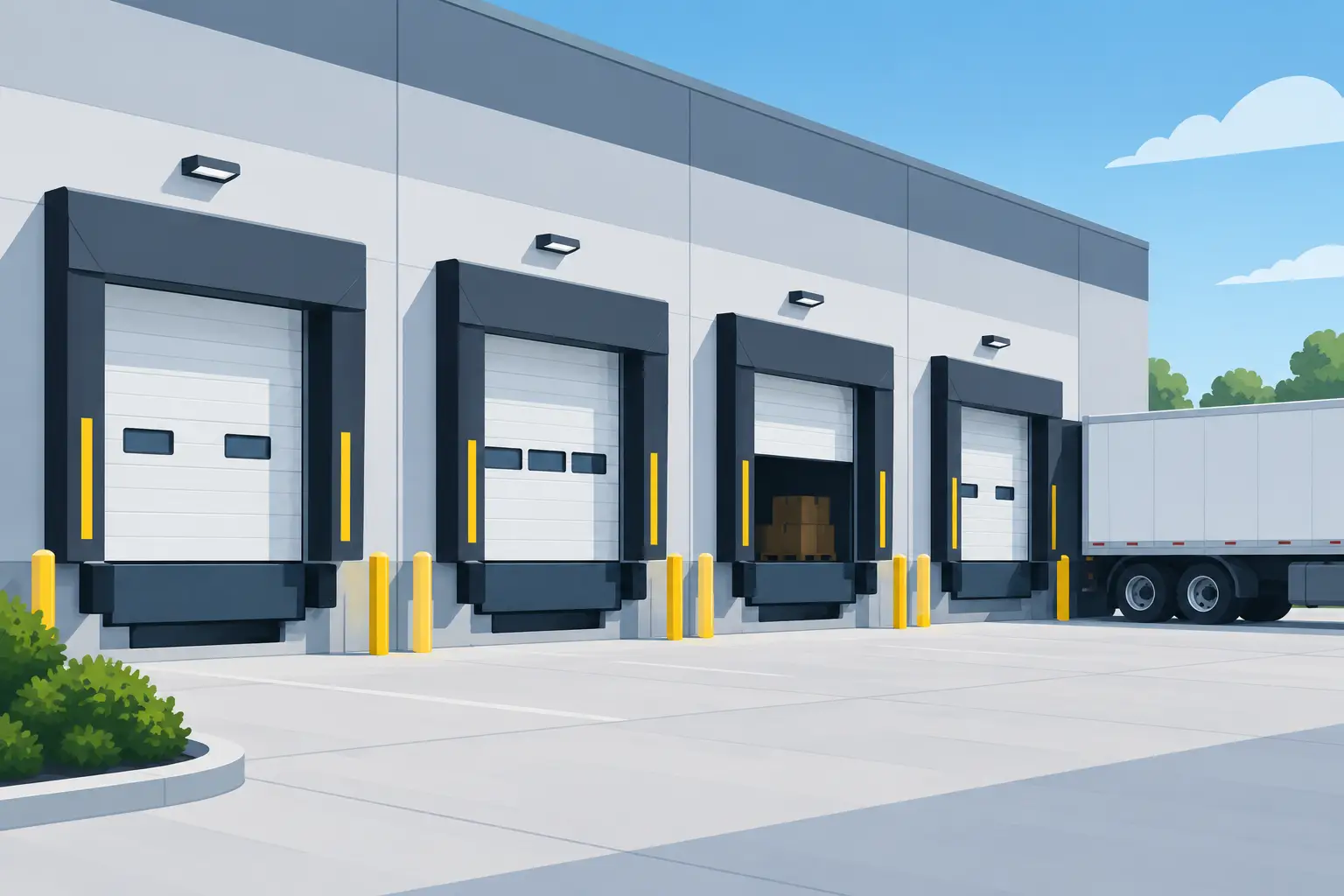
A dock door that sticks, opens too slowly, or leaves a gap around the frame can disrupt an entire shipping schedule. When trucks are waiting, staff are moving product, and weather is coming through the opening, commercial dock door options need to be evaluated as an operating decision – not just a replacement purchase.
For Chicago-area warehouses, retail backrooms, distribution centers, and multi-unit properties, the right door depends on traffic volume, opening size, security needs, exposure to wind and cold, and the equipment already installed at the dock. A lower initial price may look attractive, but it can cost more over time if the door cannot handle daily cycles or requires frequent service.
Start With the Work Your Dock Handles
Before choosing a door style, look at how the opening is used during a normal week. A facility that receives a few deliveries each day has different requirements than a high-volume operation with forklifts moving in and out of multiple bays from early morning through the night.
Ask practical questions. Does the door stay open for extended periods? Do employees need visibility through the door? Is the opening exposed to harsh wind, snow, road salt, or direct vehicle traffic? Will the door operate manually, or does the facility need an operator with remote controls, safety sensors, and access controls?
The answer often comes down to cycle demand. A door that performs well for occasional use may wear out quickly in a busy loading environment. Selecting a commercial-grade system with the right springs, tracks, rollers, and operator protects the door investment and helps avoid unexpected downtime.
Commercial Dock Door Options by Door Type
Sectional overhead doors
Sectional overhead doors are a common choice for commercial loading docks because they are versatile, durable, and available in many sizes and configurations. The door sections travel on tracks and rest overhead when open, which keeps the dock opening clear for trucks, forklifts, and personnel.
Steel sectional doors can be specified with insulation, windows, full-view panels, reinforced hardware, and wind-load upgrades. They are often a strong fit for warehouses, service buildings, auto facilities, and retail receiving areas. The trade-off is that overhead clearance is required, and the tracks, cables, rollers, and springs need regular inspection to keep the system operating safely.
Rolling steel doors
Rolling steel doors coil into a barrel above the opening rather than moving along horizontal overhead tracks. They are a practical option where ceiling space is limited or where a facility needs a compact, security-focused design.
These doors are frequently used for storage areas, loading docks, parking facilities, and commercial openings that need dependable closure after hours. Rolling doors can be built for heavy use, but the curtain, guides, counterbalance system, and operator must match the opening and expected cycle count. A rolling door is not automatically the best answer for every dock, especially if the operation requires wide clearances or frequent access for large equipment.
High-speed doors
High-speed commercial doors are designed for facilities where every second of open-door time matters. They can reduce waiting at high-traffic openings while helping control temperature, dust, pests, and airflow between work areas.
A high-speed door may be a good fit for food handling, cold storage, manufacturing, logistics, and busy internal traffic lanes. Many models include breakaway or self-resetting features that help limit downtime after a minor impact. The upfront cost is typically higher than a standard sectional door, so the value is strongest where frequent cycles, energy control, and productivity justify the investment.
Full-view aluminum and glass doors
Full-view doors use aluminum framing and glass or acrylic panels to bring visibility and daylight into a commercial space. They are often selected for vehicle service centers, retail-facing operations, showrooms, restaurants, and commercial properties where appearance matters along with functionality.
For a loading dock, full-view sections can improve visibility near active work areas. However, facility managers should consider privacy, insulation needs, and the possibility of impact damage before making this choice. In some cases, a steel sectional door with strategically placed window sections offers a more practical balance.
Insulated commercial doors
Insulation is an option worth serious consideration in Chicagoland. A dock opening can become a major source of heat loss during winter and heat gain during summer, particularly when the building has climate-controlled inventory, occupied workspaces, or offices near the loading area.
Insulated steel doors help improve thermal performance and can reduce condensation issues. They also tend to provide a more substantial feel than non-insulated doors. Still, the door alone cannot solve every energy problem. Worn bottom seals, damaged perimeter weatherstripping, poor dock shelter conditions, and doors left open for long periods can reduce the benefit.
The Hardware and Operator Matter as Much as the Door
A commercial door is a complete system. The panels or curtain are only one part of the job. Springs carry heavy stored energy, cables support the door movement, tracks guide it, and rollers keep it moving through repeated cycles. When one component is undersized, worn, or incorrectly installed, the entire system becomes less reliable.
Commercial operators should be selected based on door weight, door type, usage frequency, available mounting space, and required safety features. Depending on the application, a facility may need a trolley operator, jackshaft operator, hoist operator, or another commercial-duty configuration.
For active docks, safety equipment should not be treated as optional. Photo eyes, monitored reversing devices, manual release systems, warning lights, and properly functioning controls help protect employees, visitors, equipment, and vehicles. If the door is connected to restricted areas, access control integration may also be appropriate.
Plan for Security, Wind, and Vehicle Impact
Dock doors are regularly exposed to risks that residential doors rarely face. A truck can back in too far. A forklift can strike a bottom panel or track. High winds can put pressure on a wide opening. After-hours access may create a security concern.
Choose a door and hardware package that reflects those realities. Reinforced sections, heavy-duty tracks, stronger rollers, security locks, and wind-load-rated components may cost more initially, but they can be the right choice for a vulnerable or heavily used opening. If vehicle contact is a recurring issue, dock bumpers, guides, and protective barriers should be reviewed along with the door itself.
When a door is off track, has a broken cable, or will not close securely, keep employees clear of the opening and schedule professional service. Trying to force a heavy commercial door closed can cause more damage and create a serious safety hazard.
Replacement, Repair, or Maintenance?
Not every dock door issue requires full replacement. A door with sound sections and a solid structure may be restored with new springs, cables, rollers, hinges, weather seals, or an operator repair. A professional inspection can determine whether the problem is isolated or whether age, corrosion, repeated damage, and obsolete parts make replacement the more cost-effective path.
Maintenance is the best way to avoid making that decision during an emergency. Regular service identifies worn hardware before it fails, checks spring balance, tests safety devices, tightens mounting hardware, and helps keep the operator working as intended. For facilities with multiple doors, preventive maintenance also makes budgeting easier because repairs can be planned instead of rushed.
Garage Door Mart Inc provides commercial door installation, repair, replacement, and emergency service for businesses across the Chicago area. Clear communication, properly matched parts, and service scheduled around the needs of the facility help reduce the uncertainty that comes with a dock door problem.
Choose for the Next Five Years, Not Just This Week
The best commercial dock door is the one that supports how your facility actually operates: the number of daily cycles, the equipment moving through the opening, the weather outside, and the consequences of downtime. A properly specified door should improve security and safety without slowing the people who rely on it.
If your current door is noisy, slow, damaged, difficult to secure, or repeatedly needing repairs, an on-site evaluation can give you a clear path forward before the next delivery schedule is affected.