A garage door left open during a workday is more than an annoyance. It can expose tools, vehicles, package deliveries, and the direct entry point to your home. This smart garage opener review focuses on what actually matters when choosing connected opener technology: dependable operation, clear alerts, safe installation, and support when the door stops working.
A smart opener can be an excellent upgrade for Chicago-area homeowners, but it is not a cure for a worn-out door, weak springs, damaged rollers, or a failing motor. The best results come from pairing smart controls with a garage door system that is balanced, maintained, and safe to operate.
What Makes a Garage Opener “Smart”?
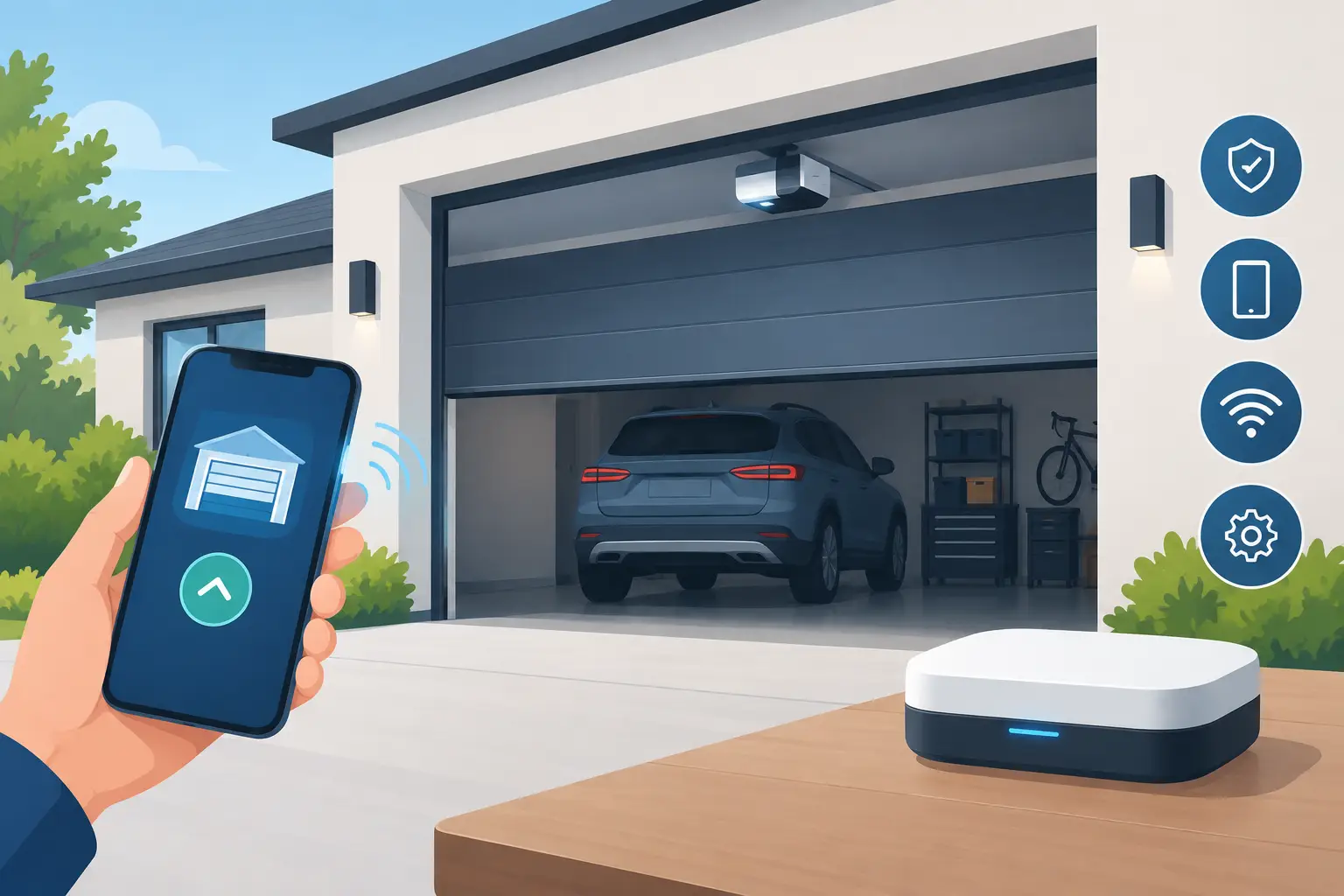
A smart garage opener connects your garage door to an app, allowing you to monitor and control the door from a phone, tablet, or approved voice-control system. Depending on the model, it can send an alert when the door opens, remind you that it has been left open, and allow you to close it from nearly anywhere with an internet connection.
Some products are complete replacement openers with built-in Wi-Fi. Others are add-on controllers designed to work with a compatible existing opener. That distinction matters. An add-on controller may be a practical choice if your current opener is relatively new, operates smoothly, and has the required safety sensors. If the motor is noisy, unreliable, or struggling to lift the door, replacing the full opener is often the better long-term investment.
For property managers and commercial operators, smart controls can provide useful visibility, but they should not be confused with a full commercial access-control system. A high-cycle commercial door may require heavier-duty equipment, managed user permissions, and professional service planning that goes beyond a consumer app.
Smart Garage Opener Review: Features Worth Paying For
The most valuable smart features are the ones that solve everyday problems without making operation complicated. Remote status checking is at the top of the list. Before leaving the office, going to bed, or leaving for vacation, you can verify whether the door is open or closed rather than wondering about it all day.
Open and close alerts are equally useful. A notification can tell you when a child arrives home, when a delivery is brought inside, or when the door opens at an unexpected time. Look for settings that let you customize notifications. Constant alerts for every movement can become background noise, while alerts for doors left open after a set period are usually far more helpful.
Guest access is another practical feature. Instead of handing out a physical remote, some systems let you provide temporary or scheduled access to a family member, dog walker, contractor, or tenant. The feature is convenient, but it should be managed carefully. Remove access when a project ends or a tenant moves out.
Battery backup deserves special attention in the Chicago area. Winter storms and power outages can happen when you least need an access problem. A battery backup allows the opener to run for a limited time during an outage, helping you get a vehicle out or secure the garage. It is not strictly a smart feature, but it is one of the most useful upgrades available on a modern opener.
Camera-equipped openers and add-on cameras can also be worthwhile, particularly for homeowners who use the garage as a primary entry. A camera adds context to an alert, but placement, lighting, Wi-Fi strength, and privacy settings determine whether it is genuinely useful. A poor view of a dark garage will not provide much value during a late-night alert.
The Trade-Offs Most Reviews Skip
Smart control depends on several systems working together: the opener, safety sensors, home Wi-Fi, the app, and your phone. If the internet is down, remote control and alerts may not work, even though the wall button and handheld remote still operate the door. This is why every household should keep a working physical remote and understand how to use the emergency release when it is safe to do so.
Compatibility can also be a problem. Not every add-on smart controller works with every opener brand, model, or wall control. Older openers may lack the required safety sensor setup. Certain proprietary controls can limit third-party compatibility as well. Checking compatibility before buying prevents an unnecessary installation appointment and return process.
Subscription costs deserve a close look. Basic remote open and close control may be included, while video recording, expanded notifications, or cloud storage may require a monthly plan. Decide whether those recurring features fit your needs before choosing a camera-based system.
There is also a security trade-off. Smart access is convenient because it puts control in your phone. That makes account protection essential. Use a unique password, enable multi-factor authentication when available, keep the app updated, and avoid sharing your primary login. Convenience should never mean giving unrestricted garage access to anyone who needs it temporarily.
When an Add-On Controller Makes Sense
An add-on controller can be a cost-effective upgrade when your existing opener is in good condition. It is usually a sensible option if the door opens and closes evenly, the motor does not strain, the photo-eye sensors work consistently, and the opener is not near the end of its expected service life.
It may be especially useful for homeowners who already have a dependable belt-drive or chain-drive opener but want status alerts and phone control. The installation is often less involved than replacing the entire unit, though wiring, sensor placement, and compatibility still need to be handled correctly.
Do not add smart technology simply to compensate for mechanical issues. A door that reverses unexpectedly, shakes, makes grinding sounds, comes off track, or will not stay closed needs repair first. Smart controls can send alerts about a problem, but they cannot safely correct a broken spring, misaligned track, worn gear, or damaged cable.
When a Full Smart Opener Is the Better Choice
A full replacement is usually the stronger option when the existing opener is 10 to 15 years old, unreliable, excessively loud, or missing modern safety features. Newer openers often combine Wi-Fi capability, battery backup options, brighter lighting, improved security, and quieter operation in one system.
Belt-drive openers are a popular choice for attached garages because they typically run more quietly than chain-drive units. Chain-drive models remain a dependable option for heavier doors and detached garages where noise is less of a concern. The correct choice depends on door weight, garage layout, use frequency, and budget.
Horsepower ratings should not be the only buying factor. A properly balanced garage door should be relatively easy to lift manually when disconnected from the opener. If the door is too heavy or poorly balanced, installing a more powerful motor does not address the underlying safety issue. The door and spring system must be inspected before a new opener is selected.
Safety Checks Before Installation
Every automatic garage door opener relies on working photo-eye safety sensors near the bottom of the tracks. These sensors stop or reverse the door if something is in its path. They must be correctly aligned, securely mounted, and free of dirt, snow, spider webs, or damage.
The auto-reverse system also needs regular testing. Place a solid object, such as a piece of wood, on the floor under the closing door. When the door contacts it, the door should reverse. If it does not, stop using the opener until the system is inspected and repaired.
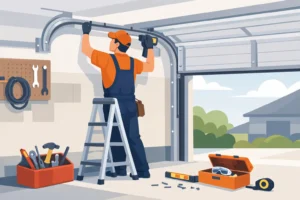
Never adjust springs, cables, or bottom brackets as a do-it-yourself project. Those components are under high tension and can cause serious injury. A professional technician can evaluate whether the door is balanced, the hardware is secure, and the new smart opener is matched to the door’s condition and weight.
A Practical Choice for Homes and Managed Properties
For a typical homeowner, the right smart opener is one that provides reliable status checks, alerts for an open door, secure access sharing, and a dependable manual backup plan. For a landlord or property manager, user access controls and notification settings may carry more weight than advanced camera features. For a busy family, quiet operation and battery backup may be the deciding factors.
Garage Door Mart Inc can help homeowners and property managers assess whether an add-on controller, opener replacement, or garage door repair is the right next step. A professional inspection is particularly useful when the door is noisy, uneven, slow to move, or intermittently reversing.
The right smart opener should make leaving and returning home easier, not add another unreliable device to manage. Start with a safe, well-maintained garage door, choose only the connected features you will actually use, and address mechanical warning signs before they become an emergency.