A garage door can work perfectly at bedtime and refuse to move by morning after a Chicago-area freeze. That is why garage doors freeze so often during winter: snowmelt, rain, slush, and condensation collect around the door, then temperatures drop fast enough to turn that moisture into a strong bond. For homeowners, it can mean being stuck in the driveway. For a business, it can delay deliveries, block employee access, and leave an opening unsecured.
The key is not to force the door. A frozen garage door is usually a manageable problem, but repeated attempts to run the opener can turn it into a broken spring, stripped gear, bent track, or damaged bottom panel. Knowing what is frozen, what you can safely do, and when to schedule service protects both the door and your day.
Why Garage Doors Freeze at the Bottom Seal
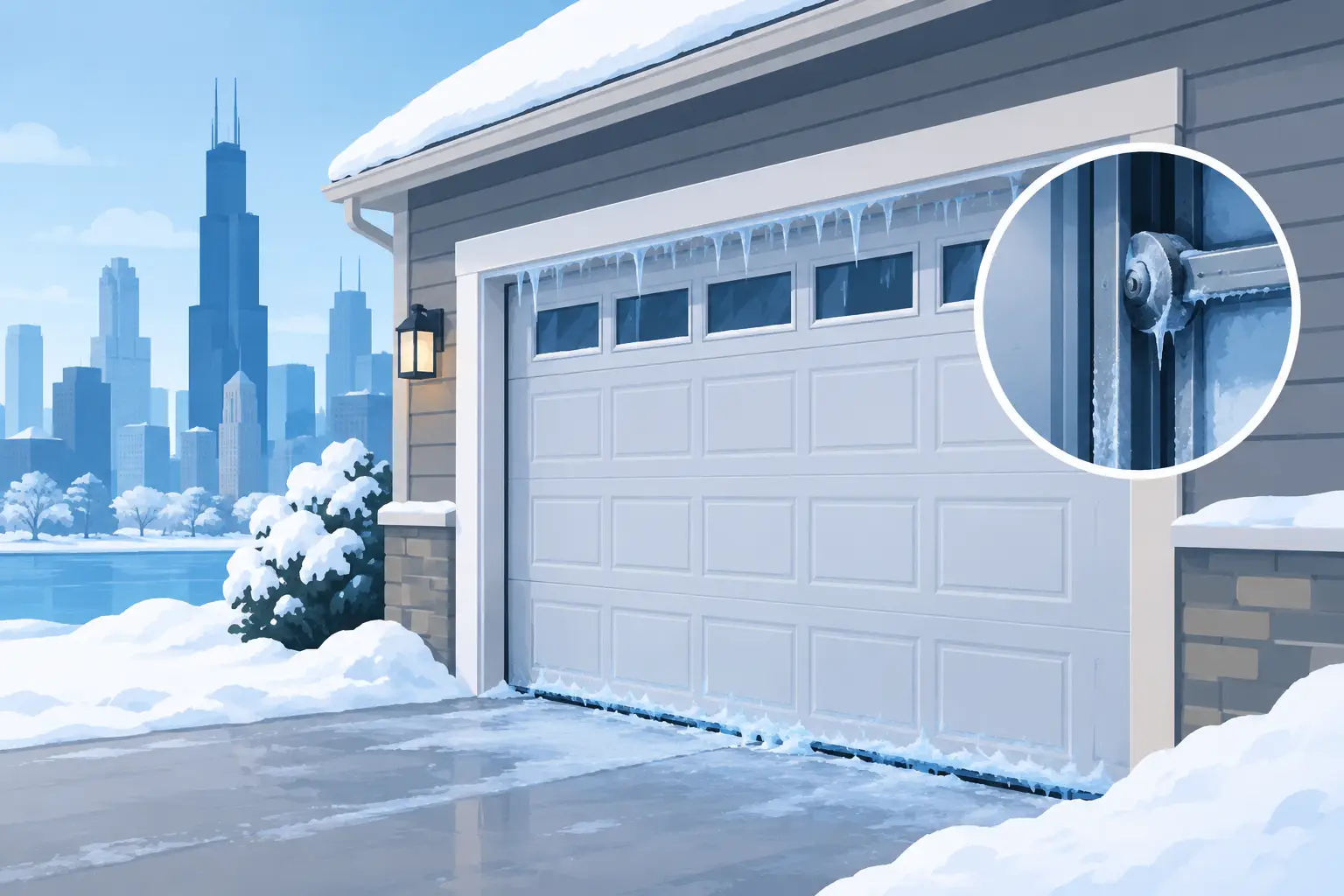
Most frozen doors are not frozen inside the tracks. They are stuck to the concrete at the bottom. Water pools along the threshold after snow blows in, snow melts off a vehicle, or rain runs down the driveway. The rubber bottom seal sits in that water, and freezing temperatures create an ice bond between the seal and the floor.
This can happen even when the driveway looks mostly dry. A thin layer of meltwater is enough to freeze the seal in place. Older or flattened bottom weatherstripping is especially vulnerable because it may hold water rather than directing it away from the door.
Wind-driven snow creates another common problem in Chicagoland. Snow can pack against the outside of the door and melt slightly during the day. Overnight, it refreezes around the bottom edge and corners. If a downspout drains near the garage, runoff can make the issue worse.
A door may also freeze because of poor drainage or a low spot in the concrete. In that case, de-icing the door solves the immediate problem, but the same issue will return until the water path, threshold, or seal is addressed.
Other Reasons a Garage Door Will Not Open in Cold Weather
Ice at the bottom is common, but it is not the only cold-weather cause. Garage doors rely on moving parts that can become stiff, brittle, or misaligned when temperatures fall.
Frozen or obstructed tracks
Moisture inside vertical tracks can freeze around rollers, especially if the tracks are dirty or have old, sticky lubricant. Ice and packed snow near the track opening can also prevent the bottom rollers from moving normally. The opener may hum, move the door an inch, or reverse when it senses too much resistance.
Tracks should never be sprayed with heavy grease. Grease collects dirt and can harden in cold weather. A technician can clean the system and apply the proper garage door lubricant to rollers, hinges, and bearings without creating more buildup.
A weak spring exposed by cold temperatures
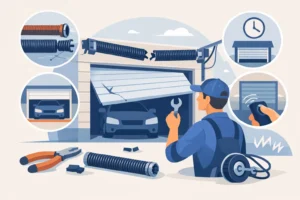
Cold weather does not usually cause a healthy torsion or extension spring to freeze. It can, however, expose a spring that was already worn. Springs carry the door’s weight, and metal becomes less forgiving in severe cold. A weakened spring may break when the opener tries to lift a door that is also bonded to the ground.
If you hear a loud bang in the garage, see a visible gap in a torsion spring above the door, or find that the door suddenly feels extremely heavy, stop using it. Garage door springs are under significant tension and should only be replaced by a trained technician.
Opener force and safety settings
An opener is designed to stop or reverse when it encounters resistance. That safety feature is useful when a door is frozen, but it can also make owners think the opener is failing. In some cases, the door is simply stuck at the seal. In others, cold weather reveals an opener with worn gears, a weak capacitor, a failing motor, or settings that need professional adjustment.
Do not increase the opener’s force setting to make it overpower a frozen door. The door may suddenly release, and the added force can damage the opener, pull hardware loose, or create a safety hazard.
Damaged weatherstripping and panels
Rubber seals stiffen with age and cold. Cracked, torn, or compressed weatherstripping lets more water and snow reach the threshold. It also reduces the door’s seal against drafts. For insulated garage doors, that moisture can contribute to condensation inside the garage, where it may freeze around hardware.
A bent bottom panel or misaligned door can make the situation worse because the seal no longer meets the floor evenly. One corner may remain stuck while the rest of the door tries to rise, placing uneven stress on the cables, rollers, and opener.
What to Do When Your Garage Door Is Frozen
Start by looking at the bottom edge from inside the garage, if possible. Check for visible ice, packed snow, or a frozen strip along the threshold. Keep vehicles, children, and pets clear of the door while you inspect it.
If the opener has already tried and failed, stop pressing the remote. Disconnecting the opener from the door using the emergency release can help you determine whether the problem is the door or the opener, but only do this when the door is fully closed. Never pull the emergency release on a partially open or unstable door.
For a light ice bond, carefully remove snow and loose ice from the outside edge with a plastic shovel, broom, or ice scraper that will not damage the seal or door finish. A small amount of warm water can loosen ice, but use it cautiously and dry the area afterward. In below-freezing conditions, excess water can refreeze quickly and create a larger problem.
A hair dryer on a low, controlled setting can help thaw a small section of ice at the seal. Avoid open flames, propane torches, heat guns held too close, or boiling water. These methods can warp the weatherstripping, damage paint, crack windows, and create a fire or burn risk.
Once the visible ice is cleared, try lifting the door manually only if it feels balanced and moves with reasonable force. If it does not move easily, stop. A door that remains stuck may have ice in the tracks, a broken spring, or another mechanical issue that needs repair.
What Not to Do
The fastest way to turn a frozen door into an expensive repair is to treat the opener like a winch. Garage door openers are meant to guide a balanced door, not pull a heavy door free from ice.
Do not repeatedly hit the wall button or remote. Do not kick the bottom section, pry underneath the door with a metal bar, or yank on cables. Do not chip at ice near the bottom seal with a sharp shovel. Each of these can tear the seal, dent the panel, knock rollers out of alignment, or damage cables.
Chemical de-icers require care as well. Some products can harm concrete, corrode metal components, or leave residue that affects the seal. If a de-icer is necessary, use a product appropriate for the surface and keep it away from moving door parts whenever possible.
Prevent a Frozen Garage Door Before the Next Freeze
Prevention begins with keeping water away from the threshold. After a snowstorm, clear snow from the base of the door before it gets packed down or melts. If a vehicle brings in snow and slush, remove standing water from the garage floor rather than letting it sit against the bottom seal overnight.
Inspect the bottom weatherstripping before winter. A good seal should be flexible, continuous, and properly seated against the concrete. Replacing worn weatherstripping is a relatively straightforward maintenance step that can improve energy efficiency while reducing ice buildup.
Keep gutters and downspouts from sending water toward the garage. If the driveway or garage floor slopes toward the door, a threshold seal or drainage improvement may be worth considering. The right solution depends on where the water originates and how often it collects.
Routine garage door maintenance matters in winter because it identifies issues before the first severe freeze. A professional inspection can check spring condition, cable wear, roller movement, track alignment, door balance, opener operation, and weather seals. For commercial doors, regular service is especially valuable because a frozen or malfunctioning door can interrupt loading, security, and daily operations.
When to Schedule Professional Garage Door Repair
Schedule service when the door will not release after visible ice is cleared, when it opens unevenly, or when the opener strains, grinds, or reverses. A broken spring, loose cable, off-track roller, or failing opener should not wait for repeated trial and error.
Emergency service is also appropriate when a door is stuck open, will not close securely, blocks a vehicle that must get out, or prevents a business from operating safely. In winter, a door left partially open can expose the garage to cold, moisture, and security risks within hours.
Garage Door Mart Inc serves homeowners and commercial properties throughout the Chicago area with repair, maintenance, spring, track, and opener service. A technician can identify whether the problem is simple ice buildup or a mechanical failure that winter conditions brought to the surface.
Before the next hard freeze, take a minute to clear the threshold and look closely at the bottom seal. That small routine can be the difference between an easy morning departure and a door that will not move when you need it most.