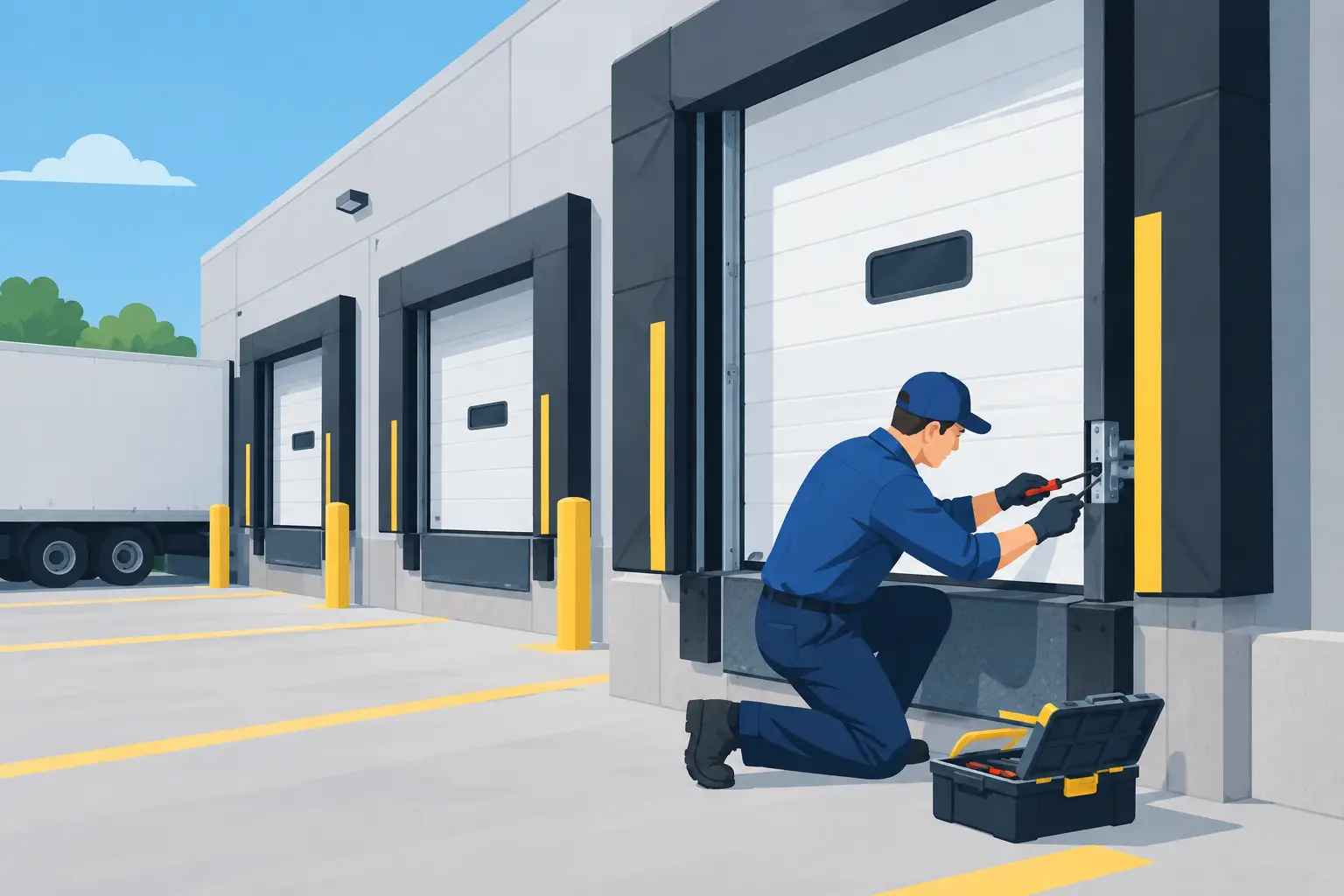
A loading dock door that sticks halfway open at 6:30 a.m. can disrupt far more than one delivery. Trucks wait, employees work around an unsafe opening, inventory is exposed, and a minor mechanical problem quickly becomes an expensive operating delay. Consistent loading dock door maintenance helps Chicago-area facilities avoid those avoidable interruptions while protecting employees, equipment, and the building itself.
For warehouse managers, retail operators, property managers, and business owners, the goal is not simply to make the door open and close. The goal is dependable daily performance under real working conditions: repeated cycles, changing temperatures, forklift traffic, weather exposure, and tight delivery schedules. A scheduled maintenance plan catches wear before it forces an emergency repair call.
Why Loading Dock Door Maintenance Matters
Commercial dock doors carry a heavier workload than most people realize. A busy distribution facility may open and close a door dozens of times per day. Over time, rollers wear, tracks shift, cables fray, springs lose tension, hinges loosen, and opener components begin to work harder than they should.
One worn component can put added strain on the rest of the system. For example, a door that is out of balance may still operate for a while, but the opener has to pull more weight during every cycle. That extra load can shorten the life of the operator and increase the chance of a sudden failure during a delivery window.
Maintenance also supports workplace safety. Dock doors are large, heavy moving systems. Damaged cables, broken springs, misaligned tracks, or unreliable safety devices can create serious hazards for employees working near the opening. A professional inspection gives your facility a chance to correct those issues before someone gets hurt or the door becomes inoperable.
Chicago-area weather adds another reason to stay ahead of service. Freezing temperatures can affect lubrication and seals. Moisture can contribute to corrosion. Wind, debris, and repeated thermal expansion can affect panels, hardware, and alignment. Facilities that wait until a door fails often face a longer disruption than those that schedule service before winter or after a busy season.
What a Professional Dock Door Inspection Should Cover
Effective maintenance is more than spraying lubricant on moving parts. A commercial technician should inspect the full operating system and look for early signs of mechanical, electrical, and structural trouble.
The door should first be tested through its complete travel cycle. A technician looks for jerking movement, unusual noise, slow operation, gaps, binding, or a door that does not sit evenly when closed. These symptoms can point to worn rollers, track damage, spring issues, cable problems, or an opener that needs adjustment.
Springs, Cables, Rollers, and Tracks
Springs and cables deserve close attention because they support and control the door’s weight. A frayed cable or fatigued spring can fail without much warning. Technicians also inspect drums, bearings, brackets, rollers, hinges, and track alignment. Loose hardware may appear minor, but vibration from frequent use can turn a loose bracket or shifted track into a door that comes off track.
Lubrication is part of the process, but the right application matters. Commercial-grade lubricant can reduce friction at rollers, hinges, bearings, and springs. Too much lubricant, or the wrong product, can attract dirt and create buildup. Cleaning and adjustment should happen alongside lubrication, not be replaced by it.
Operators, Controls, and Safety Devices
The operator needs regular attention as well. Maintenance may include checking the drive system, chain or belt tension where applicable, mounting hardware, limit settings, remote controls, wall stations, and electrical connections. If the operator struggles, reverses unexpectedly, or makes grinding sounds, it should be inspected before it stops during a critical delivery.
Safety devices should be tested during every service visit. Photo eyes, reversing mechanisms, warning devices, and control stations must respond correctly. A safety feature that has been bypassed or damaged may expose the facility to unnecessary risk and potential liability.
Panels, Seals, and Dock Area Conditions
The door itself needs a visual inspection for dents, cracks, rust, impact damage, and panel separation. Bottom seals and perimeter weatherstripping should also be checked. Worn seals allow drafts, water, pests, and outside air into the building, which can affect energy costs and product storage conditions.
The dock area around the door matters, too. Forklift impacts, debris in the tracks, standing water, poor drainage, and damaged bollards can all contribute to premature door problems. Maintenance is most effective when the door and its working environment are evaluated together.
Signs Your Facility Should Schedule Service Now
A dock door does not need to be completely stuck before it requires professional attention. Early service often costs less and prevents a small adjustment from becoming a major replacement.
Schedule an inspection if the door is louder than usual, moves unevenly, hesitates during travel, shakes, slams closed, or leaves visible gaps around the opening. You should also act quickly if you see loose cables, bent tracks, damaged rollers, cracked panels, worn weather seals, or oil and debris buildup near the operator.
A door that requires employees to force it open or closed should be taken out of service until it is inspected. The same applies when a door will not stay open, will not close fully, or reverses without a clear obstruction. These are not problems for staff to troubleshoot with makeshift repairs. Commercial doors store significant tension, and improper adjustments can make the situation more dangerous.
How Often Should Dock Doors Be Maintained?
The right maintenance schedule depends on the door type, cycle count, operating environment, and the cost of downtime to your business. A lightly used commercial door may need a professional inspection once a year. High-cycle warehouse doors, loading areas exposed to heavy traffic, and facilities with multiple shifts may benefit from service every six months or more often.
Usage should guide the schedule. If your door operates all day, carries heavy wind loads, or is regularly exposed to moisture and road salt, annual maintenance may not be enough. A technician can recommend a practical service interval after reviewing the equipment and how your facility uses it.
Between professional visits, designate a staff member to report unusual noises, slow operation, visible damage, and control issues immediately. Employees do not need to perform repairs. They simply need a clear process for identifying a concern before it becomes a shutdown.
Maintenance Reduces Costs, But It Does Not Fix Every Door Forever
Routine service extends the usable life of many commercial doors and operators, but there are limits. A door with severe impact damage, widespread corrosion, obsolete parts, repeated off-track issues, or a failing operator may be more costly to keep repairing than to replace.
The decision depends on the door’s condition, repair history, safety requirements, and how much downtime your operation can tolerate. Replacing a worn system can be a larger upfront expense, but it may improve reliability, insulation, security, and day-to-day efficiency. On the other hand, a newer door with a localized issue may only need a targeted repair and adjustment.
A qualified commercial garage door technician should explain what is causing the problem, what repair is recommended, and whether replacement is worth considering. Straight answers help facility managers budget correctly instead of repeatedly approving short-term fixes.
Keep Dock Doors Ready for the Next Delivery
Preventive service works best when it is planned, documented, and handled by technicians who understand commercial door systems. Garage Door Mart Inc provides dependable commercial door service for businesses throughout the greater Chicago-land area, including urgent repairs when a dock door failure cannot wait.
Do not wait for a jammed door to hold up a truck, expose inventory, or create an unsafe work area. A well-maintained loading dock door supports safer operations and fewer disruptions, giving your team one less problem to manage when the next delivery arrives.