A loading dock door that will not open at 6:30 a.m. can hold up deliveries, put employees at risk, and leave a facility exposed after hours. Commercial door automation turns heavy, high-use doors into controlled access points, but only when the operator, door hardware, safety devices, and daily workflow are matched correctly.
For Chicago-area warehouses, retail locations, multi-unit properties, and service facilities, the right system does more than save a few minutes. It helps keep traffic moving, supports security procedures, and reduces the strain that repeated manual operation puts on people and equipment.
What Commercial Door Automation Actually Covers
Commercial door automation is not simply adding a motor to an existing overhead door. A complete system includes the operator that moves the door, the control method used to activate it, and the safety equipment that stops or reverses movement when an obstruction is detected. The door itself must also be in good operating condition.
Depending on the facility, activation may come from a wall station, remote control, keypad, key switch, pull cord, vehicle loop detector, photo eyes, timer, or access-control system. A warehouse may need drivers to enter through an exterior keypad while a property manager may need authorized staff to operate a parking-garage door with remotes or credentials.
The operator type matters as well. Trolley operators are common for lighter sectional doors. Jackshaft operators mount beside the door and are often a better fit where overhead space is limited. Hoist operators are designed for frequent cycling and larger, heavier doors. Selecting the wrong unit can lead to premature wear, unreliable operation, and an expensive replacement sooner than expected.
Start With the Door and the Daily Workload
Automation cannot correct a worn-out door. Before an operator is installed or replaced, a qualified technician should inspect the springs, cables, rollers, tracks, hinges, drums, bottom brackets, and balance of the door. A commercial door that binds, runs off track, or requires excessive force will overload the operator.
Cycle volume is one of the most important questions. A door used twice a day at a small retail business has very different requirements than a loading dock door opening and closing dozens of times during each shift. Higher-cycle applications need commercial-grade components designed for the workload, not a residential-style opener adapted for a commercial setting.
Door size, weight, ceiling clearance, available power, and mounting conditions also affect the installation. In older Chicago buildings, space above the door can be tight, and electrical access may be limited. Those details should be addressed before installation day, not after the crew arrives.
Match Controls to the People Using the Door
The most convenient control is not always the safest one. A remote may work well for a small team, while a keypad is more practical when vendors or rotating staff need controlled access. For a busy dock, a three-button wall station with open, close, and stop functions gives staff clear manual control near the work area.
If security is a concern, avoid leaving universal remotes in vehicles or distributing access codes too broadly. Keypads should be reprogrammed when employees leave, and remotes should be tracked like keys. For facilities with multiple entry points, access-control integration can create a more consistent process, though it adds upfront cost and may require coordination with an existing security provider.
Safety Equipment Is Not Optional
A commercial door is heavy, and automatic operation creates a clear responsibility to protect employees, customers, vehicles, and inventory. Photo eyes, reversing devices, monitored sensors, and properly functioning controls are essential parts of a dependable system. They should be installed, tested, and maintained according to the door and operator manufacturer requirements.
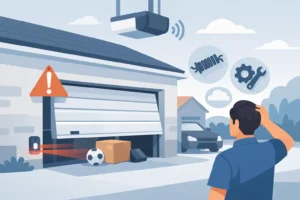
Photo eyes are especially important near drive-through openings and active loading areas. If the sensor beam is blocked or misaligned, the system should not close through the obstruction. A reversing edge or similar monitored device can provide another layer of protection where the application calls for it.
Do not bypass a safety feature to keep a door moving. Taping down a button, disconnecting sensors, or forcing an operator to run when it is reversing unpredictably can turn a repair issue into an injury or property-damage event. Take the door out of service when needed and schedule professional repair.
Train Staff on Normal Use and Warning Signs
Employees do not need to perform repairs, but they should know how to use the controls, where the emergency release is located, and when to stop operating the door. They should never walk under a moving door, stand in its path, or attempt to adjust springs, cables, or bottom brackets.
Managers should also encourage staff to report changes early. Grinding, jerking, slow travel, loud vibration, inconsistent closing, or a door that will only operate with constant pressure are all signs that service may be needed. Waiting until the operator fails completely usually creates more disruption and can increase repair costs.
Plan for Chicago Weather and Building Conditions
Chicago-area weather puts commercial doors through more than normal use. Cold temperatures can affect lubricants, stiffen weather seals, and expose weak components. Wind, snow, road salt, and moisture can also affect exterior hardware, tracks, and photo-eye alignment.
A door that operates acceptably in mild weather may begin binding during a cold snap. This is why seasonal inspections are practical for facilities that rely on overhead doors every day. Proper lubrication, hardware tightening, door-balance checks, and safety testing help identify problems before a busy morning turns into a shutdown.
Weather sealing deserves attention too. Worn bottom seals and perimeter seals can allow drafts, water, pests, and debris into a facility. For temperature-controlled spaces or tenant garages, replacing damaged seals can improve comfort and help limit unnecessary energy loss. It will not solve every heating or cooling issue, but it is a worthwhile part of maintaining the opening.
When Repair Makes Sense and When Replacement Is Better
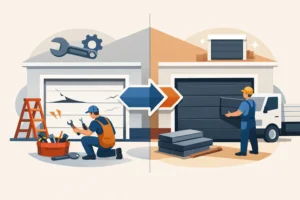
Not every automated door problem requires a new operator. A failed photo eye, worn gear, damaged limit switch, broken cable, or misaligned track may be repairable if the rest of the system is in sound condition. A professional service call should identify the actual cause rather than replacing parts based on guesswork.
Replacement becomes the better long-term choice when the operator is undersized, repeatedly failing, no longer supported with reliable parts, or unable to meet the facility’s cycle demands. The same applies when the door has major structural damage, chronic off-track problems, or hardware that has reached the end of its service life.
The lowest initial price is not always the affordable choice. A properly sized commercial operator and a well-maintained door generally cost less over time than repeated emergency calls for equipment that was never designed for the workload.
Build Maintenance Into Facility Operations
A maintenance plan does not have to be complicated, but it should be consistent. Facility teams can conduct visual checks for damaged panels, loose hardware, frayed cables, track obstructions, and sensor issues. Any concern involving springs, cables, drums, rollers, or operator internals should be referred to a trained technician.
Professional maintenance should include operational testing, inspection of moving components, lubrication where appropriate, adjustment of limits and safety devices, and a review of the door’s balance and alignment. The right schedule depends on usage. A high-cycle warehouse door may need more frequent attention than a low-use storage facility door.
For property managers, keeping service records for each opening is useful. Notes on repairs, operator age, access-control changes, and recurring issues make budgeting easier and help technicians diagnose problems faster on future visits.
Get the System Right Before Downtime Forces the Decision
Commercial door automation should support the way your building operates, not create another point of failure. The right setup considers door condition, cycle count, access needs, safety requirements, weather exposure, and available space before equipment is selected.
Garage Door Mart Inc helps Chicagoland businesses evaluate, repair, replace, and maintain commercial doors and operators with a focus on safe operation and dependable access. If a door is making unusual noise, failing to close correctly, or interrupting your workflow, addressing it now can protect your people, your property, and tomorrow’s schedule.