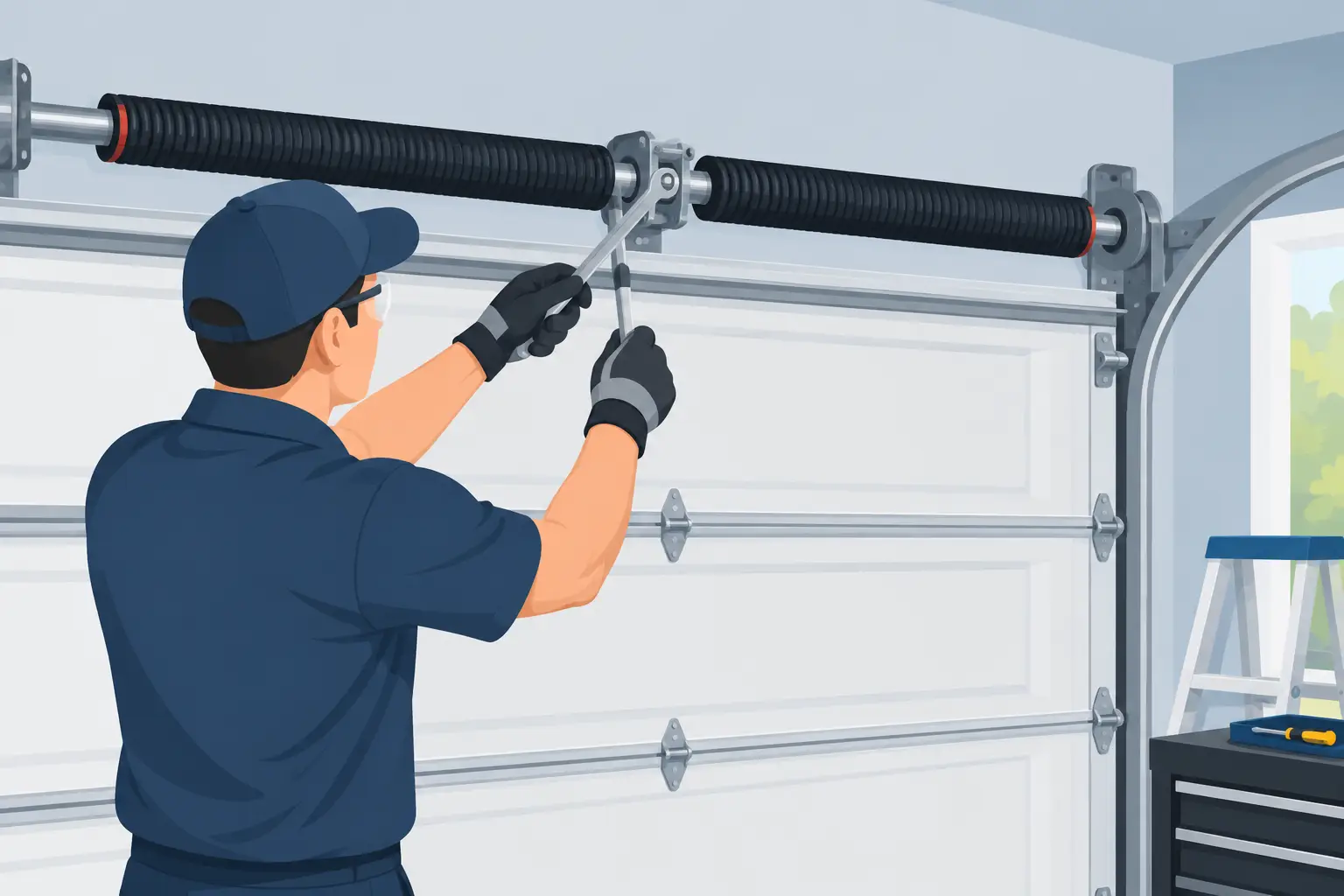
A garage door that feels unusually heavy, drops when you let go, or races toward the ceiling is not just inconvenient. It is telling you that the spring system is no longer carrying its share of the door’s weight. Knowing how to balance garage door operation starts with a safe manual test, not a wrench on a spring.
For Chicago-area homeowners, balance problems often show up after a sharp temperature swing, a broken spring, or months of wear that finally catches up with an aging door. The right response protects your opener, prevents a sudden door failure, and keeps a routine repair from becoming an emergency.
What a Balanced Garage Door Should Do
A properly balanced door is light enough to lift by hand and stable enough to stay near the position where you leave it. The springs counterbalance most of the door’s weight, while the opener simply guides the door through its travel.
With the opener disconnected, a balanced door should rise smoothly without excessive force. When placed about halfway open, it should stay roughly in place. It may drift slightly, but it should not slam to the floor or shoot upward.
That distinction matters. A door that falls is generally under-sprung or has lost spring tension. A door that rises on its own may be over-sprung. Either condition puts extra strain on rollers, cables, tracks, hinges, and the opener motor.
How to Balance a Garage Door Safely: Test First
You can check balance without adjusting any hardware. Choose a time when the garage is clear, keep children and pets away from the area, and make sure the door is fully closed before beginning.
First, unplug the garage door opener or turn off its power at the outlet. Then pull the emergency release cord to separate the door from the opener carriage. Never pull the release when the door is open unless you are certain it is supported. A door with a failed spring can come down quickly.
Lift the door manually. It should move with steady, manageable effort from the floor to the open position. Stop around waist or chest height, then carefully let go while standing clear of the door’s path.
A properly balanced door should remain near that halfway point. Next, raise it to about three-quarters open. It should stay open without drifting down. Finally, lower it slowly. A door that feels extremely heavy, binds in one area, or will not stay where positioned needs service.
Once the test is complete, close the door fully before reconnecting the opener. Do not run the opener while the emergency release is disengaged.
Signs the Door Is Out of Balance
Some balance issues are obvious. Others look like an opener problem until the door is tested manually. Watch for a door that reverses before closing, jerks as it travels, makes loud straining sounds, or moves much slower than usual.
A loud bang from the garage is another common warning sign. Torsion springs can break with a sharp noise, often leaving the door closed and too heavy to lift. Extension springs may hang loose or appear stretched unevenly. In either case, do not try to force the door open with the opener.
You may also notice a gap in the torsion spring above the door, loose lift cables, or a door that opens crookedly. Stop using the system if a cable is off the drum or the door is visibly uneven. Those conditions can allow the door to shift suddenly or come off its tracks.
Why Garage Door Balance Changes
Springs do not last forever. Every opening and closing cycle gradually wears the metal, and a standard spring has a limited service life. A heavy insulated door, frequent household use, and years of operation can all bring spring fatigue to the surface.
Chicago weather adds another variable. Cold temperatures can make moving parts less forgiving, while moisture, corrosion, and seasonal expansion can affect the door’s overall operation. Weather is not usually the root cause of an unbalanced door, but it can expose a spring or hardware problem that was already developing.
Balance can also change after a door is repaired or modified. Replacing sections, adding insulation, installing decorative hardware, or changing the bottom seal alters the door’s weight. Springs must be selected and adjusted for the actual door, not a generic estimate.
Do Not Adjust Springs Yourself
The balance test is a reasonable homeowner maintenance check. Spring adjustment is not. Torsion springs are under extreme stored tension, and extension spring systems can also cause serious injury if handled incorrectly.
Avoid loosening set screws on the torsion shaft, winding or unwinding springs, removing lift cables, or moving cable drums. Do not use the opener to compensate for a heavy door by increasing force settings. Force adjustments may mask the symptom temporarily, but they do not restore proper counterbalance and can damage the opener.
If the door is hard to lift, leave it closed whenever possible. If you must secure an open door for access, do not rely on the opener or a makeshift prop. A trained technician can evaluate the spring system, cable condition, roller wear, track alignment, and door weight as one complete system.
What a Professional Balance Service Includes
Correcting a balance problem is more than adding tension. A professional technician confirms the door’s size, weight, spring type, and spring rating before making an adjustment or recommending replacement. This is especially important when a previous repair used the wrong spring or when both springs are near the end of their service life.
The technician should inspect the torsion tube or extension system, bearings, center bracket, cable drums, lift cables, rollers, hinges, tracks, and bottom brackets. If a cable has frayed or slipped, the cause needs to be addressed before the door is returned to service.
After the spring work is completed, the door is manually tested at several heights. The opener is then reconnected and checked for smooth travel, proper limit settings, and safety reversal response. A balanced door gives the opener a manageable workload, which can help extend the life of the motor and drive components.
When to Call for Garage Door Repair Right Away
Call for professional service promptly if the door will not open, is stuck halfway, has a broken spring, has a loose cable, or is hanging unevenly. These are not wait-and-see issues, particularly if your vehicle is trapped inside or the garage cannot be secured.
Commercial doors deserve the same urgency. A loading-area door that will not hold position or operate reliably can interrupt deliveries, affect security, and create a workplace hazard. Property managers should keep tenants and staff away from a malfunctioning door until it has been inspected.
Garage Door Mart Inc provides Chicago-area residential and commercial garage door repair with practical scheduling, clear communication, and emergency support when a door problem cannot wait. A qualified service visit can identify whether the issue is spring tension, a broken component, an off-track condition, or an opener that has been working too hard.
A balanced garage door should feel controlled, quiet, and predictable every time it moves. If yours feels heavy or unstable, stop testing after the initial check, keep the area clear, and arrange service before the problem puts your door, opener, or safety at risk.