A garage door cable can look like a small, simple part of the system. It is not. These steel cables work with high-tension springs to lift and lower a door that may weigh several hundred pounds. When a cable frays, slips, or breaks, the door can go off track, hang unevenly, or drop unexpectedly.
Knowing how to inspect garage cables helps you catch warning signs before they become an urgent repair. The key is to keep the inspection visual and cautious. You can identify many problems from a safe distance, but cable adjustments, reattachment, and replacement should be left to a trained garage door technician.
Start With a Safe Garage Door Inspection
Before looking at the cables, close the garage door completely. Do not inspect a door that is partly open, crooked, stuck, or visibly off its tracks. A door in that condition may be under uneven tension and can shift without warning.
Turn off the opener using the wall control or disconnect its power if you need to work near the door. This prevents someone from operating the door while you are inspecting it. Keep children, pets, vehicles, and other people away from the garage door area.
Do not touch the cables, bottom brackets, drums, springs, or winding hardware. The cables are connected to the spring system, and the bottom brackets in particular carry substantial tension. A loose bolt or cable loop is not a homeowner repair, even if the problem appears minor.
For commercial doors, treat the inspection with the same caution. Larger sectional and rolling steel doors have heavier components and can create a significant safety risk if a cable has failed or the door is not moving evenly.
How to Inspect Garage Cables Visually
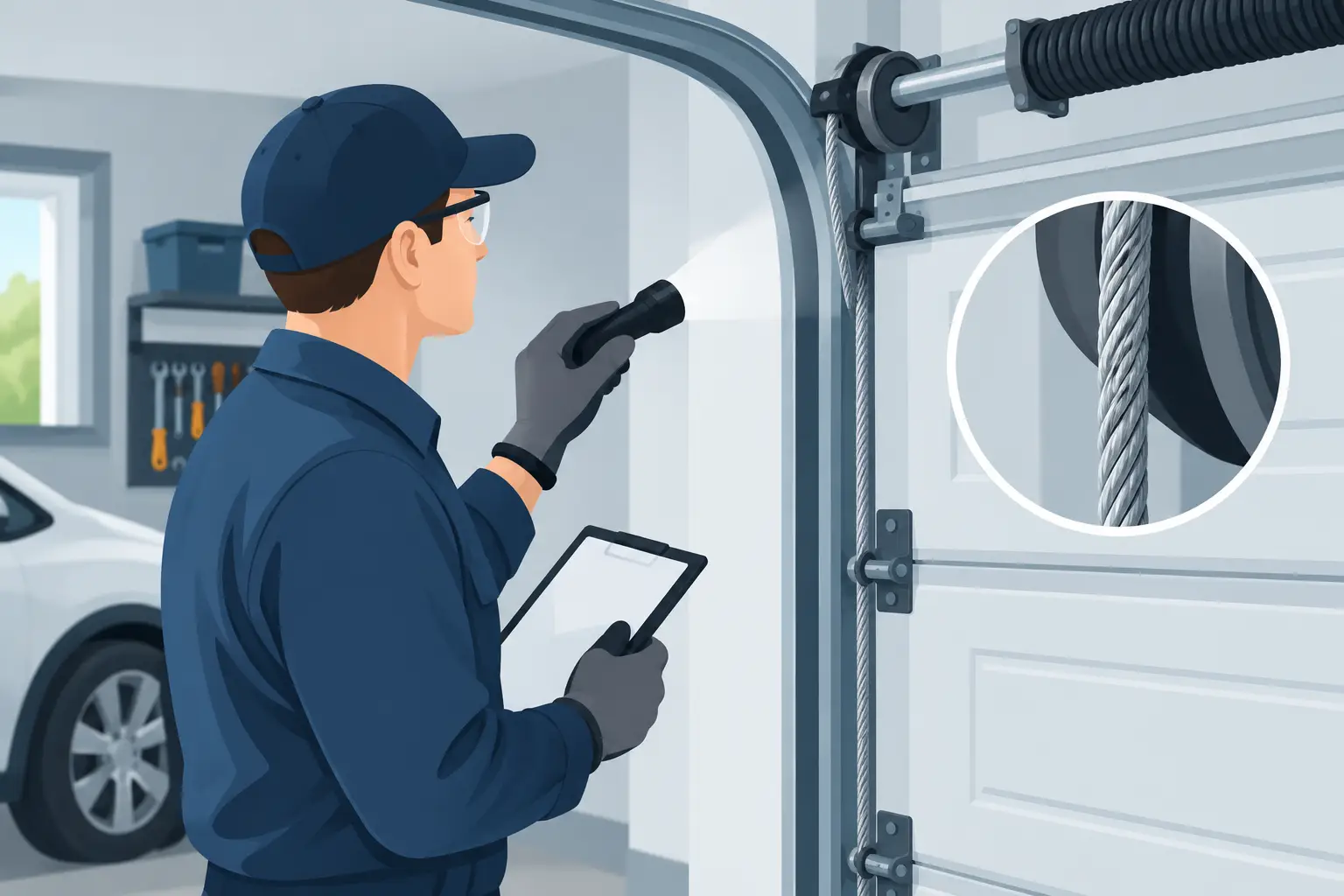
Most residential sectional garage doors use lift cables on both sides of the door. Each cable typically runs from a bracket near the bottom of the door, up along the track, and around a drum near the torsion spring shaft. Extension-spring systems have cables routed through pulleys and along the horizontal track area.
Stand several feet back with the door closed and use a flashlight if lighting is limited. Compare the cable on the left side with the cable on the right. They should appear similarly tensioned, properly routed, and free of obvious damage.
Look for Fraying, Rust, and Broken Strands
A healthy cable has a consistent twisted-steel appearance. If you see individual wires sticking out, flattened sections, kinks, or areas that look thinner than the rest of the cable, schedule service. Fraying can worsen quickly as the cable passes over the drum or pulley during normal door cycles.
Rust also deserves attention, especially in Chicago-area garages exposed to humidity, road salt, melting snow, and temperature swings. Surface discoloration may not always mean immediate failure, but pitting, heavy corrosion, or a stiff-looking cable can reduce its strength. Do not apply lubricant as a fix for a corroded or damaged cable. It may make the cable look better temporarily while the underlying risk remains.
Check Whether the Cable Is Seated Correctly
Look at the cable near the top drum, without reaching toward it. A properly seated cable should wrap neatly in the drum grooves. It should not be piled up, crossed over itself, loose, or hanging beside the drum.
At the lower end, inspect the cable’s visible path to the bottom bracket. A cable that is slack, unspooled, or visibly detached is a clear reason to stop using the door. Do not try to wind it back onto the drum. The door may be unsupported on one side, and operating it can bend tracks, damage panels, or cause the door to fall.
Watch for Uneven Door Movement
A visual inspection is useful, but the door’s movement often reveals cable trouble first. If the door is operating normally and there is no visible damage, stand clear and run it through one full open-and-close cycle using the opener.
Watch for one side rising ahead of the other, shaking, jerking, scraping, or making a snapping sound. Notice whether the bottom of the door remains level as it moves. A door that travels unevenly may have a loose cable, worn drum, damaged roller, broken spring, or track issue. The cause is not always the cable, which is why professional diagnosis matters.
If the door starts moving crookedly, stop the opener immediately. Do not continue cycling the door to see whether it corrects itself. Repeated operation can turn a manageable cable repair into an off-track door emergency.
Signs You Need Garage Cable Repair Now
Some cable problems should not wait for a routine maintenance appointment. Call for professional repair promptly if you notice any of the following:
- A cable has snapped, slipped off the drum, or come loose from the bottom bracket.
- The garage door is crooked, sagging on one side, or stuck partway open.
- The door has come off track or the rollers are no longer sitting inside the tracks.
- The opener strains, reverses unexpectedly, or makes unusual grinding or banging sounds.
- You see frayed strands, severe rust, kinks, or cable loops that were not there before.
- A torsion or extension spring appears broken, separated, or out of position.
Keep the door closed if possible. If it is stuck open and secures an occupied home, business, warehouse, or storage area, do not stand beneath it or attempt to force it down. An emergency garage door technician can secure the opening and determine whether the cable, spring, drum, track, or opener needs repair.
What Not to Do When a Cable Looks Wrong
Garage door cable repairs are often grouped into online do-it-yourself projects, but that advice ignores the tension stored in the spring system. The cable itself may look accessible, yet resetting it usually requires releasing and restoring spring tension correctly.
Do not loosen set screws on the cable drum. Do not remove the bottom bracket bolts. Do not cut a damaged cable, clamp it with hardware-store parts, or pull the door down with a rope or vehicle. These actions can release tension suddenly, damage the door, and create a serious injury hazard.
Also avoid relying on the opener to overcome a cable issue. An opener is designed to guide a balanced door, not lift a door with a failed cable or spring. Continuing to run it can strip gears, bend the top section, or pull the door farther out of alignment.
Make Cable Checks Part of Seasonal Maintenance
For most homes, a visual cable inspection twice a year is a practical schedule. Early spring and late fall work well in the Chicago-land area because they help identify wear before summer humidity, winter freezing conditions, and frequent temperature changes add stress to the system.
Property managers and commercial operators may need more frequent checks. Doors used multiple times each day accumulate cycles quickly, and a cable issue can interrupt deliveries, access, security, and daily operations. High-cycle doors benefit from scheduled professional maintenance that includes cables, springs, rollers, tracks, drums, hinges, safety sensors, and opener operation.
Keep the area around the tracks clean and make sure stored items do not rub against the cables or obstruct the door path. You can also listen for changes in sound during normal operation. A door that was once quiet but now squeals, scrapes, or jerks is asking for attention, even when the cables appear intact.
When Professional Service Is the Safer Choice
A technician can inspect cable condition, spring balance, drum alignment, track spacing, roller wear, and the door’s overall weight distribution. That broader inspection matters because cables usually fail for a reason. Worn rollers, misaligned tracks, a damaged drum, a broken spring, or an impact to the door can all place uneven load on a cable.
For homeowners and businesses, the practical decision is simple: inspect visually, stop using the door when something looks or sounds wrong, and let a professional handle anything involving tensioned hardware. Garage Door Mart Inc provides garage door cable, spring, off-track, opener, and emergency repair service throughout the Chicago-land area.
A cable rarely gives a convenient warning before it fails completely. A quick visual check now can help protect the door, the opener, and the people who use your garage every day.