A garage door opener usually gets attention at the worst possible time: when the door will not close before work, a storm knocks out power, or the unit starts grinding loudly at 6 a.m. The best garage door opener features are not about adding gadgets for their own sake. They are about dependable access, safer operation, and fewer surprises when Chicago weather puts your equipment to work.
For homeowners, the right opener should match the door’s weight, the garage’s location, and how the space is used. For property managers and commercial operators, reliability and control matter even more because a down door can interrupt deliveries, access, and security. Here is what is worth prioritizing before an opener installation or replacement.
Best Garage Door Opener Features That Matter Most
Battery backup for power outages
A battery backup is one of the most practical features available. When severe weather, high winds, or an electrical issue knocks out power, a standard opener cannot operate from the wall button or remote. That can leave a vehicle trapped inside the garage or force someone to use the emergency release manually.
A backup battery keeps the opener working for a limited number of opening and closing cycles during an outage. The exact number varies by model and battery condition, so it is not a substitute for restoring power. Still, it provides meaningful peace of mind for attached garages, households with only one vehicle exit, and properties where elderly residents or family members may need reliable access.
Photo-eye safety sensors and auto-reverse protection
Every modern residential opener should have properly working photo-eye sensors. These sensors sit near the bottom of the door tracks and create an invisible beam across the opening. If a person, pet, bicycle, box, or vehicle breaks that beam while the door is closing, the opener should stop and reverse.
This safety system only works when it is correctly aligned and kept clear. Dirty lenses, loose wiring, bent brackets, and even snow or stored items near the tracks can cause the door to reverse unexpectedly or refuse to close. If your door closes only when you hold down the wall button, treat that as a safety-system issue and arrange professional service rather than bypassing it.
Force settings and auto-reverse are just as important. The opener should recognize unusual resistance and reverse before the door creates a dangerous pinch point. A door that slams down, reverses without an obstruction, or keeps pushing after it reaches the floor needs inspection. The problem may be the opener, but it may also be worn rollers, damaged tracks, springs, or an unbalanced door.
Quiet operation for attached garages
Noise matters when a garage shares a wall, ceiling, or room with living space. A loud opener can wake children, disturb a home office, and make every early departure feel disruptive. Belt-drive openers are typically the quietest choice for residential garages because they use a reinforced belt instead of a metal chain.
Chain-drive units remain a dependable option, especially for heavier doors and detached garages where sound is less of a concern. They are often more budget-friendly, but they usually create more vibration and require periodic adjustment. Screw-drive systems can also perform well in the right setting, although temperature changes and maintenance needs should be considered in the Chicago area.
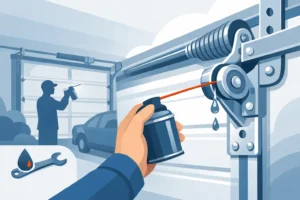
The opener is only part of the noise equation. Worn rollers, loose hardware, dry hinges, and an improperly balanced door can make even a new opener sound rough. A professional installation should include checking the entire door system, not simply mounting a motor overhead.
Smart access and activity alerts
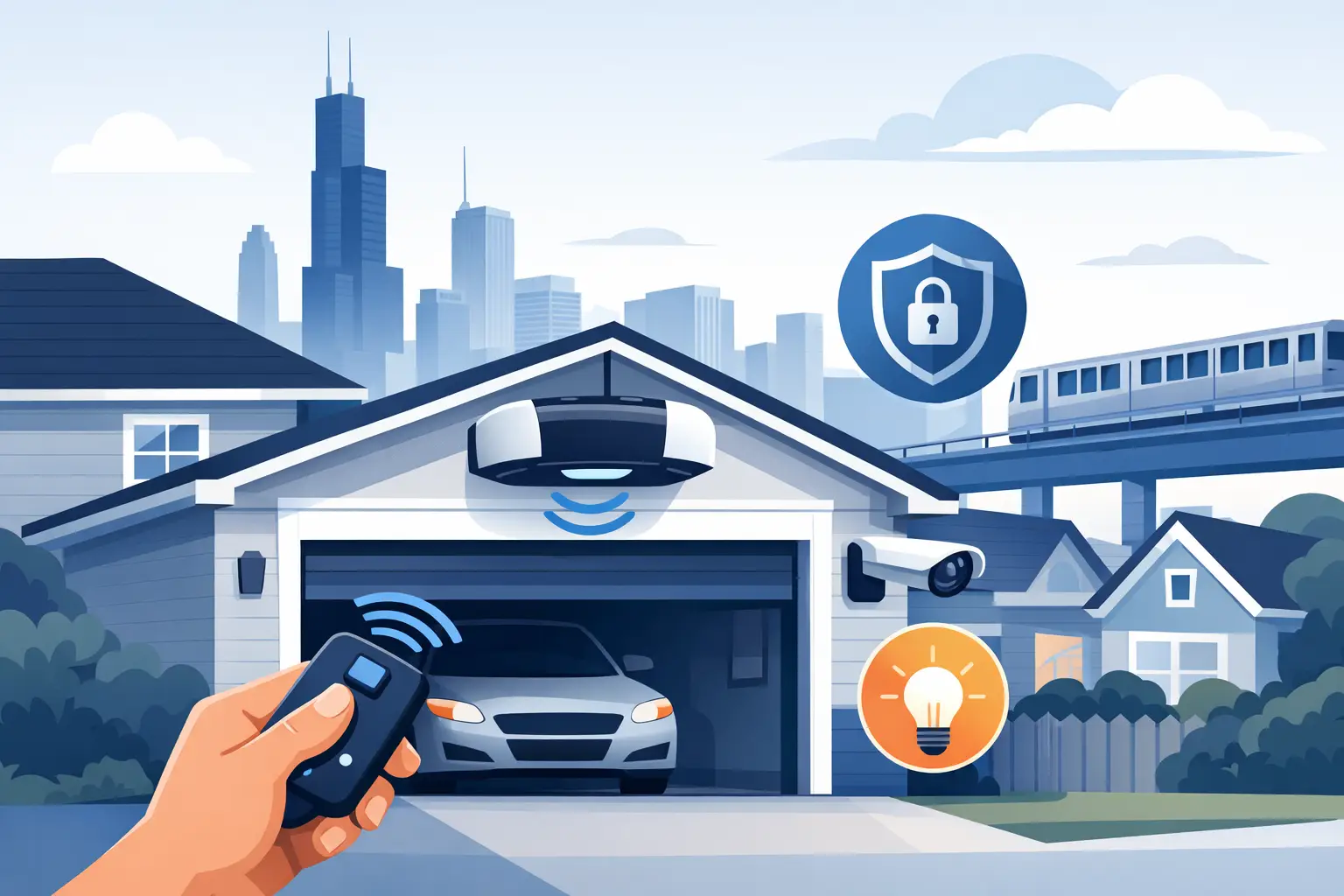
Smart garage door control is useful when it solves a real access problem. With compatible systems, homeowners can check whether the door is open, close it remotely, receive activity alerts, and provide controlled access to family members, guests, or service providers. That is valuable when you are already at work and cannot remember whether the garage door closed behind you.
For rental properties and multi-unit buildings, smart controls can reduce the headache of shared remotes and uncontrolled access. Commercial users may need more advanced access management, depending on the building and operational requirements.
There are trade-offs. Smart features depend on a stable Wi-Fi connection, proper account setup, and secure passwords. They should add convenience, not replace basic safety habits. Confirm the door is clear before closing it remotely, and avoid sharing account access broadly when a temporary code or approved user setting will do the job.
Reliable remote controls and keyless entry
A wall control and vehicle remote are basic, but keyless entry pads remain one of the most useful features for active households. A keypad lets family members enter without carrying a remote, which is helpful for kids arriving home from school, runners, dog walkers, and trusted contractors.
Look for a system that allows you to change entry codes easily. If a remote is lost, stolen, or left with a former tenant, the opener’s memory should be cleared and reprogrammed promptly. Security is not only about the garage door itself. An attached garage can provide a direct path into the home.
Rolling-code technology also matters. It changes the access code after each use to reduce the risk of unauthorized duplication. While no electronic system is invulnerable, current rolling-code equipment provides better protection than outdated openers with fixed-code controls.
Proper lifting capacity and door compatibility
The strongest motor is not automatically the best choice. An opener must be matched to the garage door’s size, material, weight, and usage level. A standard single steel door has different demands than an insulated double door, a full-view glass door, or a heavy custom wood door.
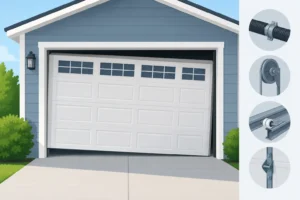
More importantly, the door must be properly balanced. Garage door springs carry most of the door’s weight. The opener is designed to guide the door, not lift a door that has become excessively heavy because of broken springs or other mechanical problems. Installing a larger opener on an unbalanced door can damage the new unit and create a safety risk.
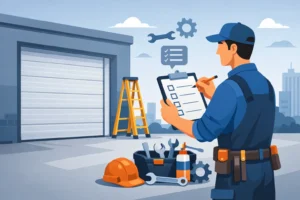
Before replacing an opener, have the technician inspect the springs, cables, rollers, tracks, and door balance. This helps prevent the frustrating situation where a new opener is installed but the door still operates poorly.
Features That Help in Chicago Weather
Chicago-area garages deal with freezing temperatures, humidity, road salt, rain, and rapid seasonal changes. A quality opener should have durable internal components, dependable lighting, and a properly protected power connection. Bright LED lighting is especially useful when arriving home after dark, though some LED bulbs can interfere with remote signals if they are not opener-compatible.
A surge protector is also worth considering. Electrical surges can damage opener control boards, especially during storms. It is a relatively small safeguard compared with the cost and inconvenience of replacing electronic components.
Weather readiness also means maintaining the door itself. A bottom seal that freezes to the floor, stiff rollers, or ice near the threshold can put extra strain on the opener. Do not keep pressing the remote if the door will not move normally. Repeated operation can turn a minor issue into a damaged gear, stripped trolley, or broken cable.
Choosing Features for Commercial Garage Doors
Commercial garage door openers are selected differently from residential units. Warehouse doors, loading areas, retail service bays, and multi-unit facilities may require higher-duty operators built for frequent cycles, larger door sizes, and tougher operating conditions. Controls may include three-button stations, monitored safety devices, external warning systems, and access controls suited to employees and delivery activity.
The priority is operational continuity. A commercial operator that is undersized or poorly maintained can delay shipments, compromise security, and create a workplace hazard. Scheduled inspection is often more cost-effective than waiting for a door to fail during a busy shift.
When an Opener Replacement Makes More Sense Than Repair
Not every opener problem requires replacement. A remote may need programming, sensors may need alignment, or a worn gear may be repairable. Replacement becomes the better value when the unit is outdated, lacks required safety features, fails repeatedly, makes excessive noise, or cannot support the access and backup-power features your property needs.
If the door is shaking, hanging unevenly, or feels unusually heavy by hand, the issue may be mechanical rather than electronic. Do not assume a new opener will correct a damaged spring, cable, track, or roller problem. A complete inspection gives you a clear answer before work begins.
A garage door should open safely, close securely, and respond when you need it. Choosing useful features and pairing the opener with professional installation gives your property one less thing to worry about when the weather, schedule, or workday gets demanding.