A dented garage door panel can look like a cosmetic problem until the door starts rubbing, shaking, or refusing to close evenly. Garage door panel damage repair is often possible, but the right answer depends on more than how the dent looks from the driveway. The panel may be protecting a bent track, damaged reinforcement strut, loose hinge, or door section that is no longer carrying its weight correctly.
For Chicago-area homeowners, property managers, and business operators, waiting can turn a manageable repair into an off-track door, a broken opener, or a security issue. A qualified technician can determine whether the damaged section can be repaired, needs replacement, or points to a larger problem in the door system.
What Causes Garage Door Panel Damage?
Most panel damage starts with an everyday accident. A vehicle backs into a closing door. A trash bin catches the bottom section. A delivery cart, forklift, lawn equipment, or heavy object strikes the door. High winds and impact damage can also bend a panel or pull it away from the hinges.
The visible damage does not always tell the full story. Steel doors can crease and lose their shape even when the paint is barely scratched. Insulated doors may have crushed foam cores behind the outer skin. Wood doors can split, absorb moisture, and begin to warp. On commercial doors, a damaged panel can put extra strain on rollers, cables, tracks, and the operator.
A garage door is designed to move as one balanced assembly. When one section is bent or misaligned, the rest of the system has to compensate. That is why a door that still opens today may become unsafe or unreliable after repeated use.
When Garage Door Panel Damage Repair Makes Sense
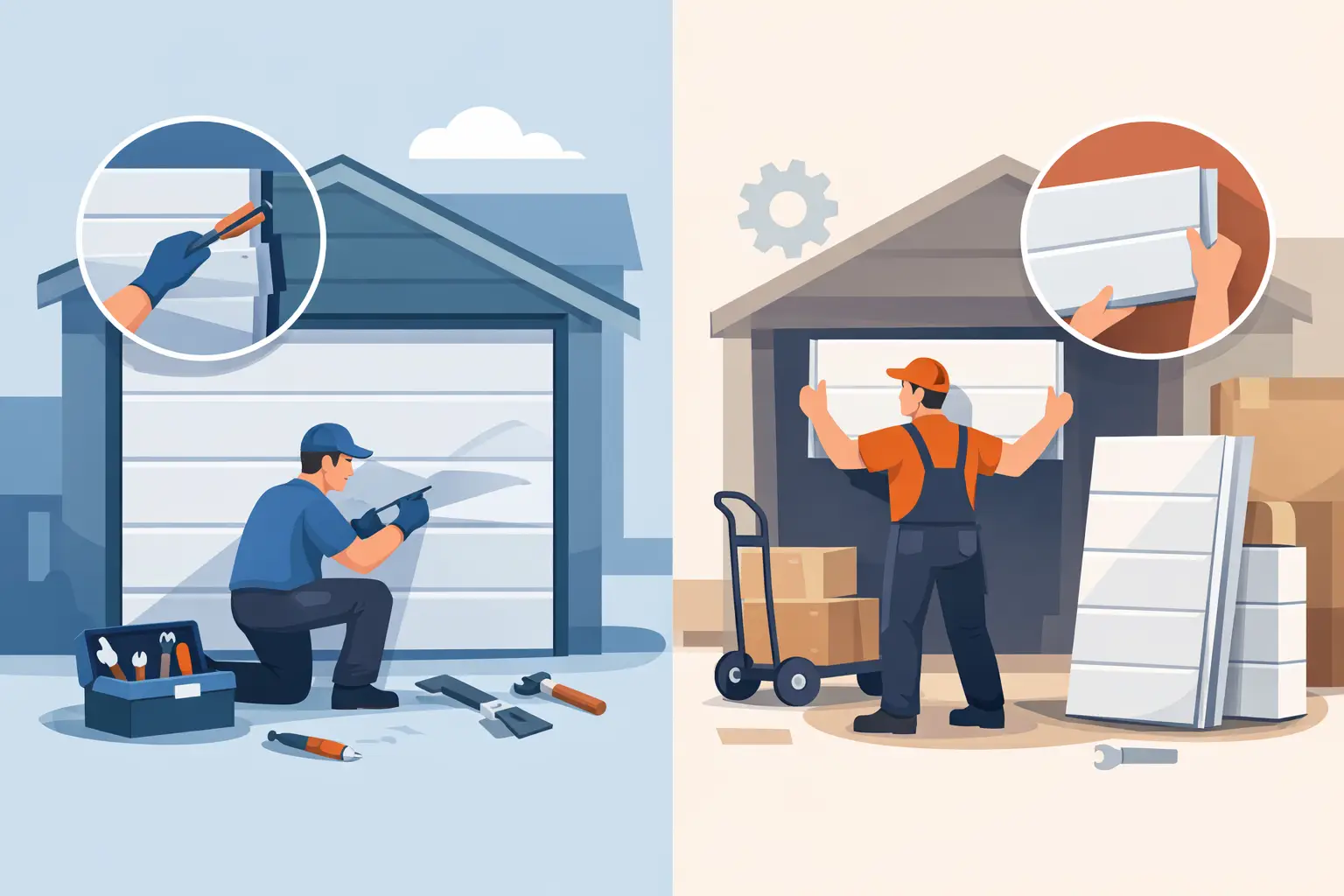
Repair is often the practical choice when the damage is shallow, localized, and has not changed how the door travels. Small dents, minor surface cracks, chipped paint, and limited cosmetic damage may be corrected without replacing the entire section.
A technician will check whether the panel is still structurally sound and whether the hinges, rollers, and reinforcement components remain secure. On some steel doors, a dent can be carefully reshaped and reinforced. A damaged hinge or strut can be replaced if the panel itself still holds its form. Surface rust may be treated before it spreads, followed by a color-matched finish where appropriate.
Repair is not always about making the panel look new. In many cases, the priority is restoring safe movement, proper alignment, and dependable closure. A modest cosmetic mark may be acceptable on a working commercial door if the section is structurally sound. At a front-facing residential property, appearance and curb appeal may make panel replacement the better value.
Signs the Damage Is Likely Limited
A repair may be possible if the door opens and closes smoothly, the panel is not separating at its seams, and the damage has not affected the track or hardware. The door should sit level when closed, seal properly along the floor, and move without scraping or binding.
Even then, do not assume a working opener means the door is safe. Garage door openers can force a damaged door through a cycle for a while, which may conceal a growing alignment or balance problem.
When a Panel Should Be Replaced
Replacement is usually the safer choice when a section is deeply creased, cracked through, buckled, rusted through, or pulled loose around the hinges. A panel that has lost its shape may not support the hardware correctly, especially as the door moves from vertical tracks to horizontal tracks overhead.
A replacement panel may also be necessary when insulation has been crushed or moisture has entered the door. This matters in Chicagoland, where winter temperatures, wind, and road salt can accelerate deterioration. A damaged insulated section can reduce energy efficiency and allow water to reach internal components that are difficult to inspect.
For sectional doors, replacing one panel can be more cost-effective than replacing the full door. However, it depends on whether the manufacturer still produces the matching section. Older doors, discontinued designs, fading paint, and unique window layouts can make an exact match difficult. In those situations, a full replacement may deliver a cleaner appearance and avoid investing in a door that has reached the end of its useful life.
Replacement Is Not Always a One-Panel Job
A new panel has to match the door’s size, design, weight, insulation level, and hardware placement. Installing the wrong section can affect spring tension and door balance. If the replacement panel is heavier or lighter than the original, the springs may need adjustment to prevent opener strain and uneven movement.
This is not a do-it-yourself task for most property owners. Garage door springs, cables, and brackets are under high tension. Trying to force a damaged panel back into place or remove hardware without the right tools can cause serious injury and additional damage.
Why a Damaged Panel Can Become a Safety Problem
A bent section can interfere with the rollers as they move through the tracks. It can pull hinges out of position, cause the door to bind, or place uneven pressure on the opener arm. If the door is heavily damaged near the bottom, it may not seal correctly, leaving a gap that affects security and allows rain, pests, and cold air inside.
For commercial properties, the risk is larger. A compromised loading-area door can slow deliveries, create an access-control issue, and expose employees to an unstable door. If a panel is hanging loose, the door is off track, or the opening is not secure, stop using it and arrange professional service promptly.
Do not try to operate a door with broken sections, loose cables, bent tracks, or visible gaps between panels. If the door must remain closed for security, disconnecting the opener is sometimes appropriate, but only if the door is fully down and stable. A service professional can assess the condition and secure the opening safely.
What to Do After Impact Damage
Start by keeping people, vehicles, and equipment clear of the door. Do not repeatedly press the opener button to see whether the door will correct itself. Every extra cycle can bend the tracks further or damage the opener.
From a safe distance, look for obvious warning signs: a panel that is bowed outward, rollers outside the track, a loose cable, a crooked door, or hinges pulling away from the section. Take a few photos for your records, especially if the damage involves a tenant, delivery vehicle, employee, or insurance claim.
Then schedule an on-site inspection. Garage Door Mart Inc provides repair support for residential and commercial doors throughout the greater Chicago area, including urgent situations that cannot wait for normal business hours. A technician can identify the full extent of the damage, explain the repair or replacement options, and provide clear recommendations based on safety, availability, and cost.
Repair Costs Depend on More Than the Dent
Panel damage costs vary because doors vary. A basic uninsulated steel section generally costs less to repair or replace than a custom wood door, carriage-house design, or insulated commercial door. Hardware damage, track alignment, opener strain, paint matching, and availability of replacement panels also affect the final scope of work.
The lowest immediate price is not always the lowest long-term cost. Repairing a badly weakened panel may save money this week but lead to recurring service calls, poor insulation, or premature opener failure. On the other hand, replacing an entire door for a repairable dent may not be necessary. A professional inspection gives you the information to make a practical decision rather than guessing from appearance alone.
Preventing Future Panel Damage
Prevention begins with clear space around the door. Keep bicycles, tools, bins, and storage items away from the door’s travel path. Make sure drivers know the door is fully open before moving a vehicle in or out. At commercial sites, mark clearance areas and inspect doors after any forklift or loading incident.
Routine maintenance also helps catch small problems early. Rollers, hinges, tracks, springs, and opener settings should be inspected so the door moves smoothly and reverses when it should. A properly maintained door is less likely to bind after a minor impact, and problems are easier to correct before they damage multiple sections.
If your garage door panel is bent, cracked, separated, or no longer moving smoothly, treat it as more than a cosmetic issue. A timely inspection can protect your property, preserve daily access, and keep a small impact from becoming a complete door failure.