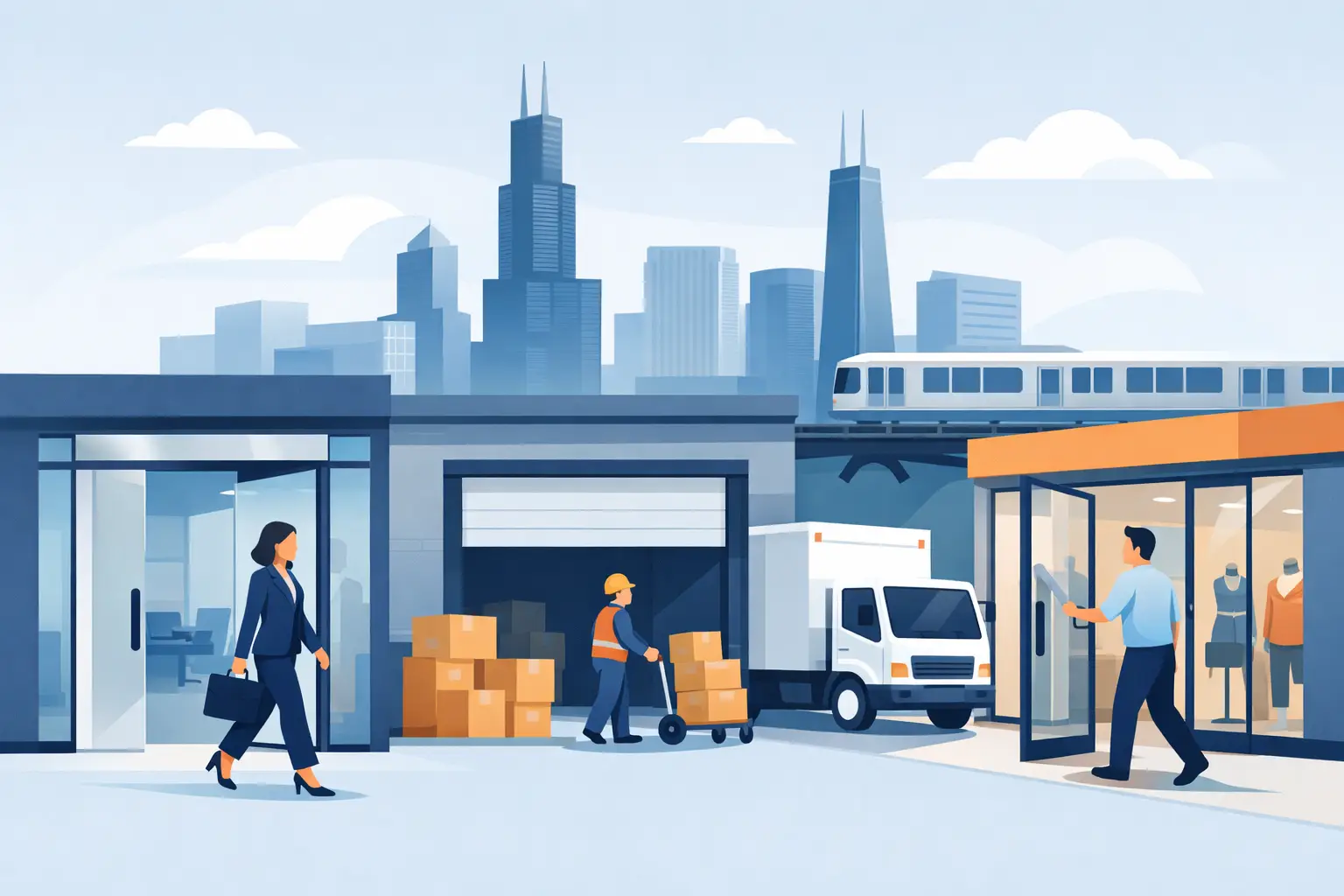
A commercial door failure rarely waits for a convenient time. It happens when a delivery truck is waiting at the dock, when a crew needs access before opening, or when a tenant cannot secure a shared garage. Commercial doors are part of your daily operation, not a background detail. When they stick, slam, run unevenly, or will not close, safety, security, and productivity can all be affected.
For Chicago-area warehouses, retail properties, auto shops, multi-unit buildings, and service facilities, the right response depends on the door, the condition of its components, and how critical the opening is to your business. A fast repair may restore service. In other cases, maintenance or replacement is the more practical way to avoid repeat downtime.
Commercial Doors Need to Match the Job
Not every commercial opening faces the same demands. A warehouse receiving door may cycle dozens of times a day and need to handle large equipment, weather exposure, and dock traffic. A retail rear-entry door may be used less often, but it must close securely every night. A parking garage door has its own challenges, including frequent vehicle movement, access control, and safety devices.
Sectional overhead doors are common for shops, warehouses, and vehicle bays because they provide a strong, practical barrier and can be insulated for better temperature control. Rolling steel doors are often selected where space is limited or security is the main concern. High-cycle and high-speed doors can make sense in active facilities where repeated opening and closing affects workflow.
The best choice is not automatically the heaviest door or the lowest-priced option. Door size, daily cycles, insulation needs, wind exposure, clearance, required security, and operator compatibility all matter. A door that is undersized for its use can create frequent service calls. A more specialized door may cost more upfront but reduce interruptions over its working life.
The Small Problems That Turn Into Business Interruptions
Commercial door systems work under load. Springs counterbalance the door’s weight, cables carry tension, rollers guide movement, tracks keep the door aligned, and openers control operation. When one component starts to fail, the rest of the system can be put under added strain.
A door that opens slower than usual, makes grinding or popping sounds, shakes during travel, or reverses unexpectedly should be inspected before it stops operating altogether. The same applies to damaged panels, bent tracks, worn rollers, frayed cables, and bottom seals that no longer keep out water, debris, or cold air.
In Chicagoland, weather makes neglected issues more expensive. Freezing temperatures can affect moving parts and seals. Snow, salt, rain, and wind-driven debris can contribute to corrosion, track obstruction, and poor door alignment. A door that barely works in mild weather can become a complete access problem during a winter storm.
Trying to force a heavy commercial door back into place can create a larger repair and a serious safety risk. Springs and cables are under high tension, and a door that has come off track may be unstable. Keep people and vehicles clear of the opening, stop using the operator, and have the system evaluated by a trained technician.
When an Urgent Service Call Makes Sense
Some issues should not wait for the next convenient maintenance visit. Call for prompt commercial door service when the door will not close and leaves inventory or vehicles exposed, when it is stuck open or shut, when a cable has come loose, or when the door is off track. A damaged opener that runs without moving the door can also cause additional damage if it continues to be used.
Emergency service is especially valuable when a failed door prevents loading, blocks a fire lane or vehicle bay, affects tenant access, or compromises after-hours security. The goal is not simply to get the door moving again. It is to restore safe, controlled operation and identify the cause of the failure.
Repair, Maintenance, or Replacement?
The right service decision comes down to condition, usage, and risk. A relatively new door with a broken spring, damaged roller, worn cable, or opener issue can often be repaired effectively. Replacing the specific failed component can be the most cost-conscious choice when the rest of the system is in sound condition.
Maintenance is the better answer when the door is operational but showing early wear. A professional service visit can identify loose hardware, roller wear, track problems, lubrication needs, balance issues, and safety-device concerns before they lead to a shutdown. For property managers with multiple doors, scheduled maintenance also makes budgeting and planning easier than reacting to failures one at a time.
Replacement is worth considering when repairs become frequent, panels are significantly damaged, the door no longer meets operational needs, or parts are difficult to source. It may also be the right move when an older, inefficient door contributes to heat loss in a conditioned space. Replacing a door is a larger investment, but repeated downtime, service calls, security concerns, and lost productivity have costs too.
A reliable contractor should explain the condition of the door in plain terms and give you a practical recommendation. Not every worn part requires a new door, and not every door can be responsibly kept in service with another temporary repair.
The Opener Is Part of the System
A commercial operator is often blamed first when a door fails to move, but the opener may not be the root problem. An unbalanced door, binding track, worn rollers, or broken spring can force the operator to work harder than intended. Replacing the operator without addressing the mechanical issue can lead to another failure.
Commercial openers should be selected for the door’s size, weight, usage level, and mounting requirements. A busy loading area may need a different operator setup than a small service bay. Controls matter as well. Keypads, remotes, wall stations, vehicle sensors, and access systems should be reliable, placed appropriately, and tested as part of routine service.
Safety features deserve the same attention. Photo eyes and other entrapment-protection devices must be aligned, functional, and kept clear. If a door closes unexpectedly, fails to reverse correctly, or operates inconsistently, stop using it until the system has been checked.
What to Expect From Professional Commercial Door Service
Business owners and facilities managers need clear communication as much as technical skill. You need to know what failed, what can be repaired, what parts may be needed, and how the work could affect operations. Scheduling around deliveries, tenant access, customer hours, and staff shifts is often part of the job.
Garage Door Mart Inc provides commercial door service across the greater Chicago area with a focus on practical repairs, replacement options, and around-the-clock response when access or security cannot wait. A process-driven appointment experience, including communication before the technician arrives, helps reduce uncertainty when your facility already has enough moving parts.
For installations, a site assessment should account for the opening dimensions, available headroom and side room, door weight, track configuration, electrical needs, and daily operating demands. This is where details matter. A door that fits the opening but does not fit the workflow will create avoidable problems later.
A Simple Maintenance Routine for Facility Teams
Your team does not need to repair commercial doors, but regular observation can catch issues early. During normal operations, watch for unusual noise, uneven movement, damaged panels, loose weather seals, and delayed response from controls. Keep the track area free of pallets, trash, ice, and other obstructions.
Do not adjust springs, cables, or bottom brackets internally. Those components require specialized tools and training. Instead, record the issue, note when it happens, and report whether the door is used heavily or only at certain times. That information helps a technician diagnose the problem faster.
For high-use doors, routine professional maintenance is not an optional extra. It is part of protecting the opening your operation depends on. The cost of a planned visit is often far easier to manage than a door failure during a delivery rush, overnight security issue, or severe weather event.
A commercial door should make work easier: open when it should, close securely, and stay out of the way of your operation. If yours is sending warning signs, arranging service before the next failure can protect your people, property, and schedule.