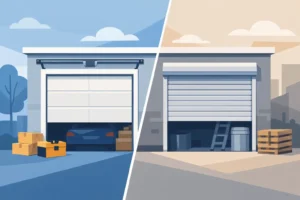
A loading dock door that sticks halfway open at 7 a.m. can delay deliveries, expose inventory, and put employees in a dangerous position before the day has even started. A consistent commercial garage door maintenance checklist helps facilities managers catch wear early, protect daily operations, and avoid preventable emergency repairs.
Commercial doors carry a heavier workload than most residential systems. They may cycle dozens of times each day, operate in changing Chicago-area weather, and support busy shipping, warehouse, retail, or multi-unit property operations. Maintenance does not eliminate every breakdown, but it gives you the best chance of finding small issues before they become a failed spring, damaged track, or inoperable opener.
Build Maintenance Around How Your Door Is Used
There is no single maintenance interval that fits every commercial property. A warehouse door used 50 times a day needs more attention than a service-bay door opened only a few times each week. High-cycle doors, dock doors, and doors exposed to road salt, wind, moisture, or temperature swings deserve closer inspection.
For most facilities, a quick visual check at the start of each workday, a more detailed monthly review, and professional service at least once or twice a year is a sensible schedule. If a door is safety-critical or receives heavy daily use, ask a qualified technician to recommend a service plan based on its cycle count, door type, opener, and operating conditions.
Daily Commercial Garage Door Maintenance Checklist
Daily checks should be quick and practical. Train a designated employee or supervisor to look for obvious changes before the door enters a busy operating cycle. The goal is not to repair the system. It is to identify unsafe conditions and take the door out of service when necessary.
- Watch one complete opening and closing cycle. The door should move steadily without jerking, binding, scraping, or pausing unexpectedly.
- Listen for new sounds such as grinding, popping, squealing, rattling, or a strained opener motor. Noise is often the first warning that rollers, bearings, springs, or hardware need attention.
- Check that the opening area is clear of pallets, vehicles, trash, ice, and loose materials. A clear path protects the bottom seal, track, and people working nearby.
- Inspect the door panels, windows, hinges, tracks, cables, and bottom seal for visible damage. Look for dents, loose fasteners, frayed cables, bent track sections, and daylight showing beneath a closed door.
- Test photo eyes or other monitored safety devices according to the manufacturer’s instructions. Keep sensors clean, aligned, and free of boxes, forklifts, or stored inventory.
If the door is moving unevenly, a cable appears loose, or a spring is broken, stop using it. Do not ask employees to force the door open or closed. Commercial garage door springs and cables are under significant tension and require professional repair.
Monthly Checks for Wear, Security, and Controls
A monthly inspection gives your team time to look beyond daily operation. Start with the door in the closed position and keep unauthorized personnel away from the work area.
Check exterior and interior panels for corrosion, impact damage, loose insulation, and cracked glazing. In Chicago-area facilities, winter moisture and salt can speed up corrosion around bottom fixtures, fasteners, track hardware, and steel door components. Addressing surface damage early can extend the working life of the door and help maintain a professional appearance.
Examine the tracks for dirt buildup, dents, loose brackets, and shifting alignment. Tracks should not be lubricated with heavy grease, which can attract debris. Cleaning should be limited to safe, accessible surfaces. If you see a bent track, rollers coming out of the track, or gaps at mounting points, schedule service rather than attempting to straighten or realign components on site.
Review the opener controls as well. Confirm that wall buttons, key switches, remote controls, access-control systems, and warning lights are working as expected. Replace weak remote batteries and remove access from former employees or vendors when appropriate. A garage door is a major access point, so control management is part of security maintenance.
Quarterly Inspection of Seals, Hardware, and Dock Conditions
Every quarter, take a closer look at the parts that support energy efficiency, weather protection, and reliable travel. This is especially valuable before winter and after the harshest part of the season.
Inspect the bottom seal, side weatherstripping, and header seal for cracks, flattening, gaps, or sections pulling away from the door. Worn seals allow water, pests, wind, and cold air into the building. At a heated warehouse or retail location, a damaged seal can also add to energy costs and create slippery conditions near the entrance.
Look at hinges, rollers, and visible fasteners for excessive wear or loosening. Do not tighten, adjust, or replace spring-related hardware unless you are trained and authorized to do so. A qualified technician can safely lubricate the correct moving parts, check roller condition, and verify that the door remains properly balanced.
For loading docks, inspect bumpers, dock leveler areas, vehicle restraint equipment, and the space around the door. Repeated truck contact, forklift traffic, and dock impacts can damage a door even when the damage is not immediately obvious. Make sure drivers understand clearance requirements and that employees know not to operate the door against a backed-in truck, raised equipment, or obstruction.
Schedule Professional Preventive Service
An annual professional inspection is the minimum for many commercial doors. Semiannual service is usually the smarter choice for high-cycle doors, large sectional doors, rolling steel doors, fire-rated doors, and systems that support constant loading activity.
During preventive service, a trained technician can inspect spring tension, cable condition, drum operation, bearing plates, shaft alignment, rollers, hinges, track alignment, opener force settings, limits, and safety devices. These are not casual maintenance tasks. A commercial door can weigh hundreds of pounds, and improper adjustments can cause serious injury or extensive property damage.
Professional service also provides a useful baseline. When a technician documents worn rollers, weakening springs, or a failing opener component, you can plan repairs before a failure shuts down a dock or leaves a business unsecured overnight. That is often less disruptive and more cost-effective than waiting for an emergency call.
Know When Maintenance Becomes a Repair Call
Some problems require immediate attention, even if the door can still move. Call for professional service when you notice a door off track, a broken spring, frayed or loose cables, a door that will not fully close, damaged panels affecting operation, repeated opener reversals, or a motor that hums without moving the door.
Keep the area clear and avoid cycling the door again. For a door that cannot close and affects building security, use your site’s security procedures while arranging service. Do not rely on temporary fixes such as chains, blocks, or improvised restraints unless they are part of an approved facility safety plan.
Keep a Simple Service Record
A maintenance log makes recurring issues easier to spot. Record the date, door location or number, observed issue, service performed, parts replaced, and technician recommendations. This is especially useful for property managers overseeing multiple doors or locations.
The record can reveal patterns, such as a specific dock door taking repeated forklift impacts or one opener struggling during cold weather. Those patterns help you make better repair, replacement, training, and budgeting decisions.
A commercial garage door should support your operation quietly and safely, not demand attention when the workday is at its busiest. When a door shows signs of trouble or is due for professional service, Garage Door Mart Inc can help Chicago-area businesses restore safe, dependable operation before a minor concern becomes costly downtime.