A commercial door that closes but does not fully lock is not a small inconvenience. For a warehouse, retail storefront, apartment property, or service facility, it can create an after-hours entry point, interrupt deliveries, and put inventory and employees at risk. Knowing how to secure commercial door systems starts with identifying the weak point before it becomes an emergency.
For many Chicago-area businesses, that weak point is not the door panel itself. It may be a worn lock cylinder, a damaged track, a misaligned strike plate, an aging opener, or an overhead door that no longer reaches the floor evenly. Security works best when the entire opening is treated as one system.
How to Secure Commercial Doors at Every Entry Point
Start by walking the property from the outside after business hours. Look at every employee entrance, loading dock, overhead garage door, rear service door, gate, and access point connecting the building to a storage area. A secure front entrance does little good if a side door has a loose frame or a loading dock door can be lifted by hand.
Pay close attention to doors that employees use every day. Frequent use creates wear at hinges, closers, latches, and locks. A door that needs to be pushed, pulled, or lifted to latch correctly is already telling you that adjustment or repair is needed.
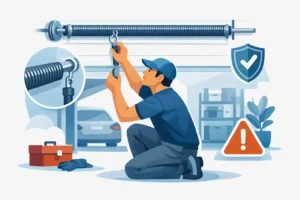
For commercial overhead doors, check whether the bottom seal meets the floor across the entire opening. Gaps can expose the building to weather, pests, and prying tools. Also inspect tracks, rollers, cables, brackets, and the bottom section for visible damage. Never attempt to adjust high-tension springs or cables without a trained technician. Those components can cause serious injury when handled incorrectly.
Use Hardware That Matches the Risk
The right lock depends on the door type, the value of what is inside, and how often the door needs to open. A basic keyed lock may be suitable for a low-traffic utility room, but it is rarely enough for a loading entrance, stockroom, or exterior access door.
Deadbolts, commercial-grade lever locks, reinforced strike plates, and heavy-duty hinges improve resistance to forced entry. On outward-swinging doors, hinge protection is especially important because exposed hinge pins can become a target. Security hinges or hinge bolts add protection without slowing down normal access.
For overhead garage doors, an interior slide lock can provide an additional physical barrier when the door is closed for an extended period. This is useful for doors that are not used overnight or during holiday closures. However, the lock must be disengaged before operating the opener. Trying to run an opener against a locked door can damage the opener, door sections, or track system.
High-security hardware costs more upfront, but the trade-off is often worthwhile for vulnerable entrances and facilities with expensive equipment or inventory. For lower-risk areas, routine maintenance and a properly functioning commercial lock may offer the most practical value.
Reinforce the Frame, Not Just the Lock
A strong lock attached to a weak frame is still a weak security plan. The strike plate, mounting screws, jamb, and surrounding wall material all need to hold under force. Long screws that reach framing, reinforced strike plates, and professionally installed door hardware make a meaningful difference.
Loading dock and service doors also need sound tracks and secure mounting points. A bent vertical track, loose bracket, or damaged bottom fixture can make an overhead door easier to force or can lead to an unexpected breakdown. Repairing these issues early protects security and helps avoid downtime during deliveries.
Control Who Can Enter and When
Keys are simple, but they are difficult to manage once a business grows. Former employees, contractors, vendors, and tenants may still have copies long after access should have ended. If your building has multiple users or restricted areas, access control can give management more visibility and control.
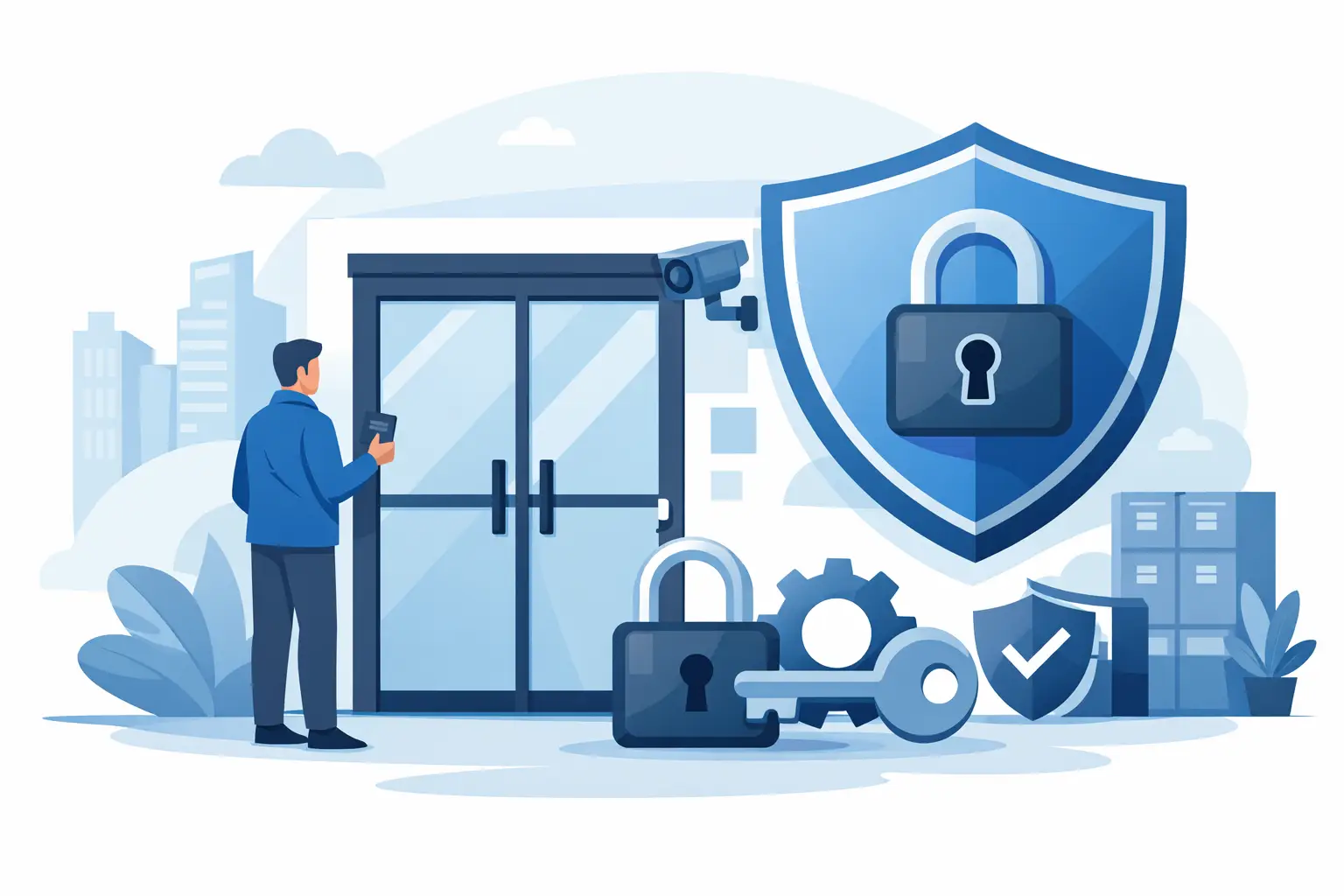
Keypads, card readers, fobs, and mobile access systems allow you to remove access without changing every lock. They can also limit entry by schedule, which is useful for cleaning crews, delivery teams, and contractors who only need access during specific hours.
Access control is not a replacement for durable door hardware. Electronic systems should be paired with a properly aligned door, secure latch, reliable closer, and backup plan for power outages. A system that looks advanced but leaves a door ajar is not providing real protection.
Create a clear key and credential policy. Keep a current record of who has access, collect keys when employment ends, and update access codes regularly. Avoid using easy-to-guess codes such as an address, business founding year, or repeated numbers.
Keep Overhead Doors From Becoming a Security Gap
Commercial garage doors are often the largest openings in a building, which makes them a priority for both security and operational continuity. A door that will not close, reverses unexpectedly, comes off track, or has a broken spring needs prompt attention. Leaving it partially open overnight is an obvious risk, but forcing it shut can create more damage.
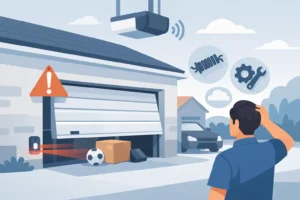
Commercial operators should be sized for the door’s weight and daily cycle demands. An undersized or aging opener may struggle to close the door consistently, especially during cold Chicago winters when components can stiffen and weather seals can freeze to the ground. Photo eyes and safety devices also need to be clean, aligned, and tested. They protect people and equipment, but when they malfunction, they can keep a door from securing fully.
Do not disable safety sensors to get a door closed. That creates a serious safety hazard and may mask the real problem. A trained commercial door technician can diagnose whether the issue is the opener, sensors, spring system, cables, tracks, or door alignment.
Add Visibility Around Doors and Docks
Good lighting discourages unauthorized activity and makes it easier for employees to see whether a door is fully closed and locked. Install lighting at rear entrances, loading docks, side alleys, parking areas, and dumpster enclosures. Motion-activated lighting can be effective in low-traffic areas, while consistently lit employee entrances may be better for facilities operating late shifts.
Cameras provide useful documentation, but placement matters. Cover the approach to the door, not just the door face. Ensure cameras can capture faces, vehicle activity, and the area around overhead doors without glare from lights or reflective surfaces.
Keep shrubs, stacked pallets, dumpsters, and stored materials away from exterior doors where possible. These items can block sight lines and may give someone cover or a tool for climbing and forced entry. At loading docks, organized storage also reduces the chance that equipment will strike a door or track during a busy shift.
Make Inspections Part of Routine Maintenance
Most commercial door failures show warning signs first: grinding noises, slow movement, uneven closing, loosened hardware, frayed cables, damaged panels, or a lock that sticks. Establishing a maintenance schedule helps catch these problems before a door fails at the end of the day.
A facility manager or designated employee can perform simple visual checks monthly. Look for obstructions, damaged weather seals, loose bolts, door gaps, water intrusion, and signs of forced entry. Test that doors close and latch without needing extra force. For powered overhead doors, watch the full opening and closing cycle from a safe distance.
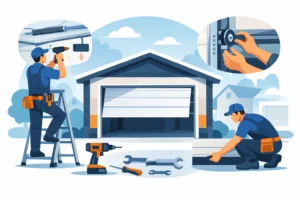
Professional service is the right choice for spring systems, cables, operators, tracks, electrical controls, and any door that is off track or difficult to operate. Commercial doors carry substantial weight, and temporary fixes can make both the security problem and the repair bill worse.
Garage Door Mart Inc provides commercial garage door repair, installation, opener service, and emergency response throughout the Chicago-land area. When a door cannot close securely, waiting until the next business day may not be an option. Fast professional service can protect your building while restoring normal operations.
Know When to Call for Emergency Service
Call for immediate professional help if an overhead door is stuck open, has come off track, has a broken cable or spring, will not lock, or was damaged by a vehicle or attempted break-in. Secure the area, keep employees away from damaged components, and do not try to force the door into position.
If the building must remain open while repairs are arranged, move valuable inventory away from the opening, limit access to the area, and use temporary monitored security measures where appropriate. Your first priority is preventing injury and limiting exposure until the door can be safely repaired.
A commercial door should give your team confidence at closing time, not leave someone checking the parking lot twice. Regular inspections, properly matched hardware, controlled access, and fast repair support keep the building protected when your business is closed and moving when it is open.