A warehouse door that will not open at 6:30 a.m. can hold up trucks, labor, inventory, and customer commitments before the first shift is fully underway. Effective warehouse door downtime reduction is not about hoping equipment lasts longer. It is about identifying wear early, responding fast when a failure happens, and using service practices that protect the door, opener, and loading schedule.
For Chicago-area facilities, weather adds another layer of pressure. Freezing temperatures, road salt, wind, moisture, and daily cycles can all take a toll on commercial overhead doors. A practical maintenance and repair plan helps facility managers avoid turning a manageable issue into a shutdown.
Why warehouse door failures cost more than a repair bill
A broken commercial door affects much more than the opening itself. If a door is stuck closed, deliveries may be delayed or redirected. If it is stuck open, the facility can lose security, temperature control, and protection from weather. When a dock position is unavailable, workers may also try to work around the problem in ways that create safety risks.
The direct repair cost is usually only one part of the expense. Overtime, detention charges, missed pickup windows, disrupted labor assignments, damaged product, and frustrated tenants or customers can quickly raise the real cost of downtime. That is why waiting until a door fails completely is rarely the least expensive option.
The right response depends on the door’s role. A lightly used storage-bay door may allow time for a scheduled repair. A high-cycle shipping door that serves outbound trucks needs priority attention, even when the issue appears minor. Facilities should rank doors by operational impact and treat the busiest openings accordingly.
Build warehouse door downtime reduction into daily operations
The best time to prevent a breakdown is before an operator has to force a door open. Daily checks do not need to be complicated, but they should be consistent. Assign a trained employee to watch each active door during normal use and report changes immediately.
Listen for grinding, squealing, scraping, or banging. Watch whether the door moves evenly, reverses unexpectedly, hesitates, or fails to seal against the floor. Check for damaged panels, bent tracks, loose hardware, frayed cables, and forklift impact near the opening. These signs do not always mean the door will fail that day, but they are clear reasons to schedule professional service before the damage spreads.
A simple written log is useful, especially in multi-door facilities. Record the door location, issue, date noticed, and whether the condition affects safety or truck flow. This gives the service technician better information before arrival and helps managers spot repeat failures that may point to an underlying cause.
Do not let staff force a damaged door
When a door is off track, binding, or hanging unevenly, employees should stop using it and keep people clear of the opening. Forcing the door can bend additional track sections, damage rollers, overload the opener, or create a cable or spring hazard. It may also turn a repair that could have been completed quickly into a larger replacement project.
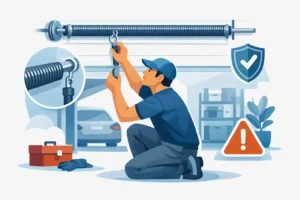
Staff can secure the area, move trucks to another available bay, and report the condition. Repairs involving high-tension springs, cables, tracks, and commercial operators should be handled by qualified technicians with the proper tools and training.
Focus preventive maintenance on high-wear components
Commercial overhead doors are moving systems. The parts that carry weight, guide movement, and control travel need regular inspection. A maintenance visit should look beyond the visible door panels and address the components most likely to interrupt operations.
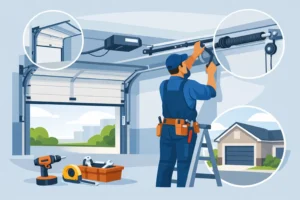
Technicians should inspect springs for wear and correct balance, cables for fraying or improper winding, rollers for damage, tracks for alignment, hinges for fatigue, and fasteners for looseness. They should also evaluate the operator, drive system, limit settings, photo eyes, safety edges, controls, and reversing functions. Proper lubrication matters, but it is not a substitute for correcting worn or misaligned parts.
Service intervals depend on door size, operating environment, and cycle volume. A door used a few times a day may need less frequent attention than a loading-door system cycling constantly through two shifts. Facilities with heavy truck traffic, cold storage requirements, or frequent exposure to dust and moisture should generally plan more frequent inspections.
Preventive service creates an opportunity to replace components before they fail at the worst possible time. Replacing worn rollers or cables during planned maintenance is usually easier to schedule than an emergency call after a door comes down crooked during a busy delivery window.
Protect doors from the damage warehouses see most often
Many commercial door calls begin with impacts. Forklifts, pallet jacks, trailers, and moving inventory can strike bottom sections, tracks, bollards, sensors, or operator controls. Even a minor hit can affect alignment enough to cause a door to bind later.
Physical protection helps. Clearly marked travel lanes, adequate lighting, dock procedures, and properly placed protective posts can reduce impact exposure. If drivers regularly back trailers close to the opening, inspect the lower door sections, tracks, and safety devices often. A damaged photo eye or safety edge can stop a door from closing and leave a loading bay unsecured.
Weather also deserves attention in the Chicago area. Ice at the threshold, snow buildup, clogged drainage, and wind-driven debris can interfere with door travel and sealing. During winter, keep the opening clear and avoid chipping ice directly against weather seals or bottom sections. If a door freezes to the floor, do not use the operator to break it free. That can strain the opener and damage the bottom seal or door sections.
Keep parts and service decisions practical
A facility does not need to stock every possible garage door component. It does need a plan for parts that are specific to its most critical doors. Document door manufacturer information, dimensions, spring configuration, operator model, remote or control requirements, and safety-device details. Keep those records available to the person who calls for service.
For high-use doors, it can make sense to keep approved replacement items on hand, such as rollers, hinges, weather seals, remotes, or commonly used safety components. Springs, cables, and operator repairs require more careful matching, so those decisions should be made with a commercial door professional. Using the wrong part to save time can create another failure or compromise safe operation.
Replacement is sometimes the better business decision. If a door has repeated off-track problems, severely damaged sections, obsolete controls, or an operator that cannot keep up with the facility’s cycle demands, continuing to patch it may increase downtime. A technician can help compare the immediate repair cost against expected reliability, safety requirements, and the cost of a planned replacement window.
Make emergency response part of the plan
Even well-maintained equipment can fail. The difference between a short interruption and a major disruption often comes down to what happens in the first hour. Facilities should know who is authorized to request emergency repair, which doors are operationally critical, and how to redirect traffic if one bay goes down.
When calling for service, provide the door location, issue, whether the door is open or closed, any visible damage, the operator model if available, and whether a truck, product, or personnel are affected. Clear details help dispatch the right technician and prepare for likely repair needs.
Garage Door Mart Inc provides commercial door repair, maintenance, replacement, and opener service across the Chicago-land area, including urgent situations that cannot wait for normal business hours. Professional technicians can assess the failure, make safe repairs where possible, and explain when a more permanent correction is needed.
A warehouse door should support the flow of your operation, not dictate it. Schedule service when you notice early warning signs, protect the opening from daily impacts and weather, and treat an emergency call as a fast operational decision rather than a last resort.