A garage door that suddenly will not open is more than an inconvenience when you are trying to leave for work, receive a delivery, or secure a business after hours. Many breakdowns begin with warning signals that are easy to overlook. Knowing the garage door spring replacement signs can help Chicago-area homeowners, property managers, and business owners act before a heavy door becomes stuck or unsafe.
Garage door springs carry most of the door’s weight every time it opens and closes. When a spring loses tension, cracks, or breaks, the opener and other moving parts must work harder than they were designed to. Prompt professional service protects the door, the opener, and the people using the entrance.
Why a Failing Spring Needs Fast Attention
A standard residential garage door can weigh well over 150 pounds. Commercial doors may weigh substantially more. Springs counterbalance that weight so the door can move in a controlled way, whether it is operated by hand or with an opener.
When a spring is worn or broken, the door may drop quickly, refuse to lift, or place excessive strain on the opener. This is not a repair to put off until the weekend. Springs are under extreme tension, and attempting to remove or adjust them without the right tools and training can lead to serious injury or property damage.
Chicago-area weather can add to the problem. Freezing temperatures, moisture, road salt carried into garages, and repeated seasonal use can affect metal components over time. A door may continue operating while a spring is nearing the end of its service life, which is why changes in performance deserve attention.
9 Garage Door Spring Replacement Signs
1. The garage door will not open, or only opens a few inches
This is one of the clearest signs of a broken spring. You may hear the opener running, but the door barely moves or reverses after lifting a short distance. The opener can move the door, but it is not meant to lift its full weight without spring assistance.
Do not keep pressing the remote in hopes that the door will force its way up. Repeated attempts can burn out the opener motor, damage gears, or pull the door out of alignment.
2. You hear a loud bang from inside the garage
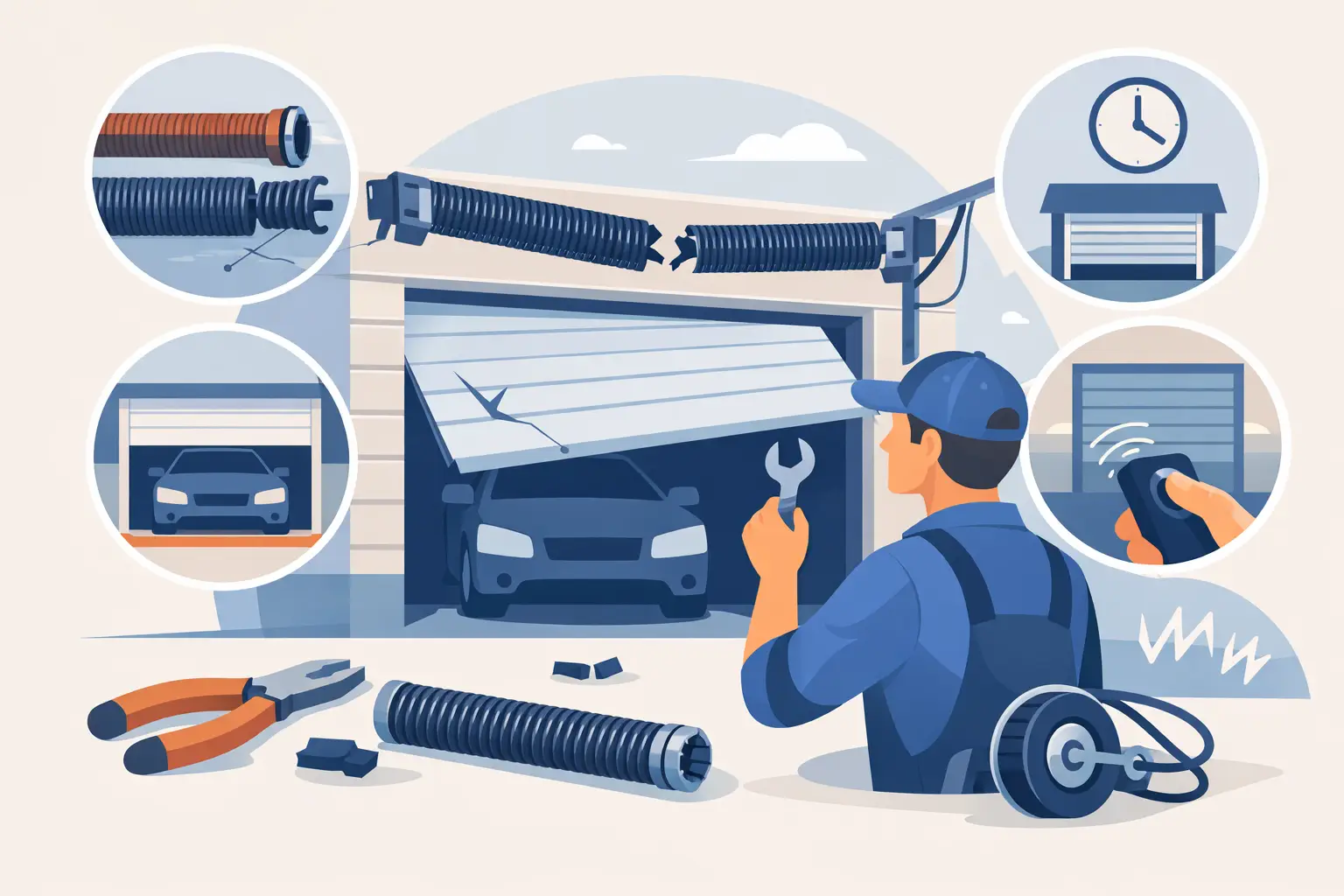
A torsion spring can make a sharp, startling bang when it breaks. Homeowners sometimes mistake the sound for something hitting the garage or a problem outside. Afterward, the door may remain closed and feel extremely heavy.
If you hear that sound, look from a safe distance. A visible gap in the coil above the door often confirms a broken torsion spring. Leave the door in place and arrange service rather than touching the spring or its winding hardware.
3. The door feels unusually heavy when operated manually
With the opener disconnected and the door fully closed, a properly balanced door should not feel like dead weight. If it takes significant force to lift, the springs may no longer be providing enough counterbalance.
Manual testing has limits. Never disconnect an opener with the door open, and do not try to lift a door that appears crooked, off-track, or unstable. If the door is heavy enough to make you strain, stop and call a technician.
4. The door opens unevenly or hangs at an angle
A garage door that rises higher on one side may have a broken extension spring, a cable issue, or a related hardware problem. In either case, uneven movement is a safety concern. The door can bind in the tracks, damage rollers, or come off track entirely.
This symptom is especially urgent when the door serves a busy commercial bay, multi-unit property, or frequently used family garage. Restrict use of the opening until a professional can inspect the springs, cables, tracks, and lift system.
5. The opener strains, stops, or makes new noises
Grinding, clicking, groaning, or repeated reversing can mean the opener is struggling against a door that is no longer properly balanced. The opener may flash error lights or stop before the door reaches the fully open position.
An opener issue is not always a spring issue. Worn rollers, bent tracks, photo-eye problems, and damaged gears can cause similar behavior. Still, a balance inspection should be part of the diagnosis before replacing an opener that may be working harder only because the springs have failed.
6. The door closes too fast or slams shut
A controlled door should travel smoothly and stop at the floor without crashing down. If the door drops faster than usual, slams, or feels difficult to control, the spring system may have lost tension.
Keep people, vehicles, pets, and equipment away from the door until it is inspected. Do not try to hold a falling door or use the opener as a substitute for a working counterbalance system.
7. You can see a gap, stretch, rust, or damage in the spring
Visual clues can be useful as long as you do not touch the components. Torsion springs sit above the door on a metal shaft. A gap in the coil usually means the spring has broken. Extension springs are mounted along the horizontal tracks and may appear stretched, distorted, or damaged.
Surface rust alone does not always require immediate replacement, but it should not be ignored. Rust can weaken the spring and create rough operation. A technician can determine whether lubrication, adjustment, or replacement is the appropriate next step.
8. The door is nearing the end of its spring cycle life
Garage door springs are rated by cycles, with one cycle meaning the door opens and closes once. Many standard residential springs are designed for roughly 10,000 cycles, though actual lifespan depends on spring quality, door weight, use frequency, maintenance, and weather exposure.
A door used multiple times each day can reach that limit sooner than expected. For a busy household, rental property, warehouse, or service facility, higher-cycle replacement springs may be worth considering. They can cost more initially but may reduce disruption and replacement frequency over time.
9. The door has become noisy, jerky, or unpredictable
Squeaking and rattling do not automatically mean a spring is failing. Dry rollers, loose hardware, or worn hinges can also create noise. But when noise appears alongside slow lifting, uneven travel, or an opener that strains, the spring system should be checked.
A garage door should not feel unpredictable. Consistent, smooth movement is a basic sign that the door is balanced and its components are working together as intended.
What to Do When You Suspect a Broken Spring
First, stop using the door if it is stuck, crooked, dropping quickly, or making severe noises. Do not pull on cables, loosen brackets, or use winding bars unless you are trained and equipped for spring work. The tension stored in these components makes DIY spring replacement one of the riskiest garage door repairs.
If your vehicle is trapped inside, do not force the door open with the opener. A qualified technician can assess whether the door can be safely opened, secured, and repaired. For commercial properties, notify staff and block access to the affected bay so no one attempts to operate it.
When scheduling service, describe what happened: whether you heard a bang, whether the door opens at all, if the opener runs, and whether you can see a damaged spring. Clear details help the technician arrive prepared to diagnose the complete issue.
Spring Replacement Is More Than Swapping a Part
A professional spring replacement begins with matching the correct spring to the door’s weight, height, track setup, and intended use. Installing the wrong spring can leave the door poorly balanced, even if it appears to work at first. The technician should also inspect cables, drums, bearings, rollers, brackets, tracks, and opener settings.
In many cases, replacing both springs on a two-spring system is the practical choice. They have typically handled the same number of cycles, so if one has failed, the other may be close behind. Replacing both at the same time can help restore balanced operation and avoid a second service call soon afterward. The right recommendation depends on the condition of the remaining spring and the specific door system.
Garage Door Mart Inc provides professional spring service for residential and commercial doors throughout the Chicago-land area, including urgent situations that cannot wait for regular business hours. You receive a clear appointment window, technician communication, and service focused on safe, dependable operation.
A spring problem rarely improves on its own. If your door is heavy, uneven, noisy, or unable to open, keep the area clear and arrange qualified service before the next trip, delivery, or work shift turns a warning sign into a complete breakdown.