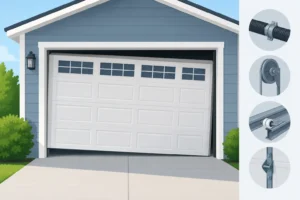
A garage door that suddenly squeaks, groans, or rattles can make every early-morning departure feel louder than it should. Knowing how to lubricate a garage door correctly can reduce normal operating noise, limit friction on moving metal parts, and help you spot a developing problem before the door stops working altogether.
Lubrication is basic maintenance, not a cure for broken springs, damaged rollers, bent tracks, or an unbalanced door. If the door is grinding, jerking, hanging unevenly, or refusing to open and close safely, stop using it and arrange professional service. For a door that is otherwise operating smoothly but sounds dry or noisy, a careful lubrication routine can make a real difference.
What You Need Before You Start
Use a garage-door-specific lubricant, white lithium grease, or silicone-based garage door spray. These products are designed to stay in place on moving components without becoming excessively sticky. In Chicago-area weather, that matters. Temperature swings, moisture, and winter road salt carried into the garage can cause ordinary household oils to thin out, wash away, or collect dirt quickly.
Avoid using WD-40 as the primary lubricant. It can help loosen moisture or free a lightly stuck component, but it is not a long-lasting garage door lubricant. Also avoid heavy grease on the tracks. Grease attracts dust and grime, creating a buildup that can interfere with roller movement.
Have a clean rag ready to wipe away old residue and overspray. Gloves and safety glasses are sensible, especially if you are working near springs, cables, or overhead hardware. You do not need to take the garage door apart for routine lubrication.
Safety First: Know What Not to Touch
Before lubricating, close the garage door fully and disconnect the opener only if you need to move the door manually. If the door is closed, leave the opener plugged in unless you are performing a separate inspection that requires disconnection. Keep children, pets, vehicles, and stored items clear of the work area.
Do not loosen, adjust, or remove torsion springs, extension springs, lift cables, bottom brackets, or cable drums. These components carry extreme tension. A spring or cable failure can cause serious injury and damage in seconds. Lubricating nearby parts is fine, but repair or adjustment work belongs with a trained garage door technician.
If you see a loose cable, a gap in a torsion spring, a roller out of the track, or a door that looks crooked, do not try to lubricate your way past the issue. Stop operating the door and schedule service.
How to Lubricate a Garage Door Step by Step
Start by looking and listening. Open and close the door once from a safe position and note where the sound seems to come from. A light squeak near a hinge is different from grinding along the track or a loud bang from a spring system. This quick observation helps you focus on the right components.
Clean the moving hardware
With the door closed, wipe dust, old lubricant, and visible debris from hinges, roller stems, bearings, and the spring area. Do not spray lubricant over dirt. It turns the buildup into a gritty paste that can wear down moving parts.
Clean the tracks with a dry rag or a mild household cleaner on a cloth if needed. The inside of the track should be clean and dry, not greasy. Tracks guide the rollers, while the rollers themselves are the parts that need lubrication.
Lubricate the hinges
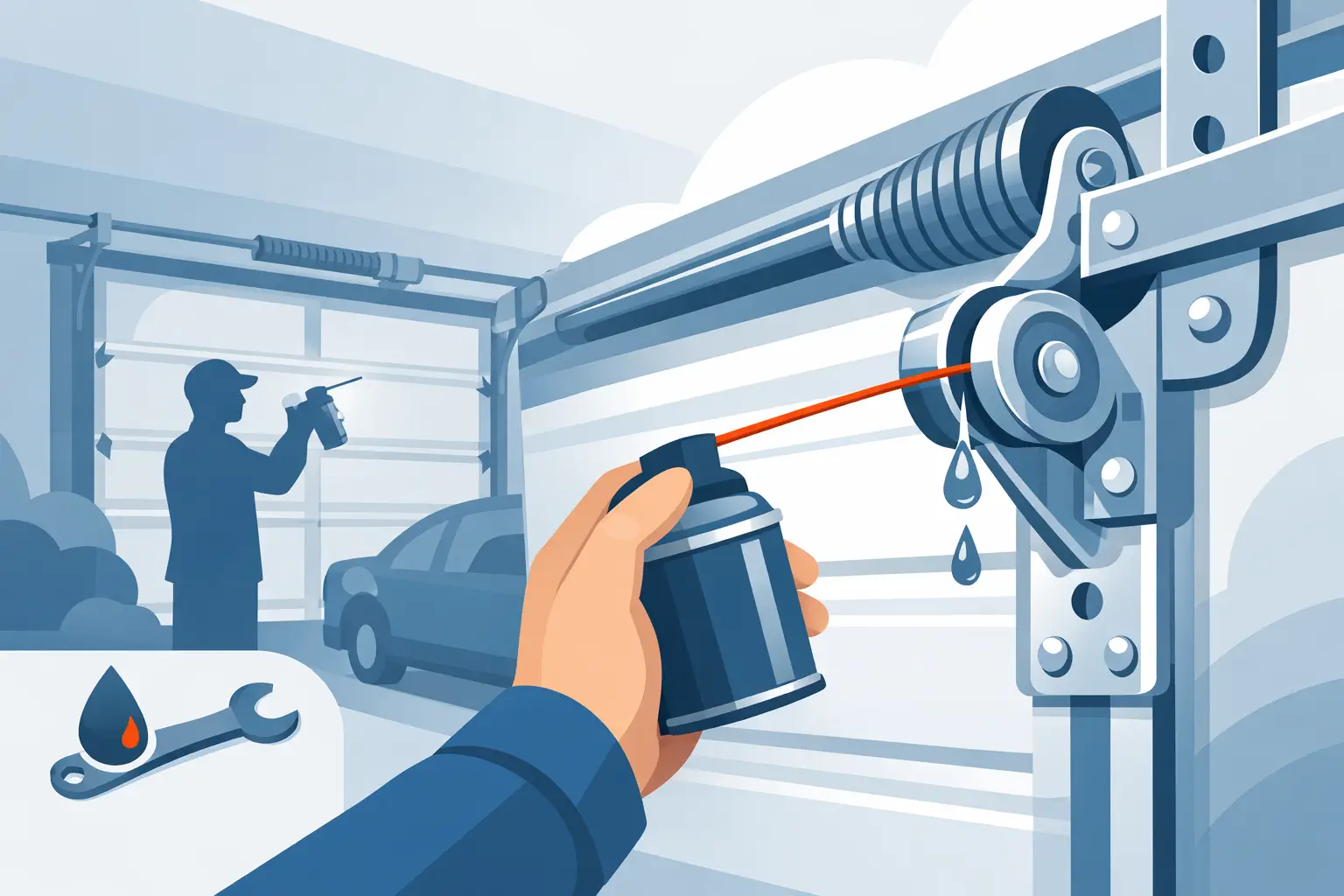
Apply a short, controlled spray to the pivot point of each hinge where the metal sections move against one another. Most sectional garage doors have hinges between every panel, with the end hinges also supporting the rollers.
Use only enough product to coat the moving joint. Too much spray runs down the door, drips on vehicles or stored items, and catches dust. After application, wipe away excess lubricant.
Lubricate the rollers correctly
Apply lubricant to the roller bearings or the small stem where each roller attaches to the hinge. Do not coat the outside wheel surface or the track.
Nylon rollers with sealed bearings may need little or no lubricant, depending on their design. Steel rollers generally benefit from regular lubrication, but they can become noisy when bearings wear out. If a roller wobbles, binds, has visible cracks, or makes a grinding sound even after lubrication, replacement is usually the better fix.
Lubricate the springs and bearing plates
For torsion-spring systems, apply a light coat along the length of the spring, then operate the door a few times so the lubricant can work between the coils. Stand clear while the door moves. The goal is to reduce coil friction and help protect the metal from surface corrosion, not to soak the spring.
You can also apply a small amount of lubricant to the center bearing and end bearing plates if accessible. Do not touch the winding cones, set screws, or cables. Extension springs may also receive a light coat, but the same warning applies: never adjust their connections or safety cables.
Lubricate the opener rail and chain only when appropriate
If you have a chain-drive opener, apply a small amount of approved lubricant to the chain according to the opener manufacturer’s instructions. A belt-drive opener usually does not need belt lubrication. Never spray a belt with grease or oil.
For screw-drive openers, use the lubricant specified for that model. The rail or screw assembly may require a particular grease, and using the wrong product can make the opener louder or cause premature wear. Avoid spraying the opener motor, photo-eye sensors, electrical connections, or remote-control components.
Run a test cycle
After lubrication, open and close the garage door two or three times. Listen for changes and watch the door travel. A properly lubricated door should sound smoother, but it should also move evenly without shaking, binding, or slamming.
If the noise remains in one location, look for a loose hinge, worn roller, damaged track, or failing opener component. Lubrication should improve normal friction noises. It will not correct mechanical damage.
How Often Should You Lubricate Garage Door Parts?
For most homes, lubricating moving garage door hardware every six months is a practical schedule. In the Chicago-land area, many homeowners prefer a spring and fall check because winter moisture and temperature changes can be hard on metal components.
A door used multiple times per day, a detached garage exposed to wind and moisture, or a commercial door with frequent cycles may need more regular attention. Property managers and business operators should build lubrication into a broader preventive maintenance plan. High-use doors have more wear points, and an unexpected failure can disrupt deliveries, access, security, and daily operations.
Do not lubricate simply because the calendar says so if parts are already coated with grime. Clean first, then apply a light product layer. More lubricant is not better.
When Noise Means You Need a Repair
A squeak that disappears after proper lubrication is usually routine maintenance. A loud pop, scrape, bang, or grinding sound deserves closer attention. The same is true if the door feels unusually heavy, reverses unexpectedly, leaves a gap when closed, or opens only partway.
Garage doors rely on springs, cables, rollers, tracks, brackets, and opener settings working together. When one part starts failing, continued operation can put extra stress on the others. For example, worn rollers can damage tracks, and an unbalanced door can overwork the opener.
Call for professional help if you notice any of these issues:
- A broken spring or a visible gap in the torsion spring
- A loose, frayed, or off-track cable
- Bent tracks, damaged rollers, or sections that bind during travel
- A door that opens unevenly, slams shut, or feels too heavy to lift
- Grinding from the opener, repeated reversing, or a door that will not close reliably
For homeowners and businesses, prompt service is often less expensive than waiting for a small hardware issue to become a full door failure.
Keep the Door Quiet Without Overdoing It
A few minutes of careful maintenance can keep a garage door operating more quietly and reduce unnecessary wear. Focus on hinges, roller bearings, springs, and approved opener components. Keep the tracks clean and dry, and stay away from high-tension spring and cable adjustments.
If your door is still loud, rough, or unreliable after lubrication, Garage Door Mart Inc can inspect the system, identify the source of the problem, and provide dependable repair service throughout the Chicago-land area. A quiet door is helpful, but a door that operates safely every time is what matters most.