A warehouse door that does not close fully, lock correctly, or respond on command is more than a maintenance issue. It is a direct gap in warehouse door security – one that can expose inventory, equipment, employees, and daily shipping operations to unnecessary risk. For Chicago-area facilities dealing with weather extremes, active loading docks, and long operating hours, the condition of every overhead door deserves close attention.
A secure warehouse is not created by one heavy-duty lock or a security camera pointed at the dock. It comes from properly operating doors, reliable openers, controlled access, clear employee procedures, and fast repairs when something goes wrong. The best approach is practical: identify where a door can fail, correct the weak points, and keep equipment maintained before a small problem turns into a forced entry or a work stoppage.
Why Warehouse Door Security Starts With the Door Itself
Many facilities focus on alarms, fencing, and surveillance while overlooking the largest moving opening in the building. A commercial overhead door can be a strong physical barrier, but only when its panels, tracks, rollers, springs, cables, bottom seal, and locking hardware are working as intended.
A door that is bent, off track, poorly balanced, or damaged along the bottom can leave a visible opening even when it appears closed. That gap may let in water, pests, wind, and cold air, but it can also make the building easier to access after hours. A failing opener can create another issue by leaving the door stuck open during a delivery window or preventing staff from securing it at the end of a shift.
Do not treat a door problem as cosmetic because it still opens and closes. Warehouse doors are heavy, high-cycle systems. Wear in one component places stress on the others, and a delayed repair can affect security, safety, and operations at the same time.
Inspect the bottom edge and locking points
The bottom section is often the first place security is compromised. Forklift contact, dock traffic, ice buildup, and repeated impacts can bend the panel or damage the bottom seal. When the door cannot sit flush against the floor, it may not properly engage its lock or provide the barrier your facility expects.
Check side locks, slide bolts, hasps, and any internal locking mechanisms for wear, looseness, or misalignment. The right locking method depends on the door type and how the entrance is used. A frequently used loading door needs a different setup than a door that remains closed overnight or a door leading to a restricted storage area.
Control Who Can Operate Each Commercial Door
A strong door is only one part of the plan. If too many people have remotes, keypad codes, or access to manual release controls, your security process is difficult to manage. Facilities managers should know exactly who can open each warehouse entrance and should review that access whenever staffing changes.
Keypad entry systems can be useful for delivery teams and authorized personnel, especially when individual codes can be assigned and changed. Remote controls should be tracked like keys. When an employee leaves, a remote is lost, or a vendor no longer needs access, remove or reprogram that access promptly.
For higher-risk areas, consider separating warehouse door controls from general building access. Not every employee who can enter an office or break room needs authority to open a loading door. Limiting access reduces accidental openings as well as intentional misuse.
Manual release mechanisms deserve special attention. They are essential during power outages and emergencies, but they should not be easy to reach from outside the building. A qualified commercial door technician can evaluate whether your release setup is protected while still allowing safe emergency operation.
Keep Doors Closed Between Active Loading Periods
An open dock door is an invitation for loss, damage, and disruption. It can also create a safety hazard for staff working near the opening. Yet in busy warehouses, doors are often left open because a truck is expected soon, a team is moving materials, or closing the door feels inconvenient.
Set a straightforward operating rule: doors should remain closed and secured unless an active loading, unloading, or approved work task requires them to be open. This simple practice limits visibility into stored goods and reduces the chance of unauthorized entry.
Where loading activity is frequent, work with staff to define who is responsible for door status at shift changes, breaks, and closing time. The process should be clear enough that no one assumes someone else secured the entrance. For multi-shift operations, a documented end-of-shift walk-through is often worth the few minutes it takes.
Use Lighting and Visibility to Support Warehouse Door Security
Good lighting does not replace a secure overhead door, but it makes suspicious activity harder to hide and helps employees notice problems sooner. Illuminate exterior door areas, alleyways, loading docks, access controls, and the paths employees use to approach the building.
Cameras are most effective when they cover the door opening, the approach to the door, and the area where vehicles stage. Positioning matters. A camera mounted too high or aimed only at the driveway may not show whether a door was forced, left partially open, or accessed by an unauthorized person.
Inside the warehouse, keep the area immediately behind exterior doors clear enough for staff to identify damage, leaks, or attempted entry. Stacked pallets directly behind a door can conceal a problem and make emergency repairs more difficult. Visibility also supports a safer response if a door is struck by a vehicle or comes off its tracks.
Address These Door Problems Before They Become Security Gaps
Warehouse operators often recognize that a door needs attention but postpone service until it stops moving entirely. That approach can leave a facility vulnerable at the worst possible time, including after hours, during severe weather, or in the middle of a scheduled shipment.
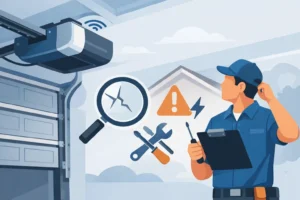
Call for commercial garage door service promptly if you notice four or more of these warning signs:
- The door does not sit level or leaves daylight along the floor or sides.
- The opener strains, reverses unexpectedly, makes grinding sounds, or responds inconsistently.
- Panels are bent, cracked, separated, or damaged by forklift or truck contact.
- Tracks are loose, rollers are worn, or the door shakes, binds, or moves unevenly.
- Locks no longer align, hardware is loose, or the manual release is exposed or unreliable.
- The door has come off track, a cable appears damaged, or a spring has broken.
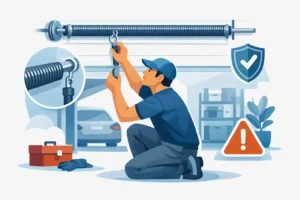
A broken spring, loose cable, or off-track door is not a do-it-yourself repair. Commercial door components are under significant tension, and improper handling can cause injury or further damage. Secure the area, keep people away from the door, and arrange professional service.
Build Maintenance Into Your Security Plan
Preventive maintenance is one of the most cost-effective ways to protect commercial doors. A trained technician can inspect hardware, check balance and travel limits, tighten mounting points, lubricate appropriate moving parts, test safety features, and identify worn components before failure disrupts the facility.
How often service is needed depends on the door’s size, type, usage level, weather exposure, and operating environment. A door used dozens of times each day may need more frequent inspection than a low-cycle storage entrance. Chicago winters add another consideration: ice, road salt, moisture, and temperature swings can accelerate wear on seals, hardware, and tracks.
Maintenance also creates a useful record of the door’s condition. For property managers and warehouse operators, that documentation can support budgeting, help prioritize replacements, and show that known safety concerns were addressed. It is far easier to schedule a planned repair than respond to an emergency door failure when a building cannot be secured.
Choose Repairs and Upgrades Based on the Real Risk
Not every warehouse needs the same security equipment. A small storage facility with limited access may benefit most from dependable locks, a well-maintained opener, and exterior lighting. A high-volume distribution center may need controlled keypad access, monitored door status, upgraded commercial openers, and a more formal closing procedure.
The key is to avoid spending on technology while ignoring a damaged door or worn mechanical system. Security upgrades work best when the physical door can close, seal, and lock correctly. If a door is nearing the end of its service life, replacement may be more reliable and economical than repeated repairs, especially when damage affects structural integrity or daily operation.
Garage Door Mart Inc helps commercial operators throughout the Chicago-land area evaluate door damage, opener concerns, security-related repairs, and replacement options. When a warehouse entrance cannot close or lock as it should, fast action protects more than inventory – it protects the ability to operate normally.
Before the next shift ends, walk each exterior warehouse door, look for gaps or damage, confirm who has access, and make sure every entrance closes the way it should. That small check can prevent a much larger problem later.