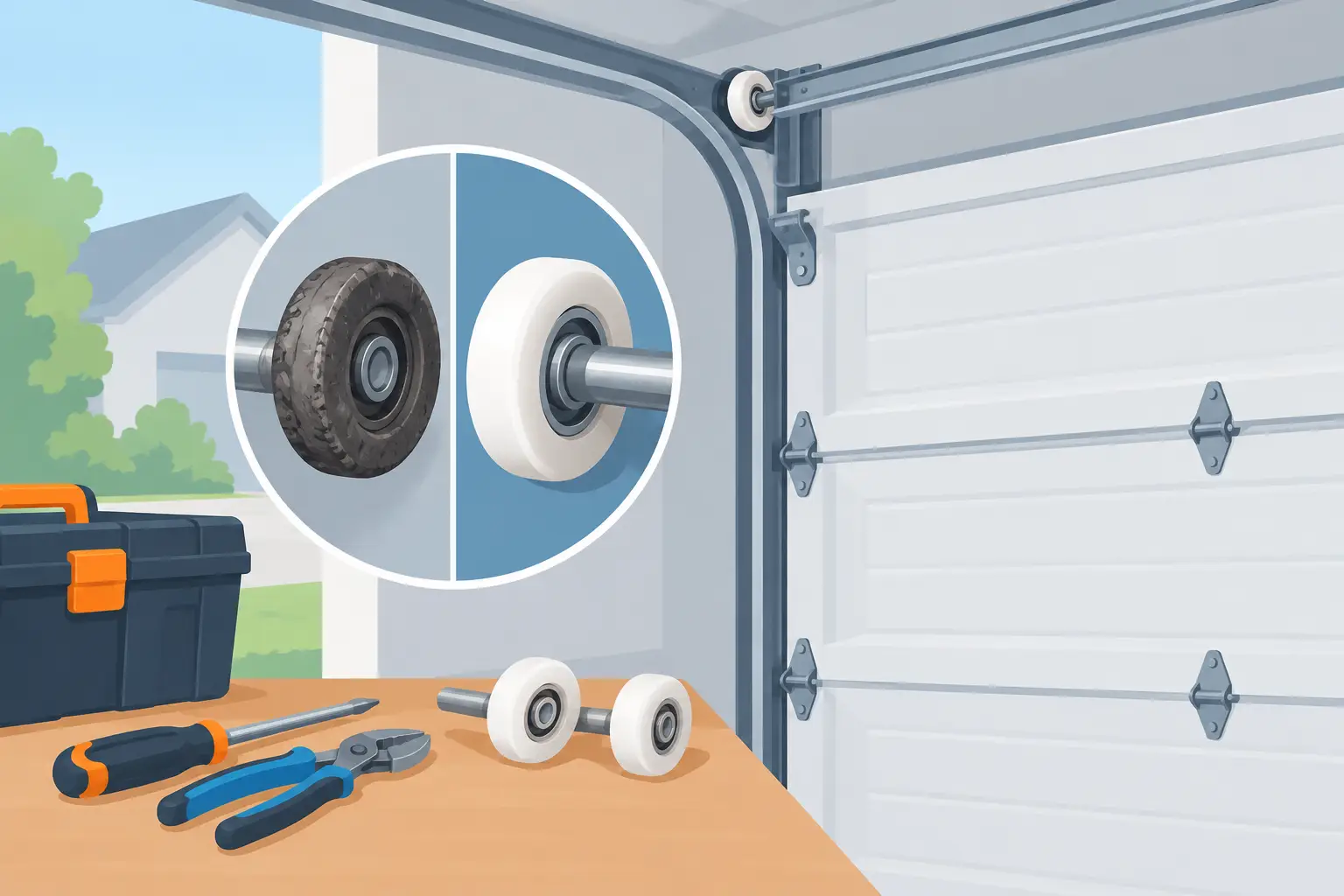
A garage door that groans, shakes, or hesitates is often sending a clear message before it stops working altogether. Knowing when to replace garage door rollers can prevent an inconvenient breakdown, reduce strain on the opener, and help keep a heavy moving door operating safely.
Rollers are small parts, but they carry a major responsibility. They guide the door through its tracks every time it opens or closes. When they wear out, the door may become noisy, uneven, or difficult to move. For Chicago-area homeowners, changing temperatures, moisture, road salt, and normal daily use can speed up that wear.
When to Replace Garage Door Rollers
Most garage door rollers should be inspected annually and replaced when they show visible wear or affect how the door moves. The exact timing depends on the roller material, how often the door is used, the door’s weight, and whether the system receives regular maintenance.
Standard steel rollers without ball bearings may wear out in as little as two to three years on a frequently used residential door. Better-quality nylon rollers with ball bearings can often last 10 to 15 years under normal conditions. Commercial doors, multi-unit properties, and busy households may need replacement sooner because their doors cycle far more often.
Age alone is not the only deciding factor. A roller that is only a few years old may need attention if it has seized, cracked, come loose, or begun damaging the track. On the other hand, older rollers that remain smooth, secure, and properly aligned may not require immediate replacement. The condition of the whole door system matters more than a calendar date.
Noise That Gets Worse Instead of Better
A little operating noise is normal, especially with an older metal door. Sharp squeaks, grinding, popping, rattling, or a rolling sound that has become noticeably louder is not something to ignore. Dry rollers can sometimes be lubricated, but lubrication will not repair worn bearings, bent stems, cracked nylon, or rusted steel.
If the door is suddenly much louder than it used to be, schedule an inspection. The cause may be rollers, but it can also involve hinges, tracks, springs, cables, or the opener. A professional diagnosis avoids replacing one part while the underlying problem continues.
Visible Wear, Cracks, or Rust
Look at the rollers from inside the garage while the door is fully closed. Signs of trouble include cracked nylon wheels, chipped edges, excessive rust, worn metal, wobbling wheels, or stems that appear bent. A roller should sit securely in the hinge or roller bracket and move through the track without binding.
Black dust or metal shavings near the tracks can also indicate that steel rollers are wearing down. Tracks with deep scratches, dents, or shiny worn spots deserve attention, too. Bad rollers can damage the tracks over time, turning a relatively straightforward repair into a larger service call.
The Door Shakes, Jerks, or Moves Unevenly
A healthy garage door should travel smoothly along both tracks. If it shudders, jerks, leans to one side, or looks uneven as it moves, worn rollers may be part of the issue. You may also notice that the door seems to drag at a particular point in its travel.
Do not keep running a door that is moving erratically. Continued use can place extra force on the opener and may cause the door to come off track. A door that is off track, hanging at an angle, or stuck in an open position should be treated as a priority repair.
The Opener Is Working Harder Than It Should
Rollers that no longer turn freely create friction. That friction forces the opener to pull harder, which can shorten the life of the motor, drive system, and internal gears. You may hear the opener strain, see the door reverse unexpectedly, or notice it no longer closes consistently.
It is easy to assume an opener is failing when the real problem starts at the rollers or tracks. Before replacing an opener, have the door hardware inspected. A properly balanced door with smooth rollers puts far less stress on the entire system.
Why Roller Replacement Is More Than a Noise Fix
Replacing worn rollers improves daily convenience, but safety is the bigger reason to act promptly. A garage door is one of the heaviest moving systems in a home or commercial building. When rollers bind or leave the track, the door can become unstable and difficult to control.
For homeowners, that can mean a vehicle trapped in the garage, an unsecured opening, or a door that will not close at night. For property managers and commercial operators, a failing door can interrupt deliveries, limit access, create security concerns, and affect tenant or employee safety.
There is also a cost consideration. Replacing rollers before they damage tracks, hinges, cables, or the opener is typically more affordable than waiting for a complete system failure. Timely service protects the components that are more expensive and more complicated to repair.
Which Garage Door Rollers Are Best?
The right roller depends on the door, usage level, and budget. Steel rollers are durable and common, but lower-grade versions can become noisy and require more frequent attention. Nylon rollers generally operate more quietly and resist corrosion, which makes them a popular option for attached garages and residential properties.
Ball-bearing rollers are usually a worthwhile upgrade for doors used several times a day. They provide smoother movement and can last longer than basic non-bearing rollers. The trade-off is a higher upfront cost, but the quieter operation and reduced wear on other hardware often make them a practical long-term choice.
Commercial doors may require specific roller sizes and materials based on track design, door weight, and cycle requirements. Installing the wrong roller can affect door alignment and performance. This is one reason commercial roller work should be matched to the door system rather than handled as a generic part swap.
Can You Replace Garage Door Rollers Yourself?
Some upper and middle rollers can be replaced by an experienced do-it-yourself homeowner with the correct tools and a clear understanding of the door system. However, garage door work has real risks. The bottom roller brackets are connected to the lift cables, which are under significant spring tension. Removing or loosening those brackets can cause serious injury or allow the door to shift suddenly.
Do not remove bottom fixtures, tamper with cables, or attempt spring adjustments. Those repairs require trained service technicians and proper tools. Even for a roller issue that looks simple, a professional can inspect the tracks, hinges, balance, cables, springs, and opener at the same time. That helps ensure the replacement solves the problem instead of masking it.
A Practical Inspection Routine
Check your garage door rollers as part of seasonal home maintenance, especially after a harsh Chicago winter. With the door closed, look for cracks, corrosion, loose hardware, and debris in the tracks. Run the door once or twice and listen for changes in sound or movement.
Keep the tracks clean, but avoid applying heavy grease inside them. Grease attracts dirt and can create buildup that interferes with the rollers. Use a garage-door-safe lubricant on the moving hardware when appropriate, following product directions. If the door is noisy after lubrication, or if it shakes and binds, the system needs more than routine maintenance.
Property managers should establish a scheduled inspection plan for shared garages, loading areas, and commercial overhead doors. Frequent cycling means small roller problems can escalate quickly. Documenting noise, travel issues, and service history also makes it easier to address wear before it disrupts operations.
When to Call for Service Right Away
Arrange prompt garage door service if the door is off track, will not open or close, makes grinding noises, reverses unexpectedly, or has rollers that are visibly broken. Do not operate a door with a loose cable, bent track, or damaged bottom bracket.
Garage Door Mart Inc provides residential and commercial garage door repair across the Chicago-land area, including urgent service when a failed door affects safety, access, or security. A trained technician can identify whether the rollers are the problem, replace the correct components, and check the rest of the system for related wear.
A smooth, quiet door is not a luxury. It is a sign that the door is moving as it should, with less strain on the parts you depend on every day. If yours has started to complain, shake, or bind, addressing the rollers now can help keep a small repair from becoming an unexpected emergency.