A garage door should move steadily, not shake the garage, rattle the ceiling, or make the opener sound like it is struggling. If you are asking what causes garage door vibration, the answer is usually a worn, loose, misaligned, or unbalanced component. The source may be minor, but continued operation can turn a manageable repair into a damaged door, failed opener, or safety concern.
For Chicagoland homeowners, vibration often becomes more noticeable after a hard winter, repeated freeze-thaw cycles, or years of daily use. Commercial doors can develop the same problem faster because of heavier door panels, higher operating cycles, and more demanding work conditions. Knowing what to watch for helps you decide whether a basic adjustment is appropriate or whether it is time to schedule professional service.
What Causes Garage Door Vibration During Operation?
Garage door vibration is not one single problem. It is a symptom of resistance or instability somewhere in the door system. As the opener pulls the door up or down, small problems in the rollers, tracks, springs, hardware, or opener can create shaking that travels through the door, rails, framing, and ceiling.
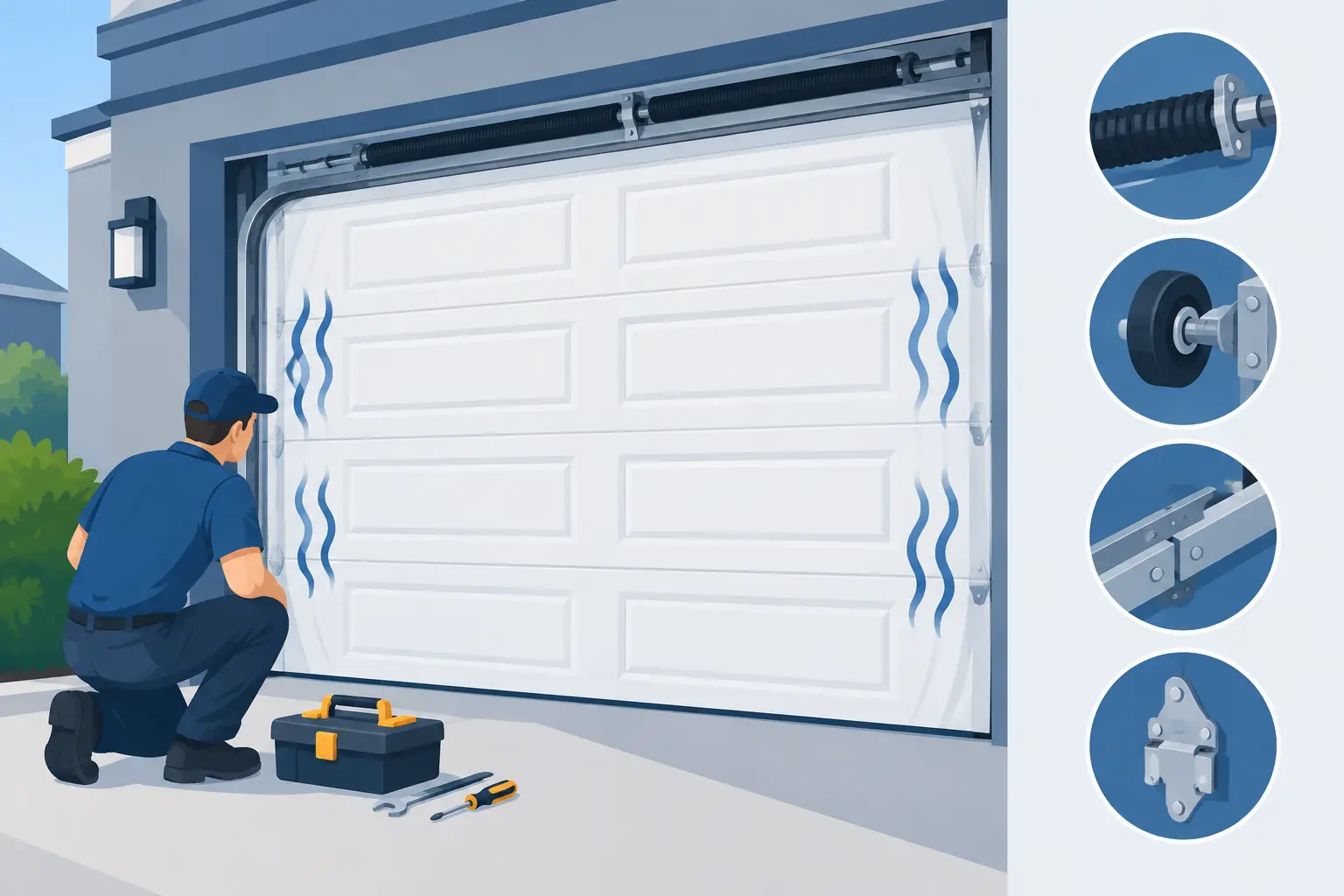
The most common causes are worn rollers, loose hardware, bent tracks, an unbalanced door, damaged hinges, and opener issues. More than one problem can be present at the same time, especially on an older door that has not received regular maintenance.
Worn or damaged rollers
Rollers guide the garage door through the tracks. When rollers wear down, crack, seize, or collect debris, they no longer move smoothly. The door may shake at certain points in its travel, make a grinding sound, or appear to wobble from side to side.
Older steel rollers are often louder and more prone to vibration than quality nylon rollers. Nylon rollers can reduce operating noise, but they still need inspection because bearings and roller stems wear over time. A roller that has come partly out of the track requires prompt service. Trying to force the door can bend the track or cause the door to go off track completely.
Loose hinges, brackets, and track hardware
Every time a garage door opens, its hinges, roller brackets, track supports, and fasteners absorb movement. Over hundreds or thousands of cycles, bolts can loosen and metal parts can wear. That looseness allows the door sections or tracks to shift under load, producing rattling and vibration.
A loose track bracket may seem harmless, but it can gradually pull the track out of alignment. Loose hinges can also allow individual door panels to flex excessively. If you see gaps around brackets, missing fasteners, cracked hinges, or movement in the tracks when the door runs, stop using the door until it is inspected.
Do not adjust bottom brackets yourself. These brackets connect to cables under extreme spring tension. A mistake can cause serious injury.
Bent, dirty, or misaligned tracks
Tracks must be properly aligned so the rollers can travel without binding. A track may become bent after a vehicle bump, impact from stored items, corrosion, or an earlier off-track event. Even a small bend can make the roller catch, which sends vibration through the entire door.
Dirt, hardened grease, and debris can also interfere with smooth roller movement. Tracks should be clean, but they should not be heavily coated with lubricant. Excess grease collects dirt and can make the problem worse. Track alignment is a precision task, particularly on heavy insulated residential doors and commercial systems, where improper adjustment can create a more serious operational issue.
An unbalanced garage door
A properly balanced garage door should be supported by its spring system, not lifted entirely by the opener. When springs lose tension, break, or are incorrectly matched to the door weight, the opener has to work much harder. The result can be vibration, jerky motion, loud straining, and premature opener wear.
You may notice that the door shakes most when it starts moving, slows noticeably near the top, or drops quickly when closing. These can be signs of a balance problem. Broken springs are especially urgent. A door with a failed spring can weigh hundreds of pounds and should not be operated by the opener.
Torsion and extension springs are high-tension components. Spring adjustment and replacement should always be handled by a trained garage door technician.
A failing opener or loose opener mounting
Sometimes the door itself is in good condition, but the vibration comes from the opener system. A loose opener mounting bracket, bent rail, worn trolley, damaged chain, or loose belt can create shaking and noise each time the motor runs.
Chain-drive openers naturally produce more vibration than belt-drive models, particularly in garages below bedrooms or living areas. That does not mean every noisy chain-drive opener needs replacement. Proper adjustment and lubrication can make a noticeable difference. However, an opener that shakes violently, hums without moving the door, reverses unexpectedly, or has a visibly damaged rail should be professionally diagnosed.
The ceiling structure matters too. An opener that is poorly supported can transfer vibration into the framing, making a moderate issue sound much worse inside the home.
Damaged door sections or weakened reinforcement
Steel door panels can bend, crack around hinges, or lose reinforcement where the opener arm attaches. Wood doors may warp or develop weakened sections from moisture exposure. When the door is no longer structurally sound, it can flex as it moves through the opening and create noticeable vibration.
This is more than a noise issue. Continued use can place uneven stress on the hinges, rollers, tracks, cables, and opener. A technician can determine whether a panel repair, reinforcement strut, or door replacement is the safer and more cost-effective choice.
When Garage Door Vibration Is a Safety Issue
Some vibration is a clear signal to stop using the door. Do not continue operating it if the door is hanging unevenly, a cable is loose or frayed, rollers have come out of the tracks, the door is scraping hard against the frame, or you hear a loud bang followed by heavy movement. These conditions can indicate a broken spring, cable failure, track damage, or an off-track door.
For businesses, a vibrating commercial door can also create downtime, security exposure, and a risk to employees near loading areas. A door that does not run smoothly should be serviced before it fails during a delivery, shift change, or severe weather event.
If the door is stuck open or will not close securely, keep people and vehicles clear of the opening. Avoid pulling on cables or attempting to reset a heavy door by force.
Safe Checks You Can Make Before Scheduling Service
With the door closed and the opener disconnected from power, look for obvious issues such as debris in the tracks, visibly worn rollers, loose-looking hardware, or damage to the panels. Listen to where the sound seems strongest during normal operation only if the door is still moving safely and evenly.
You can also check for vibration in the opener rail or ceiling support while standing clear of all moving parts. Do not touch springs, cables, drums, or bottom brackets. Those parts can store dangerous energy even when the door is closed.
A light garage door lubricant applied to appropriate moving metal parts may reduce ordinary squeaking, but lubrication will not correct a bent track, failing roller bearing, broken hinge, or balance issue. If vibration returns quickly after basic maintenance, the underlying cause needs attention.
How Professional Repair Restores Smooth Operation
A proper service visit starts with checking the full system, not just the loudest part. A technician should inspect door balance, springs, cables, rollers, hinges, tracks, brackets, opener force settings, rail condition, and safety sensors. This matters because replacing a noisy roller alone will not solve vibration caused by an overloaded opener or misaligned track.
The right repair depends on the condition of the system. It may involve tightening and securing hardware, replacing rollers and hinges, realigning tracks, repairing damaged sections, replacing springs, or servicing the opener. For older doors with recurring issues, replacement can be the better long-term value, especially when a new insulated door improves reliability, security, and energy performance.
Garage Door Mart Inc provides residential and commercial garage door repair across the Chicagoland area, including urgent service when a vibrating door becomes unsafe or unusable. Clear communication and a complete inspection help ensure the repair addresses the cause, not just the noise.
A garage door that begins to shake is asking for attention. Scheduling service while it is still opening and closing can protect your door, your opener, and the people who rely on it every day.