A garage door that stops halfway, grinds across the driveway, or leaves your home exposed creates a decision that cannot wait: repair vs replace garage door. For Chicago-area homeowners, property managers, and business operators, the right answer depends on more than the visible problem. Safety, age, damage, operating condition, and long-term cost all matter.
A qualified technician should inspect the full system before recommending a solution. A noisy door may only need rollers or adjustment. A door with bent sections, worn springs, a failing opener, and repeated service history may be telling you replacement is the more dependable investment.
When Garage Door Repair Is the Right Call
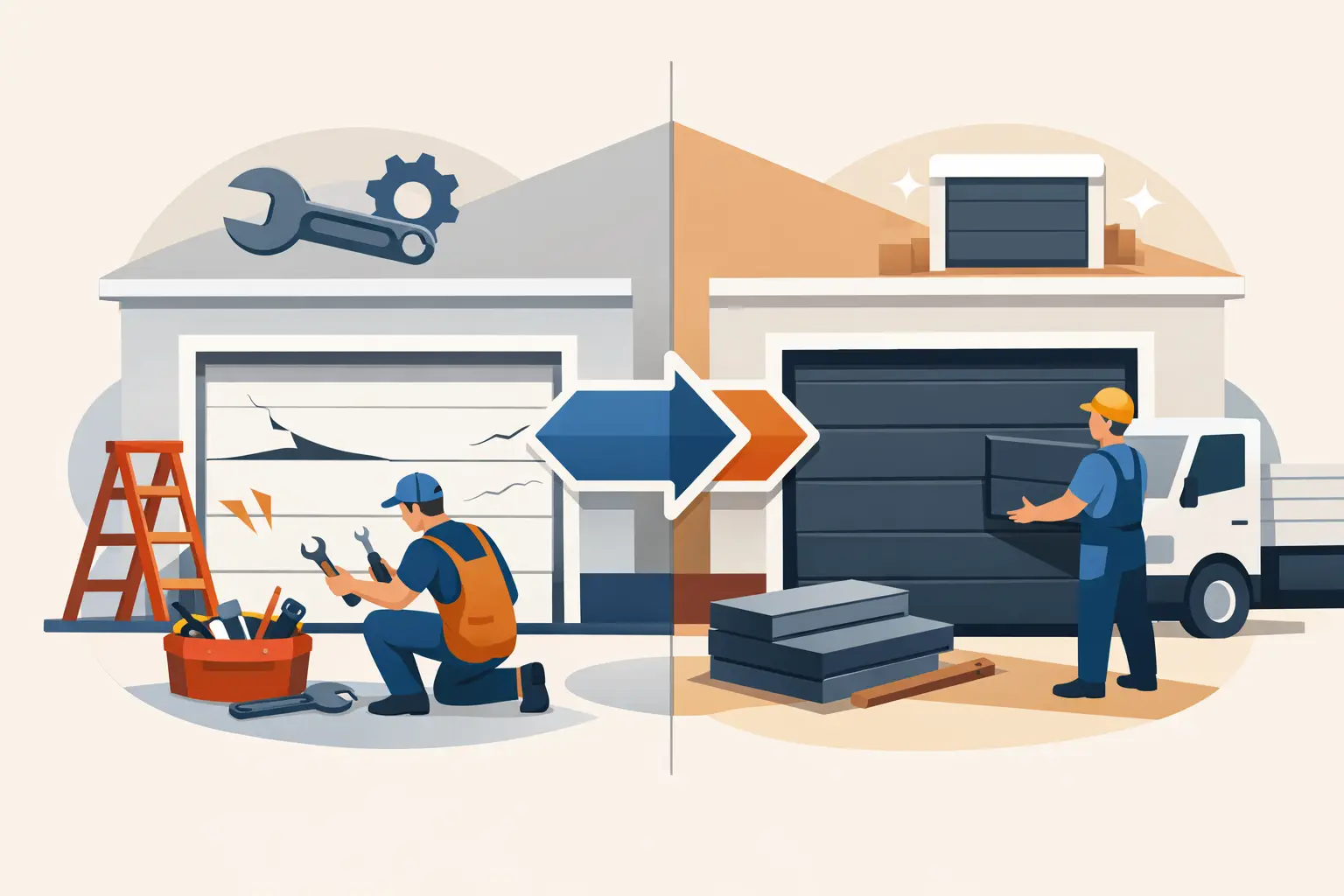
Repair is often the practical choice when the door is structurally sound and the problem is isolated. Many common garage door failures involve parts that are designed to wear over time, not the entire door itself.
A broken torsion spring, worn cables, damaged rollers, misaligned safety sensors, or an off-track door can often be repaired without replacing the door panels. The same is true for many opener concerns, including worn gears, faulty limit switches, remote-control issues, and sensor alignment problems. When the door is in good condition, restoring the failed component can return it to safe, reliable use at a lower cost than full replacement.
Repair also makes sense after minor impact damage. A single dented steel panel may be replaceable if the model is still available and the track, hinges, and other sections have not been affected. For commercial properties, replacing a damaged section or repairing a worn operator can prevent unnecessary downtime when the rest of the system is performing well.
The key is whether the repair addresses the actual cause of the issue. Tightening a loose bracket is a repair. Repeatedly forcing a heavy, unbalanced door to run through a failing opener is not. A dependable service recommendation should explain what failed, why it failed, and what the repair is expected to accomplish.
Good signs that repair is worth considering
A repair is usually a strong option when the door is less than 10 to 15 years old, the damage is limited, and it has not needed frequent service. It is also favorable when replacement parts are available and the door still opens, closes, and seals properly once the failed component is corrected.
If your door was operating normally before one clear event – such as a spring breaking or a vehicle lightly striking a panel – repair may restore full function without requiring a larger project.
When to Replace a Garage Door Instead
Replacement becomes the better value when a door has multiple problems, substantial damage, or an aging design that no longer provides reliable security and performance. A garage door is a large moving system. When panels, hardware, tracks, springs, and the opener are all nearing the end of their service life, a series of small repairs can become more expensive and frustrating than a planned replacement.
Severe structural damage is a clear reason to consider a new door. Cracked wood, rusted-through steel, warped sections, deep impact damage, or bent reinforcement struts can compromise how the door moves and how well it protects the property. If several panels are damaged, a matching replacement panel may be unavailable or may look noticeably different after years of weather exposure.
Repeated breakdowns are another important signal. If you have recently paid for cables, rollers, springs, track adjustments, and opener service, but the door continues to bind or fail, it is reasonable to step back and compare the total cost of ongoing repairs with replacement. The lowest immediate price is not always the most affordable long-term choice.
For homeowners, a new insulated garage door can also improve curb appeal and help moderate temperatures in an attached garage. For businesses, replacement may improve security, reduce service interruptions, and provide a door better matched to daily traffic, vehicle clearance, and operational demands.
Safety concerns should move the decision forward
Do not delay a replacement decision when the door is unsafe to operate. Signs include a door that falls quickly, hangs unevenly, moves off its tracks, has visibly damaged cables, or will not stay open. A door that is too heavy for the opener can burn out the motor and create a serious injury risk.
Never attempt to adjust torsion springs or high-tension cables yourself. These components carry significant force and require the right tools, training, and procedures. If the door is stuck open, off track, or unsecured, keep people clear of the area and arrange professional service promptly.
Repair vs Replace Garage Door: Questions That Clarify the Cost
The repair vs replace garage door decision is not based on age alone. A well-maintained 15-year-old door may have years of useful service left, while a newer door with poor installation, accident damage, or heavy commercial use may need replacement sooner.
Start by considering the scope of the problem. One worn component is very different from multiple failing parts. Next, look at repair history. An occasional service call is normal, but recurring issues can indicate that the system is no longer dependable.
Then consider the door’s purpose. A residential door used a few times a day has different demands than a warehouse door cycling throughout the day. Commercial operators should weigh the cost of downtime, delivery delays, access issues, and security exposure alongside the price of repair. In many cases, a planned replacement is easier to budget and schedule than an emergency failure during business hours.
Appearance matters, too. If the door is faded, corroded, damaged, or no longer fits the look of the property, replacement can provide a practical upgrade rather than simply a cosmetic expense. Modern doors are available in durable steel, insulated options, carriage-house styles, and configurations designed for higher-use commercial applications.
Do Not Forget the Opener and Hardware
A garage door and opener work as one system, but they should not be replaced automatically at the same time. If the door is balanced and in good condition, an opener replacement may solve issues such as inconsistent operation, excessive noise, lack of battery backup, or outdated safety features.
On the other hand, installing a new opener on a damaged or unbalanced door can lead to another service call. The opener is not meant to lift a door with a broken spring or drag a door with damaged rollers. Before replacing either component, have the springs, cables, tracks, hinges, rollers, and balance checked.
When replacing a garage door, it is often wise to assess the opener’s age and capacity. A newer, heavier insulated door or a high-cycle commercial application may require an opener that is properly matched to the door’s weight and use. This helps protect the equipment and supports smoother daily operation.
A Clear Path for Chicago-Area Properties
Weather, road salt, temperature swings, and daily use can be hard on garage door systems in Chicagoland. Rust, stiff rollers, weakened weather seals, and worn hardware are common issues, particularly on older doors. Regular maintenance can extend the life of a door, but maintenance cannot correct major structural damage or permanently solve repeated failures.
The most useful next step is a professional on-site evaluation with a clear explanation of your options. Garage Door Mart Inc can inspect the condition of the complete system, identify immediate safety concerns, and explain whether a focused repair or a replacement provides the better value. For urgent problems, 24/7 service helps restore access and secure the property without unnecessary delay.
A garage door should protect your home or business without becoming a recurring source of worry. If the door is unreliable, noisy, damaged, or unsafe, have it evaluated before the next failure leaves your vehicle trapped, your business interrupted, or your property exposed.