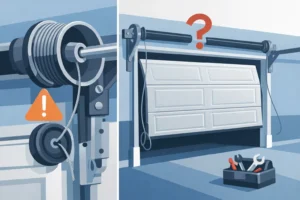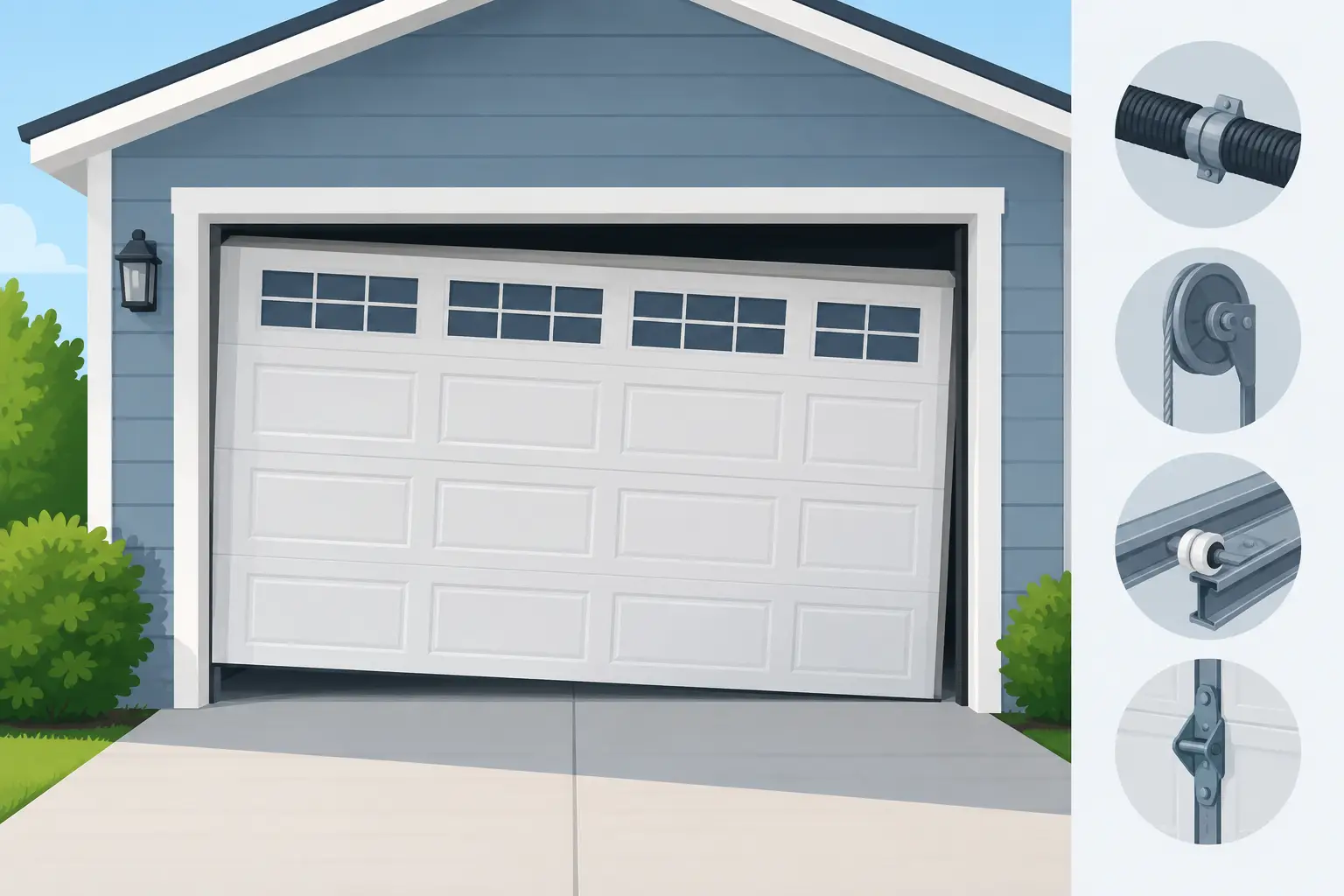
A garage door that rises higher on one side, hangs at an angle, or leaves an uneven gap at the floor is more than a curb-appeal issue. If you are asking, “why is garage door crooked,” the answer usually involves a problem with the cables, springs, tracks, rollers, or the door itself. Continuing to run it can turn a manageable repair into a door that is stuck, off track, or unsafe to operate.
For Chicago-area homeowners, property managers, and businesses, quick action matters. A crooked door can leave a garage exposed to weather and theft, block vehicle access, or create a dangerous situation for anyone nearby. Here is what may be happening and when to call for professional garage door repair.
Why Is Garage Door Crooked When It Opens?
A garage door is designed to move evenly. Its springs counterbalance the weight, cables lift each side together, rollers guide the sections through the tracks, and the opener provides controlled movement. When one part of that system fails or shifts, the door can become visibly uneven.
Sometimes the issue appears only while the door is moving. Other times, it is crooked when closed, with one bottom corner sitting above the floor. The position of the door, the noises it makes, and whether the opener still responds can help narrow down the cause. However, garage door systems store significant tension, especially at the springs and cables. Diagnosis is one thing. Trying to force parts back into place is another.
A loose, frayed, or broken lift cable
Lift cables run from the bottom brackets of the door to the spring system above. They keep both sides lifting at the same rate. If a cable slips off its drum, frays, loosens, or breaks, one side may rise while the other stays down.
This is one of the most common reasons a garage door suddenly looks crooked. You may notice a cable hanging loose near the track or wrapped unevenly around the drum. Do not operate the opener again. Pulling on a door with a failed cable can bend tracks, damage panels, and place extra stress on the remaining cable and spring.
A broken or weakened garage door spring
Torsion springs above the door or extension springs along the tracks carry most of the door’s weight. A broken spring often causes a loud bang in the garage, but not every spring failure is dramatic. A weakened spring can make the door lift unevenly, move slowly, or strain the opener.
With a two-spring torsion setup, one broken spring can allow the door to become unbalanced. The opener may pull harder on one side, particularly if a cable has also shifted. Spring replacement is not a do-it-yourself repair. These components are tightly wound and require the correct tools, parts, and adjustment procedures.
Bent, loose, or misaligned tracks
Tracks keep the rollers moving in a precise path. A vehicle bump, a falling tool, worn hardware, or repeated vibration can shift or bend a track. Even a small change in alignment can make a roller bind, causing one side of the door to lag behind the other.
Look for obvious dents, gaps between the rollers and track, loose mounting brackets, or rubbing marks along the metal. Avoid hitting the track with a hammer or attempting to straighten it while the door is under load. A track that looks only slightly bent can still be unsafe if the door is partly open.
Worn rollers, hinges, or bottom brackets
Rollers and hinges endure thousands of opening and closing cycles. Over time, rollers can crack, seize, or pop partly out of the track. Worn hinges can allow door sections to shift instead of folding smoothly. Damage near a bottom bracket is especially serious because the lift cable connects there under tension.
These problems often start with squeaking, scraping, shaking, or a jerky door before the door becomes noticeably crooked. Routine maintenance can catch worn moving parts early, but once the door is visibly out of alignment, it should be inspected before regular use resumes.
Damaged, warped, or sagging door sections
The problem is not always in the hardware. Older wood doors can absorb moisture and warp, while steel or aluminum doors can be dented by vehicles, bicycles, or equipment. A cracked stile, loose reinforcement strut, or damaged section can make one side of the door sag.
A damaged panel may be repairable, but replacement can be the better value when structural integrity is affected. This depends on the age of the door, whether replacement sections are available, and whether the remaining hardware is in good condition. For commercial doors, damaged sections can also affect security and daily operations, so waiting is rarely worthwhile.
When a Crooked Garage Door Is an Emergency
A crooked garage door is not automatically an after-hours emergency, but certain conditions demand immediate service. Stop using the door and arrange prompt professional help if you see any of the following:
- A lift cable is loose, broken, or wrapped around the drum.
- The door has come out of the tracks or rollers are outside the track.
- A spring is broken, separated, or visibly stretched out of position.
- The door is hanging overhead, stuck halfway, or blocking access to a vehicle.
- The opener is straining, grinding, or repeatedly reversing while the door moves unevenly.
Keep people, pets, and vehicles clear of the opening. If the door is partially open, do not walk under it. Do not disconnect the opener unless a trained technician instructs you to do so, because an unbalanced door can drop unexpectedly.
For a business, an uneven overhead door can interrupt deliveries, expose inventory, or prevent employees from entering or exiting safely. Facilities managers should treat it as an operational and security concern, not simply a maintenance item.
What You Can Safely Check Before Service
There are a few observations you can make without touching tensioned components. First, stop the door and look from a distance. Is one cable visibly slack? Is a roller out of the track? Are there objects, ice, or debris blocking either side of the door? In winter, packed snow or ice at the threshold can sometimes prevent one side from closing fully, although it usually does not cause a severely crooked door on its own.
Next, check whether the photo-eye sensors are clear if the door reverses near the floor. Sensor issues can stop a door from closing, but they do not normally make it rise at an angle. If the door is crooked while opening, the cause is more likely mechanical.
Do not pull cables, loosen brackets, adjust spring winding cones, or keep pressing the wall button to “see if it catches.” Repeated opener use can burn out the motor or strip internal gears. The opener is designed to move a balanced door, not lift a door with a failed spring or cable.
How Professionals Correct an Uneven Door
A proper repair begins with securing the door and identifying why the sides are no longer moving together. A technician checks spring condition and balance, cable routing, drums, tracks, rollers, hinges, brackets, and the opener’s force settings. The repair may involve resetting cables, replacing a spring, realigning or replacing tracks, installing new rollers, or repairing damaged door sections.
After repairs, the door should be tested manually for balance and then cycled with the opener. It should travel smoothly, sit level when closed, and reverse appropriately when the safety system is tested. This final step matters. A door can look straight at rest but still bind or pull unevenly during travel if adjustments are incomplete.
Garage Door Mart Inc provides repair support for crooked, off-track, and unbalanced doors across the greater Chicago-land area, including urgent service when a door cannot be used safely. Clear appointment windows and technician communication help homeowners and property managers know what to expect before work begins.
Preventing the Door From Becoming Crooked Again
Most crooked-door problems begin with wear that goes unnoticed. A professional tune-up can identify frayed cables, fatigued springs, loose track hardware, worn rollers, and opener strain before a breakdown occurs. For homes with frequent daily use, annual service is a practical baseline. High-use commercial doors may need more frequent inspection based on cycles, door weight, and operating conditions.
Between service visits, keep the tracks clear, avoid hanging heavy items from the door or tracks, and never let children ride or pull on the door. If you hear a new grinding sound, see shaking during travel, or notice the door no longer closes evenly, schedule service before the issue worsens.
A garage door should feel controlled and look level every time it moves. When it does not, stop using it and have the balance restored by a qualified technician. Acting early protects the door, the opener, and the people who depend on that opening every day.