A garage door can weigh several hundred pounds, move on a schedule your family relies on, and serve as one of your home’s largest entry points. That is why the best garage door safety upgrades are not just nice-to-have features. They help prevent injuries, reduce security gaps, and keep a busy Chicago-area household moving when weather or a power outage creates a problem.
The right upgrade depends on the age and condition of your current door, opener, and hardware. Some improvements are straightforward during an opener replacement. Others require professional installation because garage door springs, cables, tracks, and electrical connections can be dangerous to handle without the proper tools and training.
The Best Garage Door Safety Upgrades to Consider
1. Photo-eye safety sensors
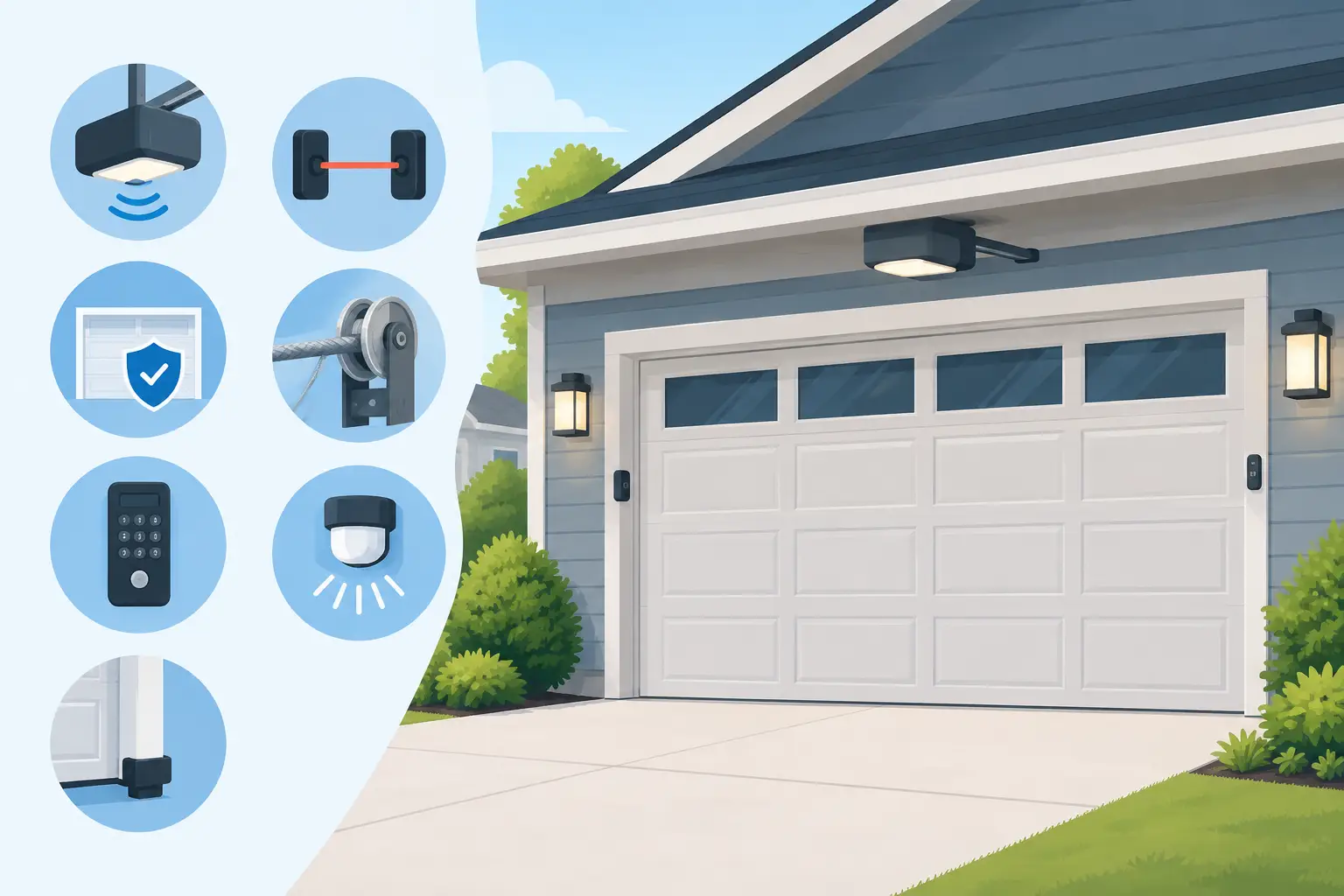
Every modern automatic garage door opener should have working photo-eye sensors. These small devices sit near the floor on both sides of the door opening and send an invisible beam across the opening. If a child, pet, bicycle, box, or vehicle interrupts that beam while the door is closing, the door should stop and reverse.
Sensors are standard on newer systems, but they are often overlooked until a door refuses to close. Bent brackets, dirty lenses, loose wiring, or sensor misalignment can all cause trouble. In Chicagoland garages, road salt, dust, moisture, and accidental bumps from storage items are common causes.
Test the reversal function monthly. With the door open, place an object in the sensor path and press the wall control to close the door. The door should not close. If it does, stop using the automatic opener and arrange service promptly. Do not bypass or tape over sensors to force a door closed.
2. An auto-reverse opener with force monitoring
Photo eyes protect the lower opening, but an opener’s force-monitoring system provides another layer of protection. When the door contacts an object while closing, a properly adjusted opener should sense unusual resistance and reverse direction.
This feature is especially valuable for homes with young children, pets, or an attached garage used as a regular entrance. It also matters for property managers, where residents may leave carts, strollers, or belongings near the opening.
An opener that closes with excessive force, fails to reverse when it contacts a flat object, or jolts its way through operation needs attention. Adjustment may solve the issue, but a worn door, damaged roller, weak opener, or binding track can be the real cause. The safety setting should never be increased simply to make a struggling door close. The underlying mechanical issue needs to be corrected first.
3. Battery backup for power outages
A battery backup opener keeps the garage door operating when utility power goes out. For homeowners, that can mean getting a vehicle out during a storm or returning home without being locked out of the garage. For businesses and property managers, it can reduce disruption when access to a secured garage, loading area, or parking structure matters.
Battery backup does not turn a residential door into a high-cycle commercial system, and its run time is limited. Still, it is one of the most practical safety and convenience upgrades available. Look for an opener with a built-in battery system that can operate the door for multiple cycles during an outage.
A manual emergency release is still necessary, but it should be used correctly. Pulling the release while a garage door is open can be hazardous if a spring or cable is failing. If the door is stuck open or hanging unevenly, keep people clear and call for professional help.
4. A smart opener with activity alerts
A smart garage door opener lets you check door status from a phone, receive open or close alerts, and operate the door remotely when appropriate. This is a meaningful safety upgrade for families who cannot always remember whether they closed the garage on the way to work or school.
Alerts can also help when an older child arrives home, a contractor needs access, or a property manager needs visibility across multiple units. Many systems allow temporary access for guests or service providers without sharing a permanent remote control.
Convenience is not the same as security. Choose a system with account protection, unique passwords, and software updates. Avoid leaving the door open remotely for extended periods, especially when the garage provides direct access to the house. A smart system works best when paired with a dependable opener and a door that already moves smoothly.
5. A rolling-code remote and exterior keypad
Older garage door remotes can create avoidable security concerns. Newer rolling-code technology changes the access code each time the remote is used, making it much harder for someone to capture and reuse a signal.
An exterior wireless keypad can be equally useful. It gives family members access without hiding a key outside or leaving a remote in an unlocked vehicle. For a rental property or commercial space, the code can be changed when staffing or occupancy changes.
Keep the keypad code private and avoid easy combinations such as an address, birth year, or repeated numbers. If a remote is lost or stolen, erase it from the opener’s memory and program a replacement. That small task closes a security gap many property owners forget.
6. Pinch-resistant door panels
A manually operated or moving sectional door has joints between its panels, and those joints can create pinch points. Pinch-resistant garage door panels are designed so fingers are less likely to become trapped as the sections fold together.
This upgrade makes the most sense when replacing an older door or installing a new one. It is particularly worthwhile for homes where children play near the garage or where the garage is used as a workshop, storage area, or daily entrance.
Not every existing door can be retrofitted with true pinch-resistant sections. If your door is aging, dented, rusted, or poorly insulated, replacement may provide the safer long-term result. Newer doors can also improve weather protection and curb appeal, but safety should remain the first reason to make the change.
7. Reinforced hardware and professional maintenance
The opener gets most of the attention, but the door’s mechanical hardware carries the weight. Springs, cables, drums, rollers, hinges, brackets, and tracks all need to work together. A broken spring or frayed cable can turn a routine opening cycle into an urgent safety issue.
For many properties, the best upgrade is replacing worn components before failure. Higher-quality rollers can reduce noise and vibration. Reinforcement struts can support wide or insulated doors. Correctly installed bottom brackets and cables help the door travel evenly. A properly sized torsion spring system helps the opener do its job without carrying more weight than it should.
These are not DIY repairs. Springs are under extreme tension, and bottom brackets connect directly to the cable system. Do not loosen, adjust, or remove either component. A trained technician can inspect balance, spring condition, cable wear, track alignment, and opener settings in one service visit.
Safety Features That Need Regular Testing
Even the best equipment cannot protect your property if it is not functioning correctly. Once a month, test the photo eyes and the opener’s auto-reverse function. Watch the door travel through a full open-and-close cycle. It should move steadily without scraping, shaking, or making grinding sounds.
Also check that the wall button is mounted high enough to be out of a young child’s reach and positioned where the full door opening is visible. Keep remotes out of children’s hands, and teach everyone in the household that a garage door is not a play area.
Twice a year, look over the visible hardware for loose fasteners, worn rollers, damaged weather seals, or cables that appear frayed. You can lubricate approved moving parts if recommended for your door, but do not apply grease to tracks and do not attempt spring adjustments. If the door is unbalanced, comes off track, or will not stay in its open position, stop operating it.
When an Upgrade Should Become a Service Call
A door that reverses for no clear reason may have a sensor issue, but it can also be binding in the tracks. A loud opener may be nearing the end of its service life, or it may be compensating for a poorly balanced door. A new remote will not solve a door that is too heavy for the opener to lift.
That distinction matters because safety upgrades work as a system. The strongest smart opener and newest sensors cannot compensate for broken springs, damaged cables, or a door that has come off track. For Chicago-area homes and businesses, Garage Door Mart Inc can inspect the complete system and recommend repairs or upgrades based on the door’s actual condition, not a one-size-fits-all checklist.
A safer garage door starts with a door that closes when it should, stops when it must, and never asks your family or staff to work around a known problem.